Kids’ UPF Gear: Clothing, Coverage and Fit
Choose sun clothing that your child can move in and will keep wearing. Check the exact garment’s UPF, coverage and care, alongside shade, a suitable hat and sunscreen on exposed skin. For water use, compare kids’ UPF swim shirts and rash guards.
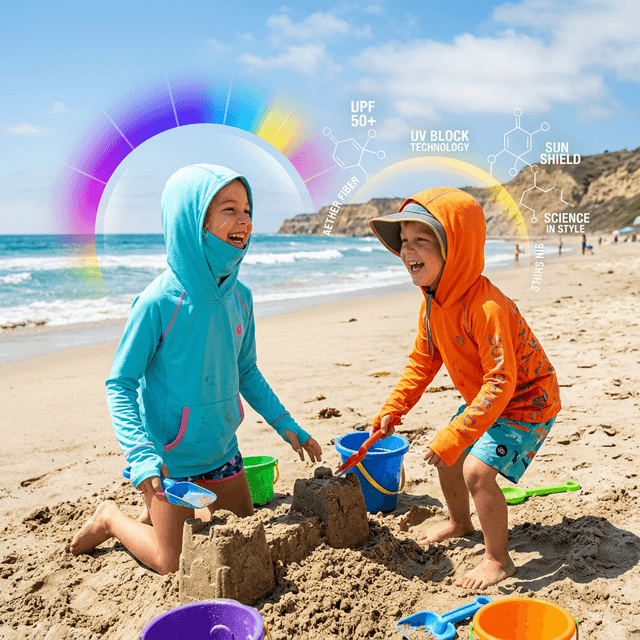
Quick picks
Fast picks for parents
Recommendations are based on manufacturer specs, source review, buyer feedback patterns, and SleeveShirts editorial criteria.
Beach day coverage
Kids UPF 50 sun hoodie
Beach, pool, and long exposed days
Start with a hooded UPF layer when sunscreen battles are the main problem.
Playground durability
Columbia / PFG-style kids UPF shirt
Rough play and frequent washing
A structured woven or ripstop-style shirt is a useful comparison point for abrasion-heavy use.
Sensitive-skin oriented
Coolibar kids UPF shirt
Soft feel and high coverage priority
A sensible search starting point for parents prioritizing comfort and reduced sunscreen friction.
Budget backup
Baleaf kids sun shirt
Multiple shirts for camp or travel
Useful when you need several washable pieces rather than one premium layer.
Who this is for
- Parents choosing sun clothing for beach, school, camp, travel, or playground use.
- Families trying to reduce sunscreen reapplication battles.
- Buyers comparing durability, softness, easy dressing, and price.
Skip this if: Skip this guide if you need medical advice for a skin condition; use it as buying guidance and ask a clinician for personal medical concerns.
How to use this guide
Pick the use case first, then compare fabric feel, hood/hat coverage, wash durability, and whether your child can put it on independently.
We use these blocks to help you decide faster; detailed reviews below still explain the trade-offs.
Quick checks before buying
Comfort: Feel the fabric and check seams and labels against your child’s skin. A finish name does not establish suitability for a skin condition.
Wear: Look for holes, thinning and stretched areas after playground use. A knit or finish name alone cannot predict how long protection lasts.
Sleeve reach: Check wrist coverage while your child reaches and plays. Thumbholes are useful only if they fit comfortably and your child can use them.
Getting dressed: Try the neckline, fastenings and sleeves. Look for labels and seams that feel comfortable.
Check the garment’s rating and coverage
An ordinary T-shirt should not be assumed to provide UPF 50+ protection. Fabric construction, color, wetness, stretch and condition all matter. Check the rating on the specific garment and cover exposed skin with the rest of the child's sun-protection setup.
Clothing covers the skin beneath it; it does not protect uncovered hands, faces or legs. Use a combination of shade, clothing and age-appropriate sunscreen. A fabric rating is not a promise of permanent protection.
Visual buying guide
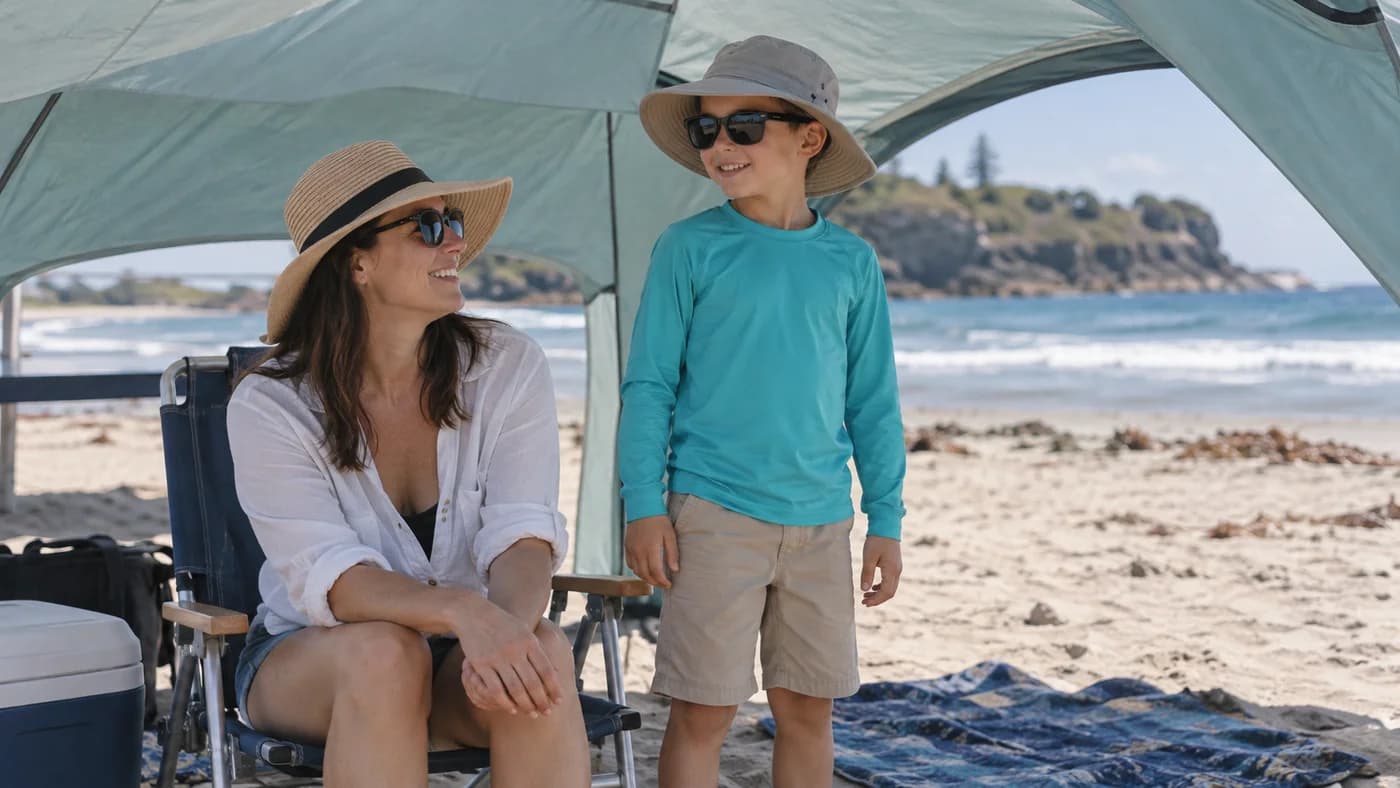
Check the outfit, then check the gaps
Look at the clothing your child will actually wear. A shirt, hat and sunglasses cover different areas; a UPF label is not a percentage of the body covered.
Sleeves and hem
Check the wrists and waist when your child reaches, bends and plays. Read the exact garment’s UPF label.
Hat and eyewear
A brim all the way around shades the face, ears and back of the neck. Use sunglasses that block UVA and UVB.
Uncovered skin and shade
Keep shade and exposed-skin protection in the plan. A clothing rating does not remove the need to protect the gaps.
AI-generated, photorealistic category examples, not photographs of exact recommended products. The images do not verify UPF, fit or performance.
CDC sun-safety guidance ↗Model details · checked October 10, 2026
Compare the specifications that affect your choice
This compares a long-sleeve tee, a short-sleeve fishing shirt and a hat for different jobs. Fiber names and weave descriptions are not UPF test ratings. The shirt prices below replace the earlier undated category estimates.
Prices are manufacturer references in USD for one item, before tax and shipping. Promotions, stock and seller terms can change. These source checks do not establish a match to every Amazon SKU or color pictured elsewhere in this guide. Unknown specifications are marked below; we have not tested these products.
Patagonia Kids’ Long-Sleeved Capilene Silkweight T-Shirt, style 62386
$45 USD regular price for one shirt; selected P-6 Outline: Pickled Pink was $30.99 (31% off). Other colors can differ.
- UPF and coverage
- UPF 40+ on the model page; do not substitute the rating of a different Capilene shirt.
- Fit and measurements
- Use the children’s chart for this long-sleeve style and check sleeve/hem reach during play. It is a tee rather than a compression rash guard.
- Fabric and construction
- 84% recycled polyester, 16% spandex.
- Care
- Machine wash warm, no bleach, tumble dry low, cool iron; no fabric softeners.
Good fit if: Choose this if you want a lightweight long-sleeve play layer with a documented model-specific rating.
Tradeoff: A tee can lift at the waist. Check coverage on the child with arms raised rather than buying by age alone.
Columbia Boys’ PFG Tamiami Short Sleeve Shirt, style 1675321
$35 USD for one shirt, Vivid Blue variant. Other colors had different promotions.
- UPF and coverage
- UPF 40, not UPF 50. Short sleeves leave the forearms and some upper-arm skin exposed.
- Fit and measurements
- Regular fit; XXS (4/5), XS (6/7), S (8), M (10/12), L (14/16), XL (18) were listed.
- Fabric and construction
- 100% polyester Omni-Wick ripstop, with a ventilated back. A woven fishing shirt, not a stretch swim rash guard.
- Care
- Machine wash, no bleach, tumble dry; check the label for temperature settings.
Good fit if: Choose this for dry outdoor play or fishing when a button-front shirt suits the child.
Tradeoff: It offers less arm coverage than a long sleeve and should not be compared as an interchangeable swim shirt.
Sunday Afternoons Kids’ Play Hat
$38 USD for one Llama Flow variant; other colors can differ.
- UPF and coverage
- UPF 50+ fabric; mesh ventilation is not rated. A hat does not cover the whole child.
- Fit and measurements
- Small 47–50 cm, Medium 50–53 cm, Large 53–56 cm. Measure the head; an infant below 47 cm needs another model.
- Fabric and construction
- Solid and printed versions use different nylon/polyester panels. Brim 7–9 cm and neck cape 13–15.5 cm vary by size.
- Care
- Hand wash cold, line dry; no bleach, iron or dry cleaning. Pack flat rather than creasing the brim.
Good fit if: Choose this if the measured head fits and a brim plus cape stays in place comfortably.
Tradeoff: The breakaway SmartStrap does not replace supervision. Mesh and gaps remain exposed; a child can still remove the hat.
Check the exact manufacturer model ↗ · Supporting fabric or size documentation ↗
Wear and care after play
Playground use can wear cuffs, elbows and other contact areas. Inspect the garment after use and washing. A visible hole or thinning is a reason to question coverage, but a home inspection cannot measure remaining UPF.
Check the exact garment’s construction and care rather than assuming a brand or weave guarantees durability. For another construction style, see the fishing-shirt guide.
Condition check:
Check for damage and follow the maker’s guidance. Holding fabric against a window cannot confirm its UPF or provide a reliable replacement date.
After water use:
After saltwater or pool use, rinse and wash as the garment’s care label directs. Let it dry before storing it.
Fabric comfort and skin concerns
If your child has eczema, a fabric sensitivity or another skin concern, discuss suitable sun protection with a clinician. Check comfort, coverage and the exact product information rather than assuming a premium price solves irritation.
Coolibar uses the ZnO name on some fabrics. Check which fabric and model you are considering, its published rating and its care instructions. Do not extend one fabric claim to the whole brand.
What matters: UPF describes ultraviolet transmission through tested fabric. It does not measure how cool a shirt feels or how much skin the complete outfit covers.
Fit and getting dressed
Try the shirt on before an outdoor trip. Check that the neckline passes over the head comfortably and that your child can use the fastenings with the help they normally need.
Ask your child about rubbing at the neck, underarms and cuffs. Try thumbholes or loops in movement; skip them if they pull on the sleeves or make dressing harder.
Check before ordering
Use retailer links to confirm current sizes, colors, seller details, and availability before ordering.
Related guides
Buying Guide
Best Baby & Toddler Sun Hats
Compare full-brim, neck-cover and adjustable hats by age, fit and real coverage.
Comparison
UPF 50 vs. 30: Does it Matter?
Compare what the fabric ratings mean and why garment coverage matters.
Technical Pillar
The 2026 Fabric Science Guide
How wicking fabrics spread liquid and what the claims mean.
Questions about children's UPF clothing
Do kids need sunscreen under UPF shirts?+
How long does kids\' UPF protection last?+
Is a dark color sun shirt better for kids than a light one?+
What is the actual UPF rating of a standard cotton kids\' t-shirt?+
Can babies under 6 months wear UPF clothing?+
Not sure yet?
Not sure how much UPF gear your child needs?
Start with the parents buying path or estimate risk before choosing hoodie, shirt, hat, and sunscreen coverage.