Best Rash Guards for Snorkeling in 2026: Warm Water, Fit & UPF Guide
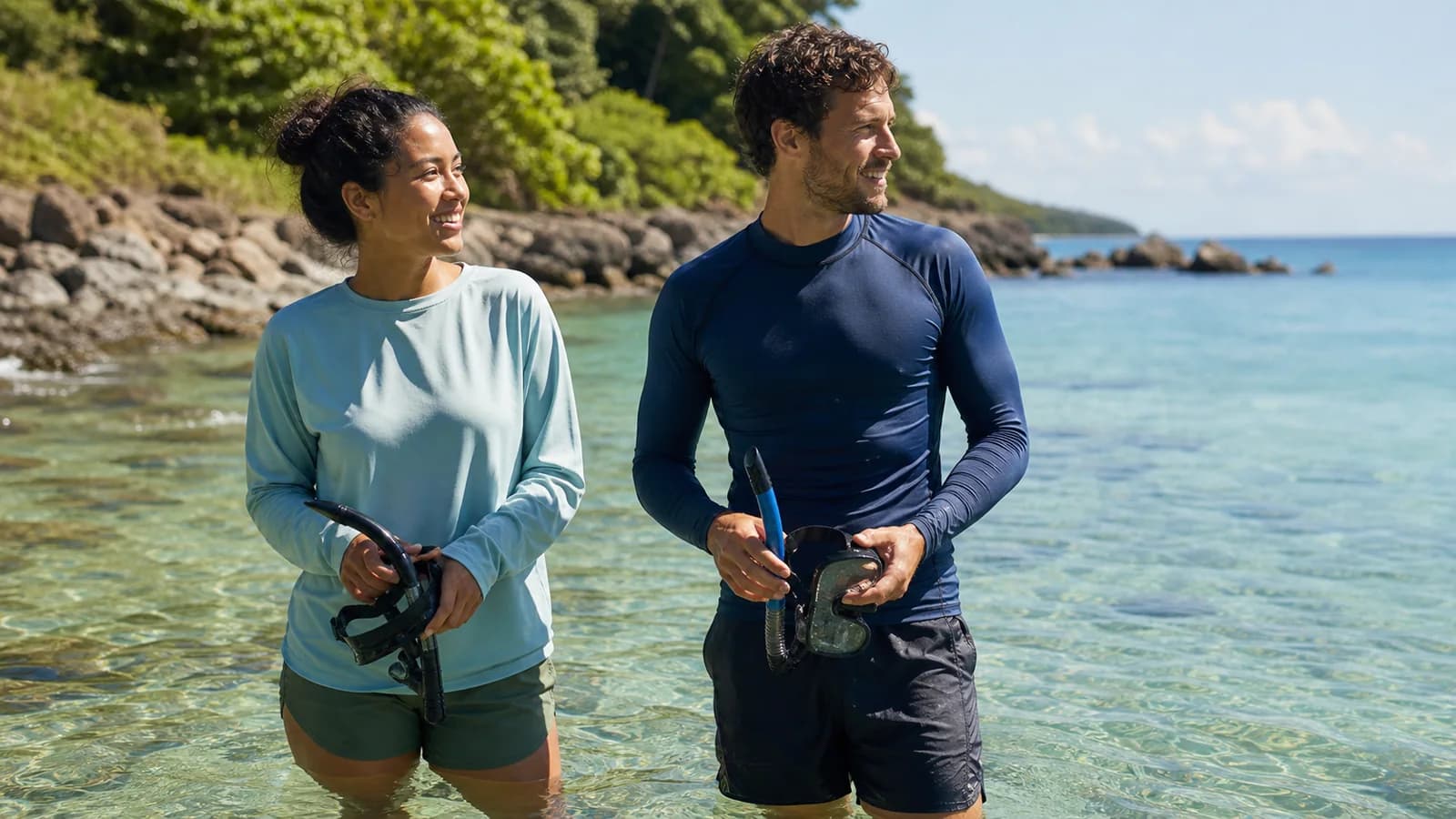
Snorkeling holds the shoulders and back near the surface for long periods, so fit and coverage behave differently than during casual pool use. This guide compares useful rash-guard formats for tropical sessions, cooler water, travel, children, and buyers who dislike compression.
Direct answer
What is the best rash guard for snorkeling?
For warm-water snorkeling, compare the slim O’Neill Basic Skins style 4339 with the looser Kanu Surf swim tee and Coolibar Ultimate’s hem attachment. Check waist overlap, shoulder movement and comfortable breathing; Ultimate also has a mesh protection caveat. Choose insulation separately for the water conditions. A rash guard does not provide flotation, and sunscreen, shade and safe-water guidance still matter.
Affiliate disclosure: SleeveShirts may earn from qualifying Amazon purchases. The shortlist is based on practical criteria, not paid placement.
Amazon inventory, sellers, specifications, ratings, and prices can change. Open the current listing and verify the exact size chart, material, coverage, and return terms.
Quick picks
Start with the format that fits the job
Compare these 6 options, then check the exact model, size and seller.
Warm tropical water
Lightweight close-fit long-sleeve rash guard
A smooth close fit reduces drag and fabric movement while floating face-down. Flat seams and a stable hem matter more than maximum compression.
Beach plus casual snorkeling
Relaxed-fit UPF swim shirt
A looser top is easier to wear between water sessions and can be more comfortable for buyers who dislike compression. Expect more water movement and verify torso length.
Long surface sessions
Hooded snorkeling rash guard
A fitted hood can cover the scalp, ears, and neck more consistently. It can also feel warmer and must not interfere with the mask seal or hearing.
Cooler water without a full wetsuit
Thermal rash guard or thin neoprene top
Added insulation may bridge the gap between a thin sun shirt and a wetsuit, but thickness and buoyancy must match local conditions and operator advice.
Model details · checked October 10, 2026
Compare the specifications that affect your choice
A closer cut can limit fabric movement; a loose tee may float up. Check waist overlap and secure attachments without restricting movement. These shirts provide neither buoyancy nor a reliable temperature rating. Use suitable flotation and follow local snorkeling safety guidance.
Prices are manufacturer references in USD for one item, before tax and shipping. Promotions, stock and seller terms can change. These source checks do not establish a match to every Amazon SKU or color pictured elsewhere in this guide. Unknown specifications are marked below; we have not tested these products.
O’Neill Basic Skins long-sleeve rash guard, style 4339
$39.95 USD for one shirt, Pacific variant. The selected variant was sold out at the check.
- UPF and coverage
- UPF 50+; exposed hands, face and legs still need protection.
- Fit and measurements
- Slim fit, described as close without being tight. S–XXL were listed; the men’s M chest guide is 39–41 inches.
- Fabric and construction
- 6 oz polyester/spandex with overlock seams. The manufacturer gives a fabric weight, not a blend percentage.
- Care
- Care instructions were not provided on the checked product page; follow the garment label.
Good fit if: Choose this if you want a closer water layer than a loose swim tee.
Tradeoff: A slim shirt is less forgiving around the waist. Check the offered sizes rather than assuming every size in the brand chart is sold for this style.
Kanu Surf Men’s Solid Long Sleeve Swim Shirt
$24.99 USD for one shirt, Black/Small variant.
- UPF and coverage
- UPF 50+ on the manufacturer page.
- Fit and measurements
- S–XXL were listed. The maker describes a looser fit than a traditional rash guard; raglan sleeves and flatlock seams.
- Fabric and construction
- A full fiber percentage was not provided on the checked page.
- Care
- A complete wash/dry instruction was not provided on the checked page; follow the label.
Good fit if: Choose this if you want a loose swim tee and the checked price suits your budget.
Tradeoff: Loose fabric may move in the water. Check waist and sleeve reach before choosing it for snorkeling.
Coolibar Men’s Ultimate Long Sleeve Rash Guard, White, style 03528
$85 USD for one shirt. The checked page displayed Final Sale, with no returns or promotions.
- UPF and coverage
- UPF 50+; the manufacturer warns that mesh ventilation may reduce protection in those areas.
- Fit and measurements
- S–XXL were listed; 27-inch body length in Large. Crew neck, flatlock seams, back hem gripper and a swim-short attachment loop.
- Fabric and construction
- Aqua Plus, with a water-repellent finish. A fiber percentage was not exposed; do not substitute the Aqua Classic blend.
- Care
- Full wash/dry directions were not exposed on the checked model page; use the label.
Good fit if: Choose this if a crew neck and hem attachment suit your swimming setup.
Tradeoff: The reference body length is shorter than Nocona’s, and mesh needs its own coverage consideration.
Model-specific buying path
3 exact Amazon rash guards for snorkeling
These exact listings cover close-fit, relaxed-fit, and value-oriented long-sleeve routes for warm-water snorkeling. They are coverage layers, not substitutes for thermal protection, swimming skill, or local operator guidance.
Specification-based shortlist, not a hands-on product test. Amazon supplies exact-listing titles, images, availability, offer data, and destinations when a match is available.
O’Neill Basic Skins UPF 50+ Long-Sleeve Rash Guard
A traditional fitted rash-guard route for shoppers who want less fabric movement while floating face-down. Confirm chest fit, breathing comfort, torso length, seam placement, and the selected color and size.
Speedo Long-Sleeve Loose-Fit UV Swim Shirt
A looser swim-shirt route for casual snorkeling and buyers who dislike compression. Expect more water movement than a fitted rash guard and verify the exact UV claim, torso length, and wet fit.
Kanu Surf Platinum UPF 50+ Long-Sleeve Rash Guard
A named UPF 50+ rash-guard alternative for shoppers comparing fit and price across established swim brands. Verify the selected size, sleeve reach, neckline, seam comfort, and return terms.
What the official guidance changes about this purchase
UPF clothing reduces the amount of sunscreen needed on covered areas, but no shirt solves water conditions, swimming ability, thermal protection, or all exposed-skin gaps. We use official sun and reef guidance to keep the apparel advice in scope.
UPF measures fabric protection
The World Health Organization explains that UPF covers both UVA and UVB and that structure, stretch, wetness, wear, and garment design affect practical protection. The exact label matters more than the generic word rash guard.
World Health Organization →Water increases the need for a complete plan
The American Academy of Dermatology advises extra caution near water and recommends water-resistant broad-spectrum SPF 30+ sunscreen on uncovered skin, alongside clothing and shade.
American Academy of Dermatology →UPF sunwear can reduce product wash-off
NOAA lists UPF sunwear as one way to protect people and marine life while noting that sunscreen-ingredient effects on aquatic ecosystems remain an active research area.
NOAA Ocean Service →How we evaluate the category
We evaluate category construction, public specifications, fit and size-chart clarity, stated UPF, material and thickness descriptions, seam placement, coverage geometry, care instructions, and recurring buyer-fit problems. We do not claim personal snorkeling tests, fabric-lab results, coral-safety certification, or medical expertise. Exact water conditions and local operator guidance override a generic apparel list.
Stable face-down fit
The torso should stay covered while the wearer floats horizontally. A hem loop, longer body, close cut, or well-designed relaxed hem can reduce ride-up.
Shoulder mobility
Arm rotation should remain free without the neckline pulling against the throat. Raglan construction and stretch can help, but the size chart is decisive.
Wet seam comfort
Flat or thoughtfully placed seams reduce rubbing beneath mask straps, flotation vests, and repeated arm movement. Decorative seams can become irritation points.
Water-temperature match
A thin Lycra-style top is primarily a coverage layer, not a cold-water solution. Thermal rash guards and wetsuits solve different insulation problems.
Neck and hood geometry
Higher collars and fitted hoods close common gaps but can affect mask seals, hearing, warmth, and comfort. Buyers should test the complete mask-and-shirt system.
Travel and care
Fast rinsing, overnight drying, salt and chlorine care, odor management, and a spare shirt matter on multi-day trips more than a permanent product ranking.
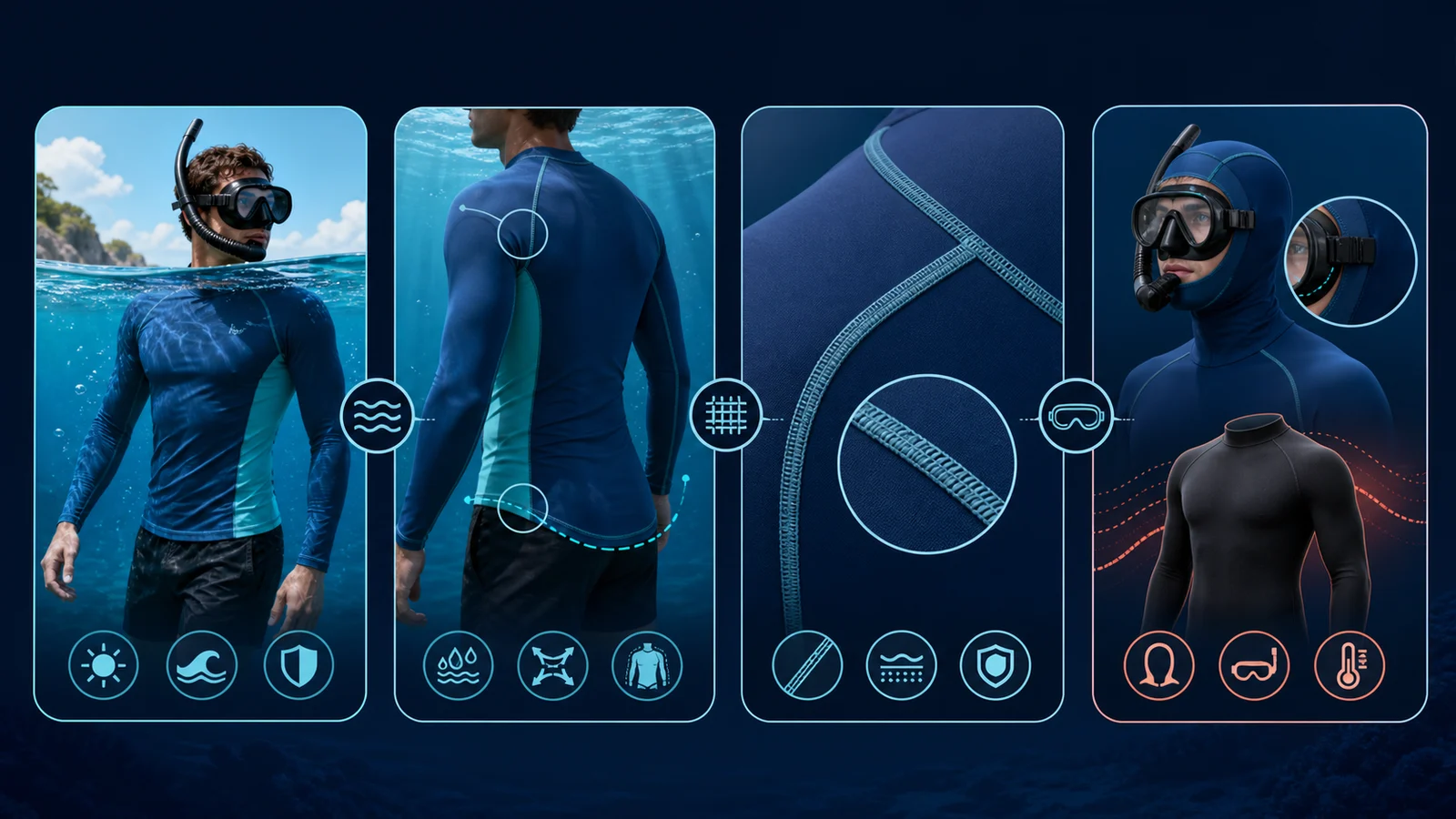
Visual buying framework
The snorkeling rash-guard fit system
A useful snorkel top has to remain stable in water, avoid friction, coexist with the mask, and stay honest about its limited insulation.
1. Choose water fit
For active surface swimming, compare a close fit that allows comfortable breathing and movement. A controlled relaxed fit may suit casual water use.
2. Stop ride-up
Long torso coverage, a stable hem, and free shoulder rotation matter while floating face-down and climbing aboard.
3. Inspect seams
Low-profile seam placement reduces repetitive rubbing at the neck, underarms, shoulders, and flotation-equipment contact zones.
4. Separate coverage from warmth
Keep hoods out of the mask seal and treat thin rash-guard fabric as coverage, not a wetsuit substitute.
Editorial category infographic generated for SleeveShirts. It explains selection logic and does not depict or certify an exact marketplace product.
Decision visual
Snorkeling rash-guard decision map
Make four decisions before opening the product grid. This prevents a warm-water sun shirt from being mistaken for thermal protection.
Set the water-temperature plan
Use local guidance to decide whether a thin rash guard, thermal top, or wetsuit system is appropriate.
Choose fit tolerance
Pick close athletic fit, relaxed swim-shirt fit, or zip entry based on comfort and water movement.
Close coverage gaps
Select sleeve, collar, hood, and torso length while accounting for mask, vest, bottoms, and exposed hands.
Verify the exact variation
Check UPF, fabric, thickness, size chart, seams, color, seller, returns, and care instructions.
Snorkeling rash-guard formats compared
The right format depends on water temperature, time at the surface, fit preference, and how the top interacts with the rest of the snorkeling kit.
| Format | Best for | Prioritize | Trade-off | Listing check | Amazon |
|---|---|---|---|---|---|
| Close-fit long-sleeve rash guard | Active warm-water snorkeling | Flat seams, stretch, stable hem, explicit UPF | Compression feel and harder wet removal | Chest, torso, neck, and sleeve measurements | Search |
| Relaxed UPF swim shirt | Beach, boat, and occasional snorkel sessions | Long torso, light fabric, reliable neckline | More drag and fabric ballooning | Wet-fit guidance and hem behavior | Search |
| Hooded rash guard | Long surface exposure and scalp coverage | Mask-compatible hood and neck fit | More warmth and enclosed feel | Hood seam, hearing, and mask seal | Search |
| Front-zip rash guard | Easy wet removal and adjustable ventilation | Zip guard, secure closure, long torso | Zipper can press under a vest | Corrosion care and zipper placement | Search |
| Thermal rash guard | Cooler water or people who chill quickly | Stated thickness and intended temperature range | Slower drying, bulk, and more warmth on land | Operator advice and complete insulation plan | Search |
| Kids long-sleeve rash guard | Family shore and supervised snorkel use | Secure fit, easy change, bright visibility, UPF | Growth and sensory-fit challenges | Age is not a substitute for measurements | Search |
Detailed buying guidance
Why snorkeling fit differs from beach fit
A beach shirt is often judged while standing or sitting. Snorkeling changes the body position: the chest faces down, the back and shoulders remain near the surface, and fabric is continuously pushed by water. A very loose shirt can balloon, twist, or ride toward the ribs, while an excessively tight neckline can become distracting during steady breathing.
The best compromise is secure rather than maximal compression. The sleeves should rotate freely, the body should stay long enough when horizontal, and the collar should lie flat around the mask strap and any flotation equipment. Test the full setup in shallow controlled water before a long excursion.
- Check fit while reaching both arms forward.
- Prefer enough torso length to overlap swim bottoms.
- Look for a boardshort loop only if it is comfortable and useful.
- Return a shirt that restricts breathing or shoulder movement.
Warm-water coverage is not thermal protection
A lightweight rash guard can cover skin and reduce abrasion, but it provides little insulation compared with neoprene. Water that feels pleasant for a short swim may feel cooler during a long slow snorkel. Wind on a boat can add chill after the wearer exits the water.
Use local dive-operator guidance, water temperature, exposure duration, personal cold tolerance, and conditions to choose insulation. A thermal rash guard or thin neoprene top may help in marginal conditions, while colder sites may require a properly fitted wetsuit. Apparel affiliate content should not prescribe a universal thickness.
- Separate sun coverage from warmth in the search query.
- Ask the operator what regular guests wear.
- Pack a dry wind layer for the boat or shore.
- End the session if cold impairs comfort or control.
Hoods, collars, and mask seals must work together
A hood adds scalp, ear, and neck coverage but also introduces seams and fabric near the mask skirt. If material sits beneath the seal, water can leak. A tight hood can create jaw or throat pressure; a loose one can shift and obstruct hearing or vision.
Put the mask on after arranging the hood according to the product design, then check the seal without overtightening the strap. Turn the head fully, breathe through the snorkel, and confirm that the collar does not bunch beneath a flotation vest. Do this before entering deep or moving water.
- Keep fabric out of the mask-seal area.
- Check hearing and head rotation.
- Avoid drawcords or loose toggles near the face.
- Use a non-hooded top when the system will not seal comfortably.
A reef-conscious plan still protects exposed skin
UPF clothing can reduce the amount of sunscreen applied to the torso and arms, which is useful for both consistency and reducing product washed into the water. NOAA also notes that research on sunscreen ingredients and aquatic ecosystems continues, so simplistic reef-safe labels should not be treated as universal scientific certification.
Follow destination rules and current public-health guidance. Cover what can be comfortably covered, apply an appropriate water-resistant broad-spectrum sunscreen to exposed skin as directed, seek shade before and after the session, and avoid touching or standing on coral. A shirt is part of responsible behavior, not a substitute for it.
- Follow local ingredient and marine-area rules.
- Use sunscreen on uncovered skin according to directions.
- Do not touch, kick, or stand on coral.
- Rinse gear away from sensitive natural water when facilities allow.
Build a two-shirt travel rotation
One rash guard can stay damp, salty, or unavailable after a morning session. A two-shirt rotation lets one rinse and dry while the other is ready, and it allows a close-fit water top to be paired with a relaxed shore shirt. The second piece often adds more practical value than a marginal upgrade in fabric branding.
Rinse according to the care label, avoid unsupported high heat, and dry completely before packing. Inspect stretch, seams, and thin high-wear areas before the next trip. Replace a garment when it no longer holds its intended fit or when damage creates coverage gaps.
- Pack one active-water fit and one relaxed backup if useful.
- Use distinct colors to simplify family gear sorting.
- Dry fully before sealing gear in luggage.
- Recheck fit after repeated pool, salt, and laundry exposure.
Mid-guide shortlist
Ready to compare current listings?
Use the criteria above as a filter. Do not buy from the thumbnail alone: open the exact size chart, material details, care instructions, seller information, and return policy.
Choose by real-world situation
Tropical boat excursion
Long surface time, wind after exit, and limited changing space reward a close-fit long sleeve plus a dry cover layer.
- Wear the rash guard before boarding.
- Keep a dry insulating or wind layer accessible.
- Confirm operator and marine-area rules.
Resort beach with short snorkels
A relaxed UPF swim shirt can transition more comfortably between shade, lunch, and short water sessions.
- Choose a long torso that stays covered when floating.
- Use a front zip if wet removal is difficult.
- Pack a second dry top.
Cooler-water shore entry
Thermal planning and safe entry matter more than a generic best-rash-guard list.
- Ask local operators about insulation.
- Protect against wind after exiting.
- Do not use a thin sun shirt as a wetsuit substitute.
Amazon listing traps to avoid
SPF and UPF used interchangeably
SPF is a sunscreen term; UPF is the relevant clothing rating. Reject product copy that makes the garment claim impossible to understand.
“Rash guard” without a water-use specification
Compression gym tops and BJJ rash guards may appear in the same marketplace results. Verify swim materials, seams, care, and intended use.
Thermal warmth implied by a thin shirt
Lightweight stretch fabric is not equivalent to neoprene. Look for an explicit thickness and temperature-use description when warmth matters.
Generated or lifestyle images treated as product proof
A beach scene does not verify the exact item, variant, fit, or UPF rating. Use images for category understanding and read the listing for evidence.
Before checkout
Final verification checklist
- 1Water temperature and exposure duration match the thin, thermal, or wetsuit plan.
- 2The exact garment states UPF 50 or the rating required for the intended use.
- 3Torso length and hem construction reduce ride-up while floating face-down.
- 4Shoulders rotate freely and the neckline does not restrict comfortable breathing.
- 5Seams, zipper, hood, mask, and flotation equipment do not create pressure points.
- 6The current variation, size chart, material, seller, returns, and care were checked.
- 7A second dry top or post-water layer is available when conditions require it.
- 8Sunscreen, shade, local rules, operator guidance, and safe-water behavior remain in place.
Continue with the right adjacent guide
Frequently asked questions
Should a snorkeling rash guard be tight or loose?
It should be secure enough not to balloon, twist, or ride up while floating, but not so tight that it restricts breathing, shoulder movement, or the neckline. A close athletic fit works well for active snorkeling; a relaxed swim shirt can work for casual sessions if the hem and torso remain stable.
Do I need a long-sleeve rash guard for snorkeling?
Long sleeves cover more of the arms and reduce the amount of exposed skin, making them the most practical general choice for extended surface time. Short sleeves may feel cooler on land but leave more skin dependent on sunscreen and can create a sharp exposure line at the sleeve edge.
Is UPF 50 good for snorkeling?
Yes. UPF 50 is a clear high-protection fabric rating when it applies to the exact garment and covered panels. Practical protection also depends on fit, stretch, wet behavior, garment condition, and coverage. It does not protect exposed hands, face, legs, or gaps around the neckline and waist.
Can I wear a regular workout compression shirt snorkeling?
A workout shirt may not have a verified UPF rating, swim-specific seams, salt or chlorine care guidance, or a stable water fit. Some can function as a basic layer, but a swim-intended rash guard gives the buyer clearer evidence about material, use, and coverage. Verify rather than assume.
Does a rash guard keep you warm while snorkeling?
A thin Lycra-style rash guard provides limited warmth and should mainly be treated as a coverage and abrasion layer. Thermal rash guards and neoprene tops provide more insulation, while colder conditions may require a wetsuit. Match the system to local water temperature, duration, operator advice, and personal tolerance.
Is a hooded rash guard better for snorkeling?
It can be better for long surface exposure because it covers the scalp, ears, and neck more consistently. The hood must stay out of the mask seal, preserve hearing and head movement, and remain comfortable beneath any flotation equipment. A non-hooded top is better if those conditions are not met.
Do rash guards replace sunscreen?
No. They reduce exposure only where intact fabric remains covered. The American Academy of Dermatology recommends broad-spectrum, water-resistant SPF 30+ sunscreen on uncovered skin, along with clothing and shade. Follow the product directions, reapply after swimming as directed, and follow local marine-area rules.
How many rash guards should I pack for a snorkeling trip?
Two is a practical starting point for multi-day travel: one can rinse and dry while the other remains available. A close-fit water shirt plus a relaxed shore shirt can cover different jobs. Longer trips, slow-drying climates, family use, or limited laundry access may justify more.
Sources checked
- World Health Organization: Protecting against skin cancer - UPF definition and the effects of structure, stretch, wetness, wear, and design.
- American Academy of Dermatology: Sunscreen FAQs - Water, reflective surfaces, clothing, shade, and sunscreen guidance.
- NOAA Ocean Service: Skincare chemicals and coral reefs - Current summary of aquatic research and UPF sunwear as a protection option.
- American Academy of Dermatology: Shade, clothing, and sunscreen - Layered sun-protection strategy and uncovered-skin guidance.
Editorial transparency
We are not a medical provider, manufacturer, or accredited product-certification body. Recommendations combine public product data, standards-based claims, independent reviews, buyer feedback patterns, and SleeveShirts editorial judgment. AI may assist research organization and drafting, but final page wording should remain transparent about which signals come from direct source data versus secondary review patterns.
About the author
SleeveShirts Editorial
SleeveShirts Editorial researches UPF clothing, sun hoodies, fishing shirts, running layers, and family sun-protection gear for shoppers comparing products online. We prioritize clear criteria, source quality, practical fit/use-case signals, and transparent affiliate disclosures over brand sponsorship claims.
We do not present SleeveShirts as a dermatologist, medical authority, or accredited product-certification body. When a guide relies on manufacturer specifications, public standards, third-party reviews, or buyer feedback, it should say so plainly.