Best Men's UPF Swim Shirts in 2026: Rash Guards, Loose Fit & Beach Coverage
If you searched for a men's UPF swim shirt, you are probably choosing between a fitted rash guard, a looser beach shirt, a zip swim top, or a sun hoodie that can handle water-adjacent days. The right starting point depends less on the word "best" and more on how wet, active, and covered you need to be.
Affiliate disclosure: SleeveShirts may earn from qualifying Amazon purchases. Recommendations are based on manufacturer specs, official source review, buyer feedback patterns, and SleeveShirts editorial criteria, not paid placement.
Quick answer
Start with the fit first, then verify the UPF claim.
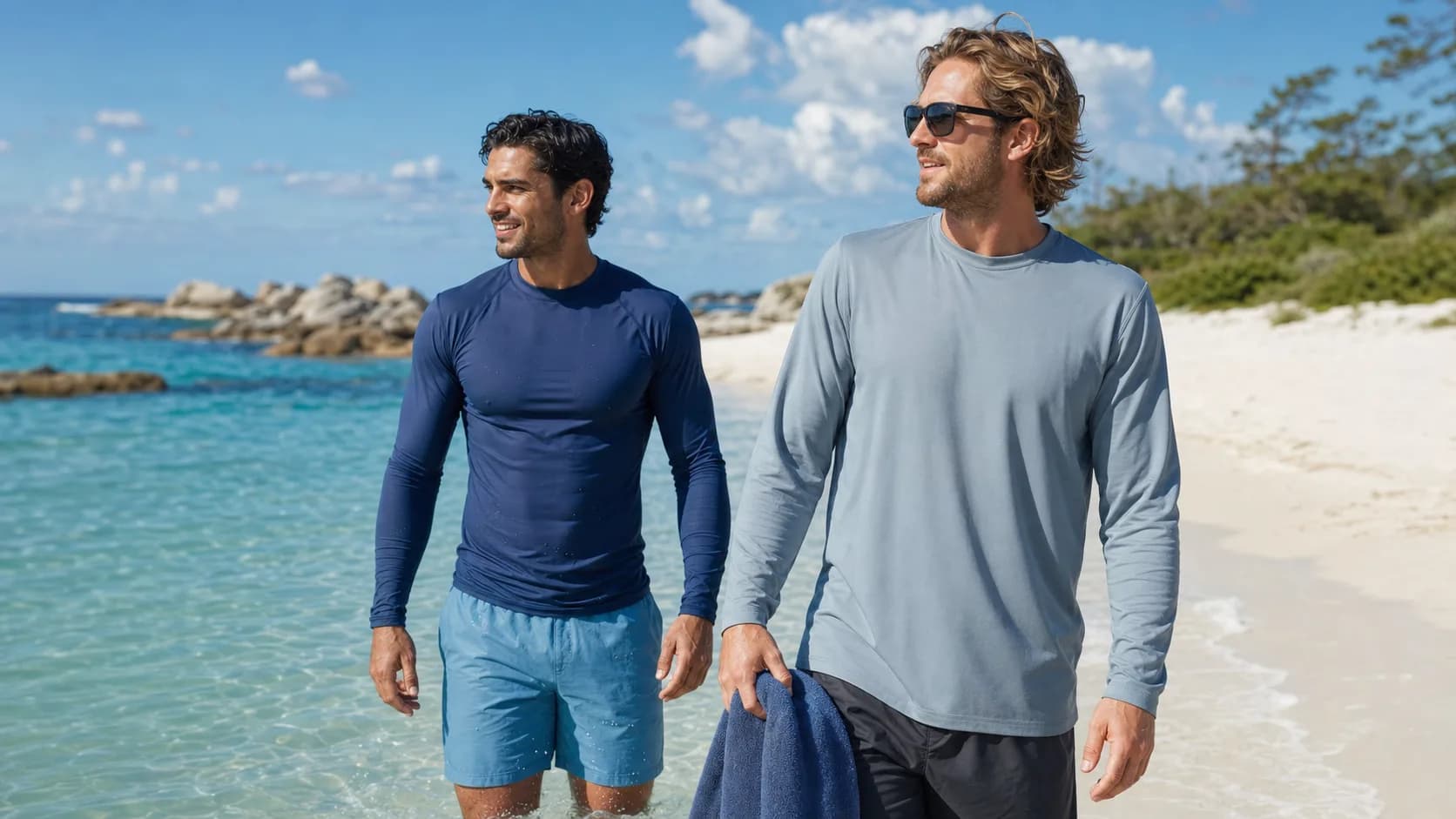
For true water activity, a long-sleeve UPF 50 rash guard is the practical starting point. For pool lounging, beach walks, and vacation wear, a relaxed swim shirt is easier to keep on. For fishing, boating, or kayaking, compare swim shirts against sun hoodies and fishing shirts because reflection and neck coverage matter more.
Quick picks
Best starting points for men
Use these as search starting points, then compare the current listing for UPF rating, fabric, neckline, sleeve length, and return policy before buying.
Best active water fit
Long-sleeve UPF 50 rash guard
Start here for snorkeling, surfing lessons, paddleboarding, lap swimming, and any trip where the shirt will stay wet for hours.
Best relaxed beach fit
Men's loose-fit UPF swim shirt
Better for pool days, beach walks, resort wear, and shoppers who dislike compression-style rash guards.
Best easy on/off
Men's quarter-zip or half-zip swim top
A zipper helps with ventilation and changing, but check neck rub, zipper guard, and whether the fabric still sits flat when wet.
Best dry-land coverage
UPF sun hoodie for beach and boating
Choose a sun hoodie when neck and ear coverage matter more than repeated swimming. It is usually a layer, not a true rash guard.
Model-specific buying path
Four men’s swim and water-day shirts to compare
The shortlist deliberately spans fitted, loose, regular-fit, and hooded coverage. Pick the use case first; then confirm the exact listing’s UPF wording, wet-use suitability, measurements, seller, and return terms.
Specification-based shortlist, not a hands-on product test. Amazon supplies exact-listing titles, images, availability, offer data, and destinations when a match is available.
O'Neill Men's Basic Skins UPF 50+ Long Sleeve Sun Shirt
A close-fitting long-sleeve rash-guard route for snorkeling, swimming, paddling, and surf lessons where loose fabric movement is the main thing to avoid.
Kanu Surf Men's Long-Sleeve Loose-Fit UPF 50+ Swim Shirt
A loose-fit alternative for pool days, beach walking, and vacation wear when comfort across the chest and midsection matters more than low drag in active water.
Speedo Men's Long Sleeve Regular-Fit UV Swim Shirt
A middle route between compression rash guards and very loose sun shirts. Verify the current listing’s UPF language and choose by chest, torso, and sleeve measurements.
Columbia Men's PFG Terminal Tackle Long Sleeve Fishing Hoodie
A hooded water-adjacent option for fishing, boating, kayaking, and long beach walks. It belongs in this comparison as a coverage layer, not as a low-drag swim rash guard.
Model details · checked October 10, 2026
Compare the specifications that affect your choice
The checked loose tee, slim rash guard and zip layer suit different needs. Manufacturer prices below are dated references, not Amazon offers. Verify the exact style before applying these specifications to an Amazon listing.
Prices are manufacturer references in USD for one item, before tax and shipping. Promotions, stock and seller terms can change. These source checks do not establish a match to every Amazon SKU or color pictured elsewhere in this guide. Unknown specifications are marked below; we have not tested these products.
Kanu Surf Men’s Solid Long Sleeve Swim Shirt
$24.99 USD for one shirt, Black/Small variant.
- UPF and coverage
- UPF 50+ on the manufacturer page.
- Fit and measurements
- S–XXL were listed. The maker describes a looser fit than a traditional rash guard; raglan sleeves and flatlock seams.
- Fabric and construction
- A full fiber percentage was not provided on the checked page.
- Care
- A complete wash/dry instruction was not provided on the checked page; follow the label.
Good fit if: Choose this if you want a loose swim tee and the checked price suits your budget.
Tradeoff: Loose fabric may move in the water. Check waist and sleeve reach before choosing it for snorkeling.
O’Neill Basic Skins long-sleeve rash guard, style 4339
$39.95 USD for one shirt, Pacific variant. The selected variant was sold out at the check.
- UPF and coverage
- UPF 50+; exposed hands, face and legs still need protection.
- Fit and measurements
- Slim fit, described as close without being tight. S–XXL were listed; the men’s M chest guide is 39–41 inches.
- Fabric and construction
- 6 oz polyester/spandex with overlock seams. The manufacturer gives a fabric weight, not a blend percentage.
- Care
- Care instructions were not provided on the checked product page; follow the garment label.
Good fit if: Choose this if you want a closer water layer than a loose swim tee.
Tradeoff: A slim shirt is less forgiving around the waist. Check the offered sizes rather than assuming every size in the brand chart is sold for this style.
Coolibar Men’s Nocona Zip Rash Guard, White, style 03545
$95 USD for one shirt. The checked page displayed Final Sale, with no returns or promotions.
- UPF and coverage
- UPF 50+ on the model page.
- Fit and measurements
- S–XXL were listed; 30-inch body length in Large. Quarter zip, flatlock seams and hem gripper.
- Fabric and construction
- Aqua Classic: 84% recycled polyester, 16% elastane. The maker describes chlorine and saltwater resistance; this is not a lifetime guarantee.
- Care
- Complete care directions were not exposed on the checked model page; follow the label.
Good fit if: Choose this if you want a water-specific quarter zip and a longer listed reference length.
Tradeoff: No Tall selector was shown. Confirm fit and the final-sale exclusion before paying more for the zip.
Check the exact manufacturer model ↗ · Supporting fabric or size documentation ↗
Best men's UPF swim shirts by use case
Search intent matters here. A man shopping for a surf rash guard has a different problem than someone buying a relaxed pool shirt or a fishing layer. Use the activity first, then narrow by fit.
Surfing and board sports
Fitted long-sleeve rash guard
Less fabric movement, cleaner shoulder rotation, and fewer loose edges when waves, paddling, and board contact are involved.
Check before buying: Look for flat seams, torso length, and enough stretch through the shoulders.
Snorkeling and resort water
UPF 50 swim shirt or rash guard
Snorkeling exposes back, shoulders, and arms for long stretches. A long sleeve is usually more useful than a short-sleeve swim tee.
Check before buying: Check whether the shirt rides up when floating or kicking.
Beach vacation comfort
Loose-fit UPF swim shirt
A relaxed cut is easier to wear from pool to lunch, especially if you do not want a compression feel across the chest or midsection.
Check before buying: Loose shirts can balloon in active water, so treat them as comfort-first.
Fishing, boating, kayaking
Fishing swim shirt or sun hoodie
Reflection off water makes neck, ears, forearms, and hands more important. Hooded or collared options can beat a basic rash guard.
Check before buying: Avoid heavy fabrics that stay soaked after spray or a swim stop.
Big and tall fit
Relaxed long-sleeve swim shirt
Longer torso length and less compression are usually more important than a very athletic fit. Look for size charts with chest and body length.
Check before buying: Avoid cropped rash guards if you have a longer torso.
Budget backup shirt
Basic UPF 50 swim tee
For trips, an extra budget shirt can matter more than one premium layer because wet shirts need time to dry.
Check before buying: Verify UPF rating, fabric blend, and whether buyer feedback mentions transparency when wet.
Who this guide is for
Beach and pool shoppers
You want arm and shoulder coverage without reapplying sunscreen every hour on covered skin.
Active water users
You swim, snorkel, paddle, surf, or move enough that loose cotton-like beach layers will get annoying.
Vacation packers
You need one or two shirts that can work for water, walking, poolside meals, and travel days.
Skip this if
You only need a dry hiking or fishing layer. In that case, start with our men's UPF shirt guide or sun hoodie guide instead.
Men's UPF swim shirt comparison table
Prices and availability can change quickly. Use the Amazon links as current search starting points, then verify the exact UPF rating and material details on the product listing.
| Type | Best use | Fit | Coverage | Watch out for | Shop |
|---|---|---|---|---|---|
| Fitted rash guard | Swimming, snorkeling, surfing, paddling | Snug, stretchy, low-drag | Arms, shoulders, torso; neckline varies | Compression feel, wet cling, short torso | Search |
| Loose swim shirt | Pool, beach, casual vacation wear | Relaxed and easier over the torso | Arms and torso; can ride up in waves | Fabric ballooning during active swimming | Search |
| Zip swim top | Boat days, frequent on/off, ventilation | Semi-fitted with zipper opening | Good torso and neck control if zipper lies flat | Zipper rub and collar irritation | Search |
| Sun hoodie | Beach walks, fishing, boating, travel | Relaxed dry-land layer | Adds hood coverage for neck and ears | Often not ideal for repeated swimming | Search |
| Fishing swim shirt | Boat, pier, kayak, water reflection | Usually relaxed with venting or hood options | Strong arm and torso coverage; hood varies | May feel heavy when soaked | Search |
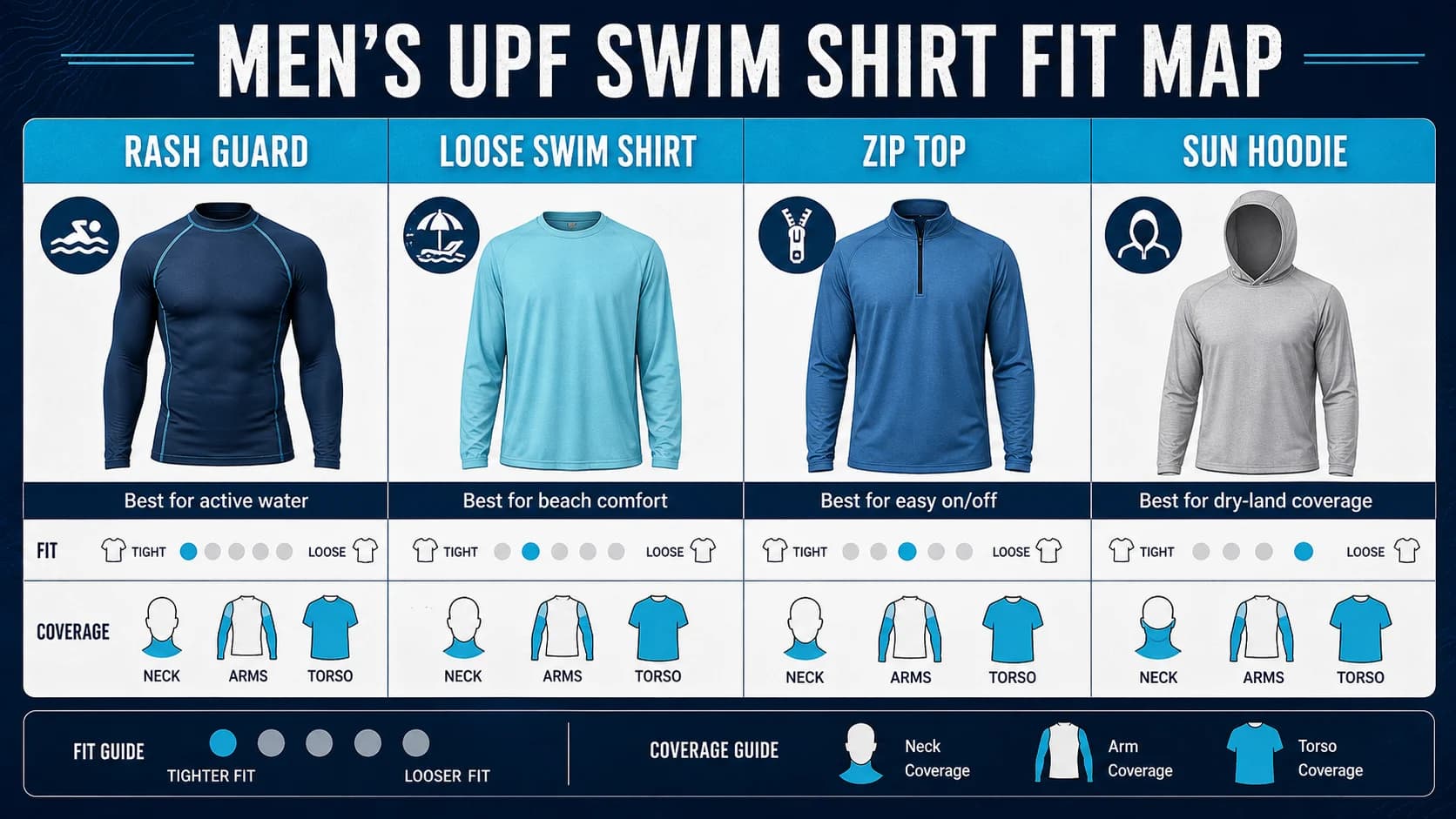
Illustrative category visual for fit decisions; the garments shown are not exact Amazon products.
How to choose the right men's UPF swim shirt
Men's swim-shirt fit issues usually show up in four places: shoulder mobility, torso length, midsection cling, and neck/collar comfort. A shirt can look fine dry and still become annoying once saltwater, chlorine, sunscreen, and repeated movement are involved.
Torso length
A short rash guard can ride up when swimming, paddling, or reaching overhead. Longer hems help keep the lower back covered.
Shoulder mobility
Raglan sleeves and stretch panels usually feel better for swimming strokes and paddling than stiff shoulder seams.
Neckline comfort
Crew necks are simple, mock necks add coverage, and zip collars add ventilation. Avoid collars that scrape when saltwater dries.
Wet cling tolerance
Fitted rash guards cling by design. If that bothers you, use a relaxed swim shirt for casual beach and pool use.
Body fit
Athletic cuts can feel clean in the water but tight across the midsection. Relaxed cuts are easier on land but move more in waves.
Seam placement
Flat seams matter around the armpits, shoulders, and sides. Raised seams can rub during paddling, swimming, or long beach walks.
Big chest or broad shoulders
If shirts usually pull across your chest, prioritize stretch, raglan sleeves, and reviews from buyers with similar builds.
Midsection comfort
A fitted rash guard can highlight the stomach area and feel tight when wet. Relaxed swim shirts are often easier for comfort-first beach days.
Sleeve length
Sleeves that are too short expose wrist gaps. Sleeves that are too long can bunch at the hands when swimming or paddling.
Material and durability checks
For swimming, choose a shirt intended for wet use. Check its fit, care instructions and suitability for salt or chlorinated water; an ordinary trail shirt may not be designed for the same use.
Polyester blends
Common for quick-dry swim shirts. Compare softness, stretch, and whether buyer feedback mentions odor after repeated use.
Nylon blends
Can feel smooth and durable, but the exact hand feel depends on weave and stretch content. Check whether the listing calls it swim-ready.
Spandex or elastane
Adds stretch for rash guards and paddling. Higher stretch can improve mobility, but it may feel more compressive when wet.
Mesh or vent panels
Useful on dry-land and fishing shirts, but mesh coverage can vary. Verify that any vented zones are still covered or intended for sun exposure.
Chlorine and salt exposure
Pool chlorine, saltwater, sunscreen, and heat can shorten garment life. Rinse after use and avoid high dryer heat unless the care label allows it.
Wet transparency
Light colors and thin fabrics can become more revealing when soaked. Buyer photos and reviews are often useful signals here.
Rash guard vs loose swim shirt vs sun hoodie
Rash guard
Best for active water
A fitted rash guard moves less in the water, dries predictably, and reduces fabric drag. It is the cleaner choice for snorkeling, paddling, swimming, and surf lessons.
Loose swim shirt
Best for beach comfort
A relaxed swim shirt is easier on the torso and feels more like a normal tee. It is best when you are mostly walking, lounging, or getting in and out of the pool.
Sun hoodie
Best for water-adjacent days
A sun hoodie can protect more neck and ear area when you are fishing, boating, or walking on the beach. It is usually a layer around water rather than a swim-first shirt.
What to verify on Amazon before buying
Amazon search results can mix true swim rash guards, dry-land sun shirts, fishing hoodies, and generic long-sleeve tees. Before treating a listing as a men's UPF swim shirt, check the current product page for these points.
- 1UPF 50 or UPF 50+ is stated on the current listing, not only in an image badge.
- 2The product description says swim, rash guard, water shirt, or quick-dry water use if you plan to swim.
- 3Size chart includes chest and body length, not only generic S/M/L labels.
- 4Buyer feedback does not repeatedly mention see-through fabric when wet.
- 5Seams, zipper, or collar are not common complaint points.
- 6The return policy works for fit-sensitive rash guards.
Not sure yet?
Use the buying path before you shop.
If your main use is fishing, kayaking, or boating, water reflection changes the decision. If your main use is beach vacation, comfort and coverage gaps matter more.
FAQ
What is the best men's UPF swim shirt?
For active water use, start with a UPF 50 or UPF 50+ long-sleeve rash guard. For casual beach or pool use, a looser UPF swim shirt may feel better.
Should men choose a tight rash guard or a loose swim shirt?
Choose a tighter rash guard for swimming, snorkeling, surfing, and paddling. Choose a loose swim shirt for beach, pool, travel, and comfort-first coverage.
Is a sun hoodie good for swimming?
A sun hoodie is usually better for dry-land beach coverage, fishing, boating, hiking, or travel. For repeated swimming, a swim-specific rash guard or swim shirt is usually cleaner.
What UPF rating should a men's swim shirt have?
UPF 50 or UPF 50+ is the simplest target for covered skin. Also check coverage, fabric stretch, neckline, and whether the listing says the shirt is built for swim use.
Do men need sunscreen under a UPF swim shirt?
Usually not on skin fully covered by a properly rated shirt, but you still need sunscreen on face, hands, legs, feet, and neckline gaps.
Can I use a fishing shirt as a swim shirt?
Sometimes for boat or kayak days, but many fishing shirts are not ideal for repeated swimming. Check wet weight, fabric cling, and whether the product is labeled for swim use.
How many UPF swim shirts should I pack?
Two is a practical minimum for a multi-day beach trip: one can dry while the other is ready. Add a sun hoodie if you also spend long hours walking or boating.
What color is best for a men's UPF swim shirt?
Darker colors can hide stains and may feel more substantial, while light colors can feel cooler visually. The listed UPF rating and fabric construction matter more than color alone.
What is the best men's rash guard for surfing?
For surfing, prioritize a fitted long-sleeve rash guard with stretch, flat seams, and enough torso length. Loose shirts can drag, ride up, or bunch around the board.
What is the best men's UPF swim shirt for a big belly?
A relaxed or loose-fit UPF swim shirt is usually easier than a compression-style rash guard. Check chest, waist, and body length measurements instead of relying only on the size letter.
Are cheap UPF swim shirts worth it?
They can be worth it as backup shirts or casual beach layers if the current listing clearly states UPF 50 or UPF 50+, the fabric is swim-ready, and reviews do not flag transparency or seam problems.
Should a men's swim shirt have a hood?
A hood helps for fishing, boating, kayaking, and long beach walks because it covers the neck and ears. For lap swimming or surfing, a hood can feel like extra drag unless it is designed for that use.
Is a quarter-zip swim shirt better than a crew neck?
A quarter-zip gives ventilation and easier on/off, but it adds a zipper that can rub. A crew neck is simpler and often better for repeated swimming.
Can a men's UPF swim shirt be worn for running?
Sometimes, but swim shirts can feel heavier or clingier than running shirts. If running is the main use, compare our running and anti-odor guides instead.