Sizing guide
Men’s vs. Women’s Performance Fit: How to Choose a Hiking Shirt
Compare shoulder room, torso shape, sleeve reach and hem coverage using your measurements and a practical try-on checklist.
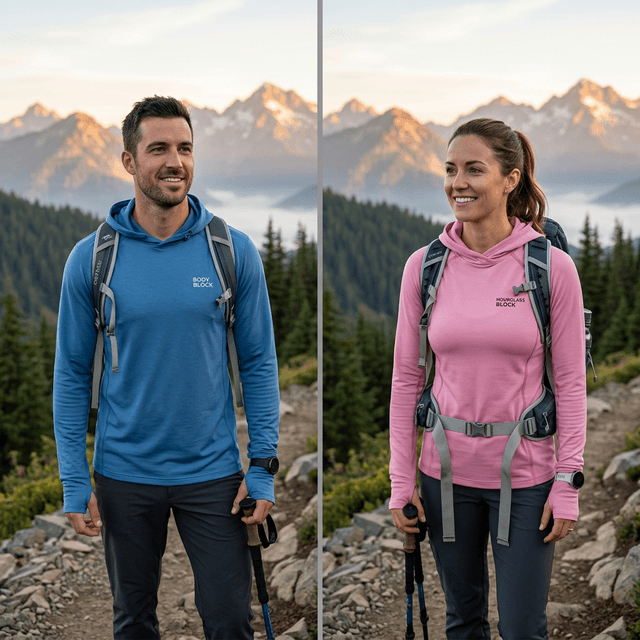
Start with measurements and movement
A men’s, women’s or unisex label is a place to start comparing sizes. Choose the shirt that gives your shoulders room, covers your torso and wrists, and works with your pack. You can try any cut that meets those needs.
Use this as practical fit guidance. Recommendations are based on published information and try-on checks, not our own anatomical studies, laboratory measurements or wear tests.
As an Amazon Associate, SleeveShirts earns from qualifying purchases through the links in this guide.
Technical Fit Finder
Adjust relative proportions to explore cuts to try. The sliders are not body measurements and cannot determine your size.
What the cut label tells you
Brands use different size charts and patterns. A women’s shirt may have shaping at the waist or room at the bust and hips; a men’s shirt may use a straighter torso. Neither is a rule for every product or wearer. A unisex cut can fit well if its dimensions and movement suit you.
Compare the exact model’s size chart. Check whether it lists body measurements or finished garment measurements. A chest measurement taken around your body is not interchangeable with a shirt measured flat, and a familiar letter size may differ between brands.
If you also need a layer for a warm hike, compare our hot-weather base-layer guide. Fabric and cut need to work together.
Four measurements to check
Measure as the brand instructs, using a flexible tape without pulling it tight. If possible, compare a shirt that already fits you well. Note the size, cut and how it behaves under the equipment you intend to wear.
| Area | What to compare | Try-on check |
|---|---|---|
| Chest or bust | Brand chart, intended ease and any finished dimensions | Breathe normally and reach forward without pulling across the front. |
| Waist and hips | Room at the fullest part under the hem | Sit, bend and raise your arms; check for gripping or riding up. |
| Shoulders and sleeves | Shoulder construction and the brand’s sleeve-measurement method | Hold poles or reach as you would while hiking; check wrist coverage. |
| Torso length | Published body or back length, including Tall options | Check the hem beneath your pack belt and above your waistband. |
Shoulder room and seam placement
A seam that feels fine while standing can become noticeable under a backpack strap. Put your pack on, adjust it as you normally would, and reach forward and overhead. Check the collar, shoulder seams and underarms for pressure or pulling.
Raglan sleeves, offset seams or gussets can change where fabric sits and how it moves. Those construction details are worth comparing, but none guarantees a chafe-free hike. Look for the feature on the exact garment rather than assuming it belongs to all shirts sold for one gender.
For hooded options, our Echo, Sahara and Sombra comparison includes published size and length information.
Torso shape, hem and coverage
A closer cut may reduce loose fabric, while a straighter or relaxed cut may give more room at the midsection. Check both while seated and moving. Do not use a fixed waist-to-hip ratio as a universal fit target.
For sun coverage, avoid relying on a shirt that pulls excessively across the shoulders or leaves the waist exposed as you reach. The UK government’s UPF guidance identifies stretch, construction and wear as factors affecting protection. The fabric’s stated rating does not cover gaps around the garment.
Try it with the rest of your gear
- Wear your usual sports bra or base layer, if applicable, rather than testing the top over different clothing.
- Check the hood with your cap or helmet, where the maker supports that use. Turn your head and look upward.
- Grip your poles and check thumbholes for pressure, sleeve pulling and remaining hand exposure.
- Try a shell over the shirt. Check that sleeves do not bunch and that neither layer pulls at the neck.
- Read the return conditions before removing tags, washing or wearing outdoors.
Care also belongs in the decision. Check the garment’s wash and drying instructions before expecting it to keep the same fit after repeated use.
A worked example: body chart versus shirt length
Outdoor Research’s Men’s Echo Hoodie 287625 describes a trim fit. Its men’s medium body chart gives chest 38.5–41.5 inches (98–105 cm); the published centre-back length is 28 inches (71.1 cm). Checked October 10, 2026.
A hypothetical 100 cm chest falls within that medium body-chart interval. It does not establish the finished shirt’s chest circumference or the amount of ease, which the checked page does not publish. Compare the back length with a shirt you wear, then try overhead reach, shoulder movement and the hem with your usual pack. Use the exact model’s chart rather than transferring this medium to another brand.
Frequently asked questions
Can I wear a shirt sold for another gender?
Yes. Compare the measurements and intended fit, then check movement and coverage. The category label does not establish suitability for your body.
Is unisex sizing always a poor choice?
No. It may fit well or poorly, like any other cut. Check the chart, torso length, sleeve reach and shoulder room instead of rejecting the label.
Should I size up for a sun shirt?
Try the sizes against your measurements and the maker’s intended fit. Excessive stretch can affect coverage, while a different size can change sleeve reach, hem position and bunching. Check both sizes in movement if possible.
Does a shaped waist prove higher quality?
No. Waist shaping is a fit feature. Construction, fabric, care and how the garment suits you are separate considerations.
Do women’s sleeves need to be shorter?
No universal sleeve length suits everyone. Compare published measurements and wrist coverage when your arms are extended. Look for Tall or alternative sizing if the standard length is insufficient.
Choose the cut that passes your try-on checks
Choose a shaped cut if it fits your bust, waist and hips comfortably. Choose a straighter or relaxed cut if it gives you better room and movement. Consider a different size or model if the sleeves, shoulders or hem fail your checks.
Continue with the women’s UPF shirt guide, performance-fabric guide or merino versus synthetic comparison.