Best UPF Swim Shirts in 2026: Rash Guards, Kids & Beach Shirts Compared
If you searched for UPF swim shirts, you probably need a shirt that handles water, sun, and repeat wear better than a regular cotton tee. Start with the use case: adult rash guard, kids swim shirt, relaxed beach shirt, or a cover-up layer for before and after the water.
Affiliate disclosure: SleeveShirts may earn from qualifying Amazon purchases. Recommendations are based on manufacturer specs, official source review, buyer feedback patterns, and SleeveShirts editorial criteria, not paid placement.
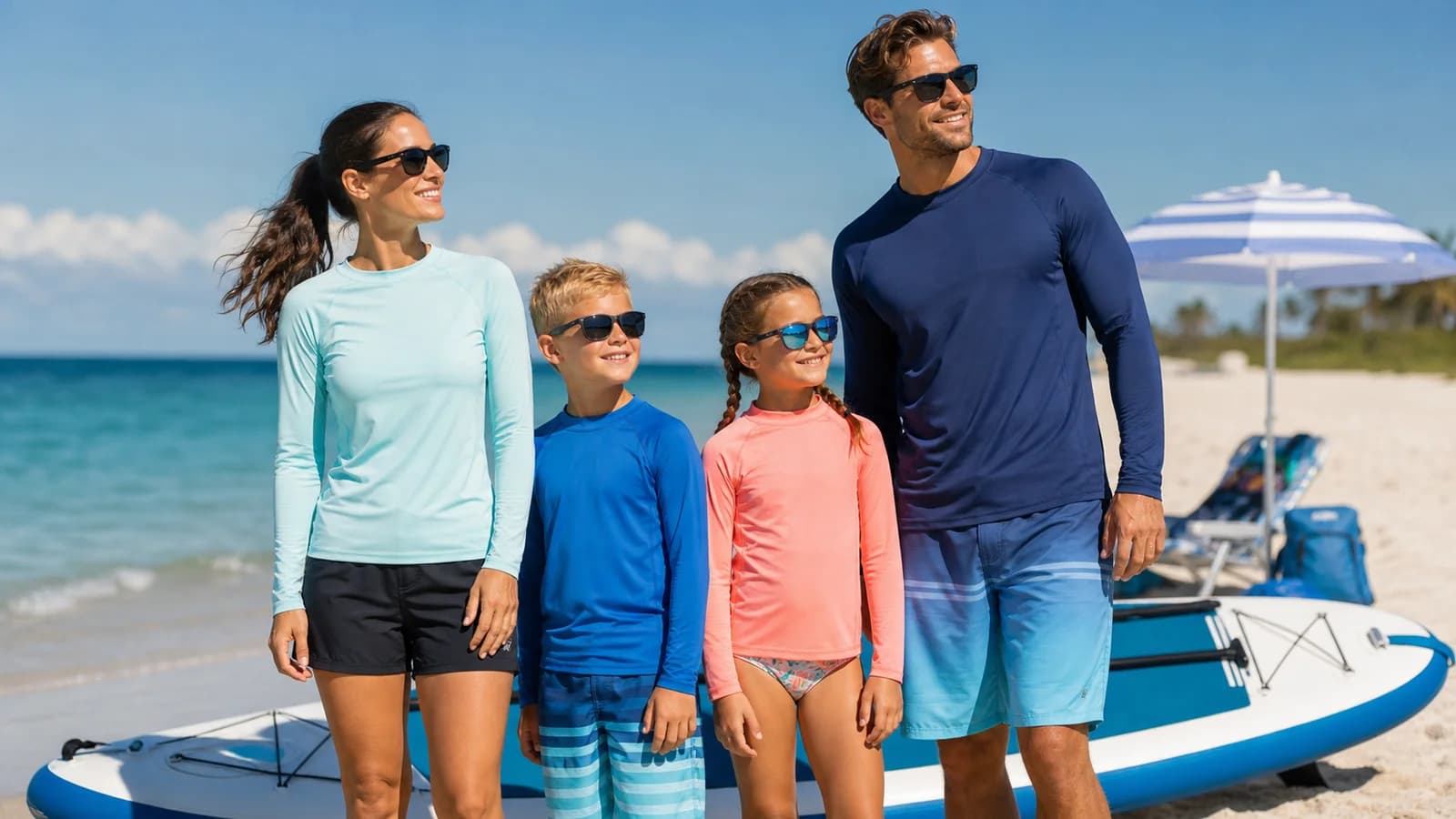
Quick answer
Choose a rash guard for swimming, a relaxed swim shirt for casual beach use, and a sun hoodie when you need more dry-land coverage than water performance.
Quick picks
Use these as search starting points, then verify UPF rating, swim-use language, size chart, seam comfort, and return policy on the current listing.
Best adult starting point
Long-sleeve UPF 50 rash guard
Start here for beach, pool, paddleboard, and snorkel days when the shirt will get wet and stay on for hours.
Best kids starting point
Kids UPF 50 long-sleeve swim shirt
The easiest parent default is a bright, easy-wash long sleeve that covers shoulders and arms during water play.
Best women's beach option
Women's UPF swim shirt or swim cover-up
Useful when you want more coverage over swimwear without switching into a dry hiking shirt.
Best family value search
Family rashguard or UPF swim-shirt multipacks
For trips, camp, and pool rotation, extra shirts often matter more than one premium top.
Model-specific buying path
Four concrete swim-shirt starting points
This mixed shortlist gives men, women, kids, and relaxed-fit shoppers a named model to inspect instead of a generic product category. Verify the exact listing and size chart before checkout.
Specification-based shortlist, not a hands-on product test. Amazon supplies exact-listing titles, images, availability, offer data, and destinations when a match is available.
O'Neill Men's Basic Skins UPF 50+ Long Sleeve Sun Shirt
A fitted men’s rash-guard starting point for swimming, snorkeling, surf lessons, and paddle sports where a shirt that stays close in the water is useful.
O'Neill Women's Basic Skins Long Sleeve Rash Guard
A women’s fitted long-sleeve counterpart for active water. Use the model as a swim-specific benchmark, then compare torso length and shoulder mobility against looser alternatives.
Kanu Surf Girls' Keri UPF 50+ Long Sleeve Rashguard
A long-sleeve kids option for family beach and pool planning. Fit, comfort, supervision, exposed-skin sunscreen, and reapplication still matter around water.
Kanu Surf Men's Long-Sleeve Loose-Fit UPF 50+ Swim Shirt
A loose-fit counterpoint for adults who prioritize beach and pool comfort over compression. Expect more fabric movement during active swimming.
Model details · checked October 10, 2026
Compare the specifications that affect your choice
Start with the wearer’s size and activity, then choose loose tee, close rash guard or zip shirt. These adult and child references are not interchangeable size charts. Exposed skin, shade and safe water supervision remain separate decisions.
Prices are manufacturer references in USD for one item, before tax and shipping. Promotions, stock and seller terms can change. These source checks do not establish a match to every Amazon SKU or color pictured elsewhere in this guide. Unknown specifications are marked below; we have not tested these products.
Kanu Surf Men’s Solid Long Sleeve Swim Shirt
$24.99 USD for one shirt, Black/Small variant.
- UPF and coverage
- UPF 50+ on the manufacturer page.
- Fit and measurements
- S–XXL were listed. The maker describes a looser fit than a traditional rash guard; raglan sleeves and flatlock seams.
- Fabric and construction
- A full fiber percentage was not provided on the checked page.
- Care
- A complete wash/dry instruction was not provided on the checked page; follow the label.
Good fit if: Choose this if you want a loose swim tee and the checked price suits your budget.
Tradeoff: Loose fabric may move in the water. Check waist and sleeve reach before choosing it for snorkeling.
O’Neill Basic Skins long-sleeve rash guard, style 4339
$39.95 USD for one shirt, Pacific variant. The selected variant was sold out at the check.
- UPF and coverage
- UPF 50+; exposed hands, face and legs still need protection.
- Fit and measurements
- Slim fit, described as close without being tight. S–XXL were listed; the men’s M chest guide is 39–41 inches.
- Fabric and construction
- 6 oz polyester/spandex with overlock seams. The manufacturer gives a fabric weight, not a blend percentage.
- Care
- Care instructions were not provided on the checked product page; follow the garment label.
Good fit if: Choose this if you want a closer water layer than a loose swim tee.
Tradeoff: A slim shirt is less forgiving around the waist. Check the offered sizes rather than assuming every size in the brand chart is sold for this style.
Lands’ End Women’s Long Sleeve Relaxed UPF 50 Rash Guard, item 246954
$49.95 USD regular price for one shirt. Lower promotional prices varied by selection and conditions.
- UPF and coverage
- UPF 50 as named on the manufacturer page.
- Fit and measurements
- Regular, Petite, Plus and Long Torso options were shown. Regular XS (2–4) through XL (18) were listed; this is not a numeric Plus body-measurement chart.
- Fabric and construction
- The checked page did not expose a complete fiber specification. Confirm the exact color and size on the garment listing.
- Care
- The checked page did not expose complete care directions; check the label.
Good fit if: Choose this if a relaxed cut or a separate torso/Plus option matters more than a compression fit.
Tradeoff: The shirt is not documented here as providing bra support. Check your swim top underneath and verify the selected fit’s measurements.
SwimZip Wave Rider Kids’ Long Sleeve Zipper Rash Guard — Black
$27.99 USD for one Black shirt. This price does not establish the cost of the Orange Color Pop Amazon listing.
- UPF and coverage
- UPF 50+ on the model page.
- Fit and measurements
- The selector spans infant through older-child sizes. Choose the actual height/size chart; the long zip has a chin guard and zipper garage.
- Fabric and construction
- Nylon/spandex; exact percentages were not provided in the checked specification.
- Care
- Complete care directions were not recorded; follow the label.
Good fit if: Choose this if opening the front helps you dress a wet child without pulling a close neck over the head.
Tradeoff: It is a top, not a full-body sunsuit. Check bottom overlap and the zipper guard on the child.
Who this is for
- Parents who want easier beach and pool coverage for kids without relying on sunscreen alone.
- Adults comparing rash guards, relaxed swim shirts, and beach cover-ups before buying.
- Travelers who need one or two packable water-friendly shirts for vacation or paddle days.
Skip this if
- You need a dry hiking shirt, fishing hoodie, or cold-water wetsuit layer instead of swimwear.
- You want medical advice for a skin condition or sun sensitivity. Talk to a clinician for that.
- You only want live prices. Use current Amazon listings because prices and inventory change.
Comparison table: swim-shirt types
UPF, fabric, and swim-use claims are model-specific. Open the current product listing before checkout.
| Type | Best use | Fit | Coverage note | Best buyer | Shop |
|---|---|---|---|---|---|
| Long-sleeve rash guard | Swimming, paddleboarding, beach days | Usually closer fit with stretch | Torso, shoulders, arms; add hat and sunscreen for exposed skin | Adults who need wet-use comfort first | Search |
| Relaxed swim shirt | Pool, casual beach, vacation backup shirt | Looser than a rash guard; less clingy when dry | Arms and torso; check sleeve length | People who dislike compression-style rash guards | Search |
| Kids UPF swim shirt | Beach, pool, camp water days | Comfortable enough that kids keep it on | Shoulders and arms; pair with hat and sunscreen | Parents who want less sunscreen struggle | Search |
| Sun hoodie | Dry beach walks, boating, fishing, travel | Looser, airier, better when mostly dry | Adds neck and ear coverage when hood is up | People who need more coverage outside the water | Search |
| Beach cover-up | Walking to the beach, resort, post-swim coverage | Loose, easy to pull on and off | Varies by length, sleeve, and neckline | Women who want coverage over swimwear | Search |
Infographic: UPF swim shirt decision map
Use this visual shortcut when you are deciding between a rash guard, relaxed swim shirt, kids swim shirt, and sun hoodie. The right pick depends less on brand and more on how wet, active, and covered you need to be.
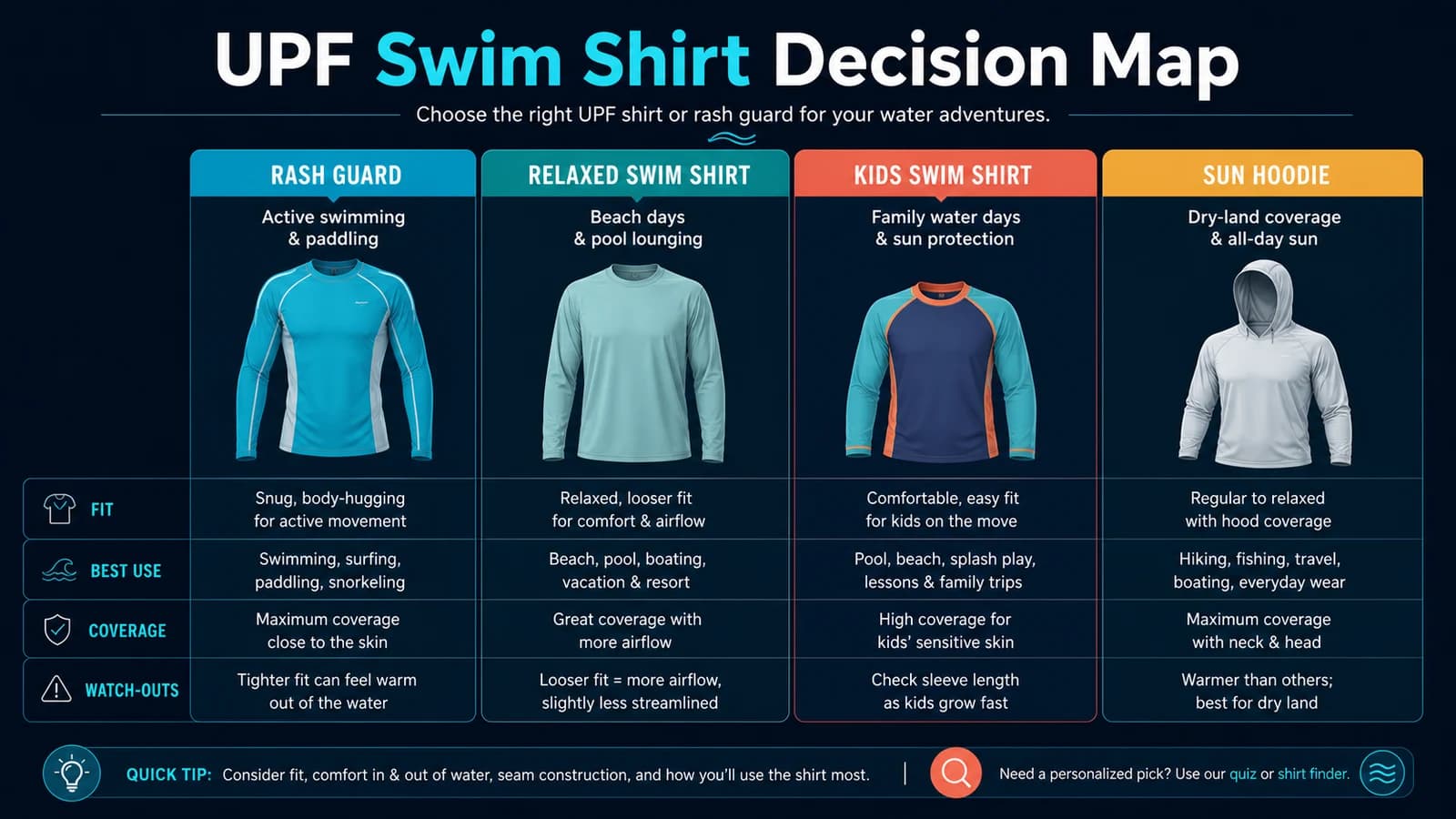
Illustrative category visual for decision support; the garments shown are not exact Amazon products.
Active water
Closer rashguard fit for swimming, snorkeling, surfing, and paddling.
Casual beach
Relaxed swim shirts when comfort and airflow matter more than streamlining.
Kids
Soft long sleeves, bright colors, and easy laundering for repeat water days.
Dry coverage
Sun hoodies for beach walks, boating, fishing, and travel between swims.
Rash guard vs swim shirt vs sun hoodie
Rash guard
Best when the shirt gets soaked
Closer fit reduces drag and shifting in water. Check flat seams, collar comfort, and whether the fabric feels too tight when wet.
Swim shirt
Best for relaxed pool and beach days
Looser cuts can feel easier for casual wear, but they may float or cling differently once wet. Read fit feedback before buying.
Sun hoodie
Best for dry-land coverage
A hoodie can cover neck and ears better than a swim shirt, but many hoodies are not intended for frequent swimming.
Best swim-shirt choice by scenario
Search intent for swim shirts is broad. A parent buying for a beach trip needs a different product than an adult who paddles, surfs, fishes, or wants a resort cover-up. Use these paths before opening Amazon so you do not compare the wrong category.
Beach vacation
Pack two relaxed swim shirts and one rash guard
A relaxed shirt handles walking, lunch, and shade breaks. A rash guard handles actual swimming, snorkeling, and paddle sessions. This split avoids wearing one soaked shirt all day.
Paddle / surf / snorkel
Prioritize stretch, flat seams, and stable fit
Loose fabric can ride up, balloon, or rub during repeated movement. Look for swim-specific language, raglan sleeves, and a collar that does not scrape when wet.
Kids and parents
Plan enough shirts for use, laundry and drying
Kids gear gets wet, sandy, misplaced, and washed often. Two or three simple UPF 50 long sleeves usually beat one expensive shirt with no backup. For the parent-specific fit checklist, read the kids UPF swim shirts guide. For infants and toddlers, use the baby UPF swim shirts guide.
Boating and fishing
Use a sun hoodie when you are mostly dry
If the shirt is mainly for boat decks, piers, and reflected sun, hood coverage may matter more than swim fit. If you will jump in repeatedly, switch back to a rash guard.
Fit, fabric, and construction details that matter
Neckline and collar height
Crew necks are simple but can leave gaps. Mock necks add coverage but can feel warm or rub under the chin when wet.
Raglan sleeves
Raglan or underarm-panel construction can feel better for swimming strokes and paddle reach than stiff shoulder seams.
Flat seams
Flatlock-style seams reduce bulky edges. This matters most around armpits, shoulders, and sides where wet fabric moves.
Stretch recovery
Swim shirts should stretch without staying bagged out. Look for spandex or elastane in active rash guards, especially for kids.
Wet cling
Very light shirts can cling when soaked. That is not always bad for swimming, but it changes comfort during lunch, travel, or beach walks.
Care instructions
Chlorine, salt, sunscreen, and heat can shorten garment life. Rinse after use and follow the care label instead of using high dryer heat by default.
Source notes
The Skin Cancer Foundation explains that UPF measures how much UVA and UVB radiation reaches skin through fabric; a UPF 50 fabric lets about one fiftieth through. That is why coverage and garment fit matter as much as the rating.
The FDA says sunscreens are not waterproof and water-resistant labels are time-limited. For swim days, a UPF shirt reduces the amount of exposed skin, but sunscreen is still needed where skin is uncovered.
Before you buy
Confirm swim use
The listing should make sense for water contact, not just dry trail use.
Check seams and neck
Flat seams and a comfortable collar matter when saltwater, chlorine, and movement are involved.
Size for the real use
Tight is better for active swimming; relaxed is easier for casual beach wear.
Plan exposed-skin coverage
Add sunscreen, hat, sunglasses, and shade for face, hands, legs, and neckline gaps.
Swim-shirt cluster
Choose the swim-shirt guide that matches the shopper.
Use this page as the hub, then jump into the more specific guide when fit, age, or body coverage changes the decision.
Not sure which swim shirt to buy?
Start with the internal path first, then shop once you know whether you need a kids rashguard, adult swim shirt, beach cover-up, or dry-land sun hoodie.
FAQ
Are UPF swim shirts better than sunscreen?
They solve different problems. A UPF swim shirt covers the skin under the fabric, while sunscreen is still needed on exposed areas like face, hands, legs, and gaps around the neck. For water days, clothing plus sunscreen is usually more practical than relying on sunscreen alone.
What is the difference between a rash guard and a swim shirt?
A rash guard is usually closer-fitting and built for water contact. A swim shirt can be looser and more casual. If you will swim, surf, paddle, or snorkel, start with rashguard-style fit. If you mainly sit, walk, or travel, a relaxed swim shirt can feel easier.
Should kids wear long sleeves at the beach?
For most long beach or pool days, long sleeves are the parent-friendly default because shoulders and arms are easy to miss with sunscreen. Choose a soft fit, bright color, and easy-care fabric kids will actually keep on.
Can you swim in a regular UPF shirt?
Sometimes, but check the listing. A dry hiking or fishing UPF shirt may become heavy, clingy, or uncomfortable when soaked. For frequent swimming, use a rash guard or swim-specific UPF shirt.
What UPF rating should a swim shirt have?
For a simple buying target, look for UPF 50 or UPF 50+ on the current product listing. Also compare coverage, stretch, wet comfort, seams, and whether the garment is made for swim use.
Should a swim shirt fit tight or loose?
For active swimming, surfing, snorkeling, and paddling, a closer rashguard-style fit usually shifts less in the water. For beach walking, resort wear, and casual pool time, a relaxed swim shirt can feel easier and cooler when dry.
Do dark or light swim shirts protect better?
UPF is the rating that matters most, not color alone. Darker and denser fabrics can often block more light, but a listed UPF 50 shirt is still the clearer buying signal. Also check whether the fabric stretches thin when wet.
How many kids swim shirts should parents pack?
For a beach trip or camp week, two or three shirts is more practical than one premium shirt. Rotation helps with wet fabric, sunscreen residue, laundry, and the inevitable missing shirt.