Best Baby UPF Swim Shirts in 2026: Infant Rash Guards, Toddler Zip Tops & Sun Hats
If you searched for a baby UPF swim shirt, you are probably trying to solve three parent problems at once: cover more skin, avoid a changing battle, and keep the outfit comfortable when wet. Start with age, shade, and how often you will change diapers or clothes.
Affiliate disclosure: SleeveShirts may earn from qualifying Amazon purchases. Recommendations are based on manufacturer specs, official guidance review, buyer feedback patterns, and SleeveShirts editorial criteria, not paid placement. This guide is educational and not medical advice.

Quick answer
For babies, the best UPF swim shirt is the one that closes coverage gaps and comes off easily when wet.
For infants, shade and protective clothing should come before sunscreen dependence. For toddlers, the practical winner is often a UPF 50 long sleeve with either a generous neck opening or a protected zipper. For crawlers, a one-piece sun suit can reduce belly ride-up.
Choose by age first
Baby UPF swimwear is not one category. A 4-month-old in stroller shade, a 10-month-old splashing at the pool edge, and a 2-year-old at a splash pad need different buying logic. Age changes the priority order: shade, easy changes, coverage gaps, and whether the child will tolerate the garment.
0-6 months
Shade-first clothing kit
Buy: Lightweight long sleeves, brimmed hat or neck-flap hat, stroller shade, and a backup cover layer.
Official guidance emphasizes keeping very young infants out of direct sun. Swim shirts can help with coverage, but shade and timing still lead the plan.
Avoid: Do not plan a long direct-sun beach session around one rash guard.
6-12 months
Baby rash guard plus hat
Buy: Long-sleeve UPF 50 swim shirt, soft swim hat, and an extra dry top for changes.
This is often the first age range where families want pool and beach gear, but wet changes and heat management still matter.
Avoid: Avoid tight neck openings that make removal difficult when the shirt is wet.
12-24 months
Toddler zip top or one-piece suit
Buy: Front-zip rash guard, one-piece sun suit, or long-sleeve swim shirt with enough room for a swim diaper.
Toddlers need room to move and clothing that is easy to change. Check fit and removal rather than judging only the product photo.
Avoid: Avoid stiff collars, exposed zipper teeth, and cuffs that leave marks.
2-3 years
Rotation set for pool, daycare, or vacation
Buy: Two or three long-sleeve UPF swim tops, a labeled hat, and a dry cover layer for breaks.
At this stage, gear gets lost, sandy, and wet fast. Rotation is usually more useful than one premium item.
Avoid: Avoid buying only one shirt for a multi-day trip or daycare week.
Quick picks
Best starting points for parents
Best infant default
Long-sleeve baby UPF rash guard
Start here for short, supervised water play when you want simple shoulder and arm coverage without a bulky one-piece.
Best for diaper changes
Toddler zip rash guard
A front zipper is often easier for wet changes, but check zipper guards, chin rub, and whether the zipper lies flat.
Best crawler coverage
Baby one-piece UPF swim suit
A one-piece can reduce ride-up at the waist and cover more torso during crawling, splash pads, and sand play.
Best shade backup
Swim hat plus cover shirt
A hat with a neck flap and a light cover layer can help close face, ear, and neck gaps when shade is imperfect.
Model-specific buying path
Four baby and toddler swim options to compare
These products cover one-piece, separate-top, zippered, and coordinated-set buying paths. For infants, clothing is only one part of the plan: prioritize shade, short exposure, hats, supervision, and pediatric guidance for sunscreen use.
Specification-based shortlist, not a hands-on product test. Amazon supplies exact-listing titles, images, availability, offer data, and destinations when a match is available.
RuffleButts Baby Girls Seersucker One-Piece Rash Guard Swimsuit UPF 50+
A long-sleeve one-piece route that reduces waist ride-up during crawling, splash play, and sand time. Check closure placement and diaper-change access for the exact size.
Green Sprouts Baby Long Sleeve Rashguard UPF 50+
A separate long-sleeve rash guard for short, supervised water sessions and easy pairing with swim diapers or bottoms. Verify the neck opening and wet removal.
SwimZip Boys Long Sleeve One-Piece Sunsuit UPF 50+
A one-piece zip option for parents prioritizing coverage and easier wet changes. Inspect zipper guards, chin comfort, diaper access, and leg openings.
Simple Joys by Carter's Baby and Toddler Two-Piece Rashguard Set
A two-piece route for parents who want a matching rash guard and swim bottom. Check whether the exact selected set states a UPF rating and provides adequate sleeve and torso coverage.
Model details · checked October 10, 2026
Compare the specifications that affect your choice
These are two manufacturer-verified references, not a claim that every Amazon color or older SKU matches. Check the baby’s height, waist overlap and diaper access. A zip shirt still needs a separate bottom; a full-length sunsuit may need more removal for changing. For babies under 6 months, shade and avoiding direct sun come first.
Prices are manufacturer references in USD for one item, before tax and shipping. Promotions, stock and seller terms can change. These source checks do not establish a match to every Amazon SKU or color pictured elsewhere in this guide. Unknown specifications are marked below; we have not tested these products.
green sprouts Long Sleeve Rashguard Shirt — past-season White
$9.99 USD for one White past-season shirt. This is not the price of the newer Eco line or an Amazon variant.
- UPF and coverage
- UPF 50+; this specific manufacturer page states wet-or-dry protection.
- Fit and measurements
- 6, 12, 18 and 24 months plus 3T and 4T were listed. Pull-on raglan cut with flatlock seams.
- Fabric and construction
- Solid colors: 82% nylon, 18% elastane. Printed versions use a different blend; do not transfer these percentages to a print.
- Care
- Machine wash cold, non-chlorine bleach if needed, dry flat; no iron or dry cleaning.
Good fit if: Choose this if the available past-season size and solid-color fabric match your needs.
Tradeoff: Past-season stock is limited by selection. A separate shirt still needs a swim bottom and waist overlap.
SwimZip Wave Rider Kids’ Long Sleeve Zipper Rash Guard — Black
$27.99 USD for one Black shirt. This price does not establish the cost of the Orange Color Pop Amazon listing.
- UPF and coverage
- UPF 50+ on the model page.
- Fit and measurements
- The selector spans infant through older-child sizes. Choose the actual height/size chart; the long zip has a chin guard and zipper garage.
- Fabric and construction
- Nylon/spandex; exact percentages were not provided in the checked specification.
- Care
- Complete care directions were not recorded; follow the label.
Good fit if: Choose this if opening the front helps you dress a wet child without pulling a close neck over the head.
Tradeoff: It is a top, not a full-body sunsuit. Check bottom overlap and the zipper guard on the child.
Shop by product type
Compare a separate top, zip shirt, sunsuit or hat by the child’s coverage and changing needs. These labeled category visuals show the format; they do not depict an exact product.
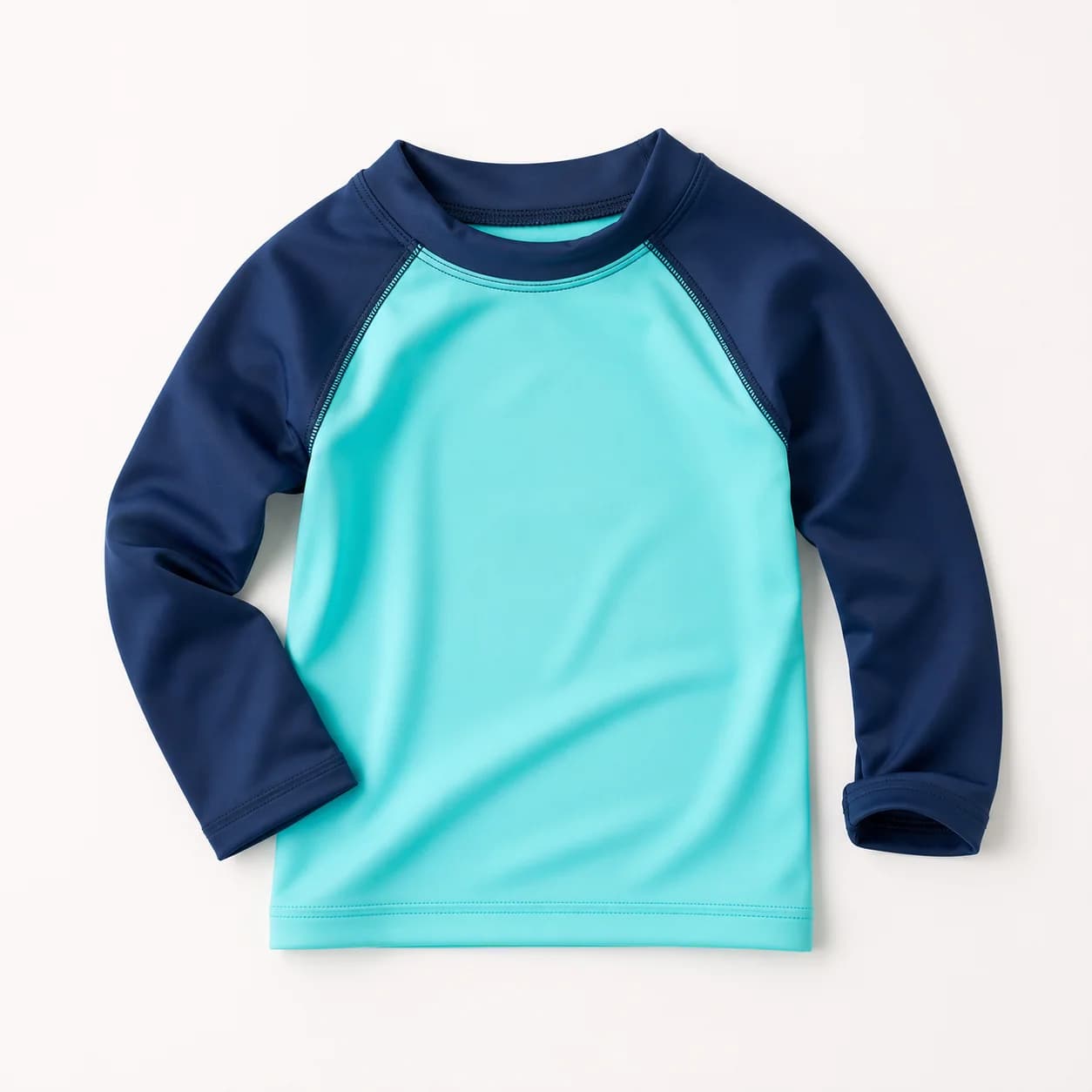
Short water play, pool trips, beach splash
Baby rash guards
Verify UPF 50 or UPF 50+, sleeve length, neck opening, and whether reviews mention easy wet removal.
Product image is a generated category visual. Verify the exact Amazon listing before buying.
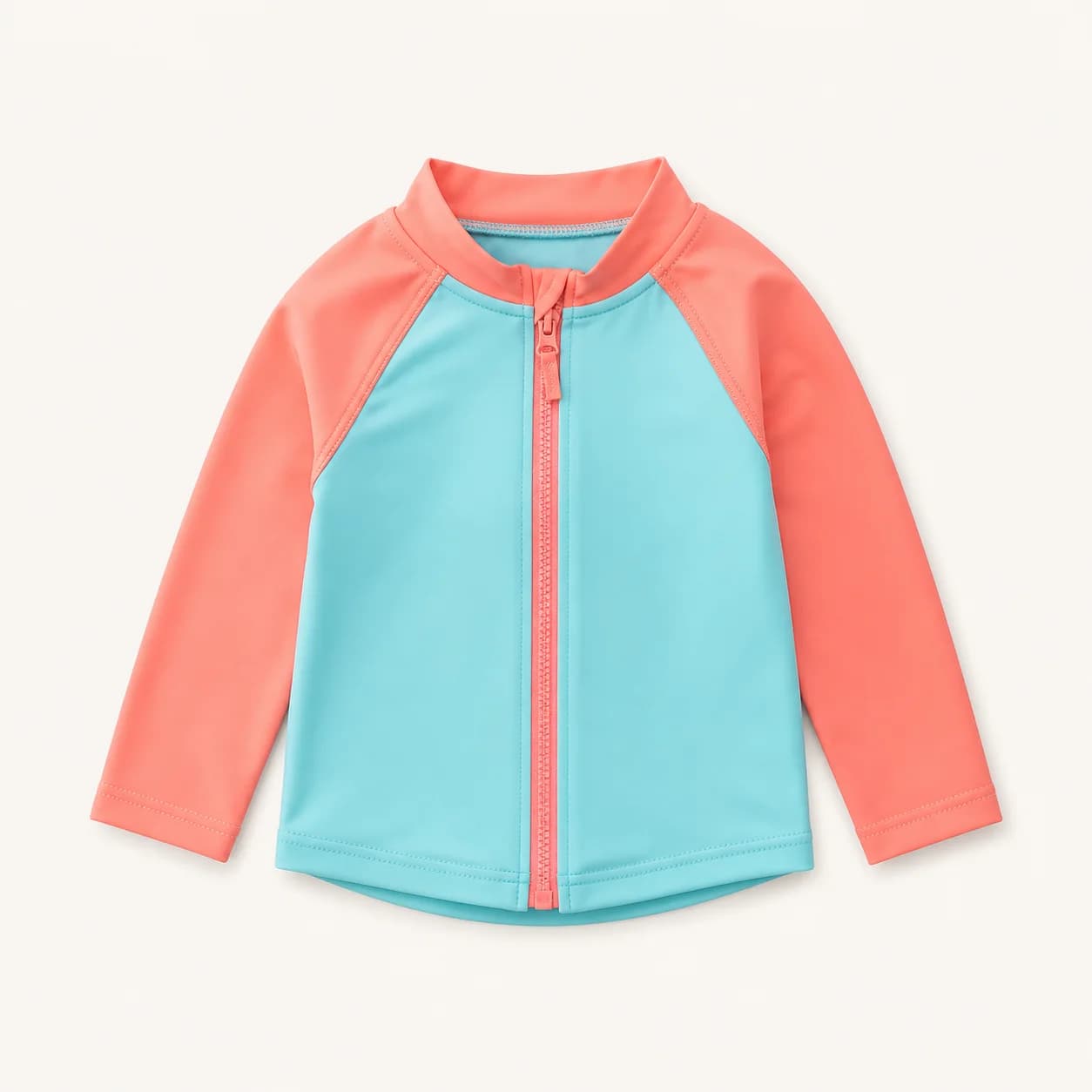
Frequent changes and toddlers who resist pullovers
Toddler zip tops
Look for zipper guards, smooth collar edges, and parent feedback about chin rub.
Product image is a generated category visual. Verify the exact Amazon listing before buying.
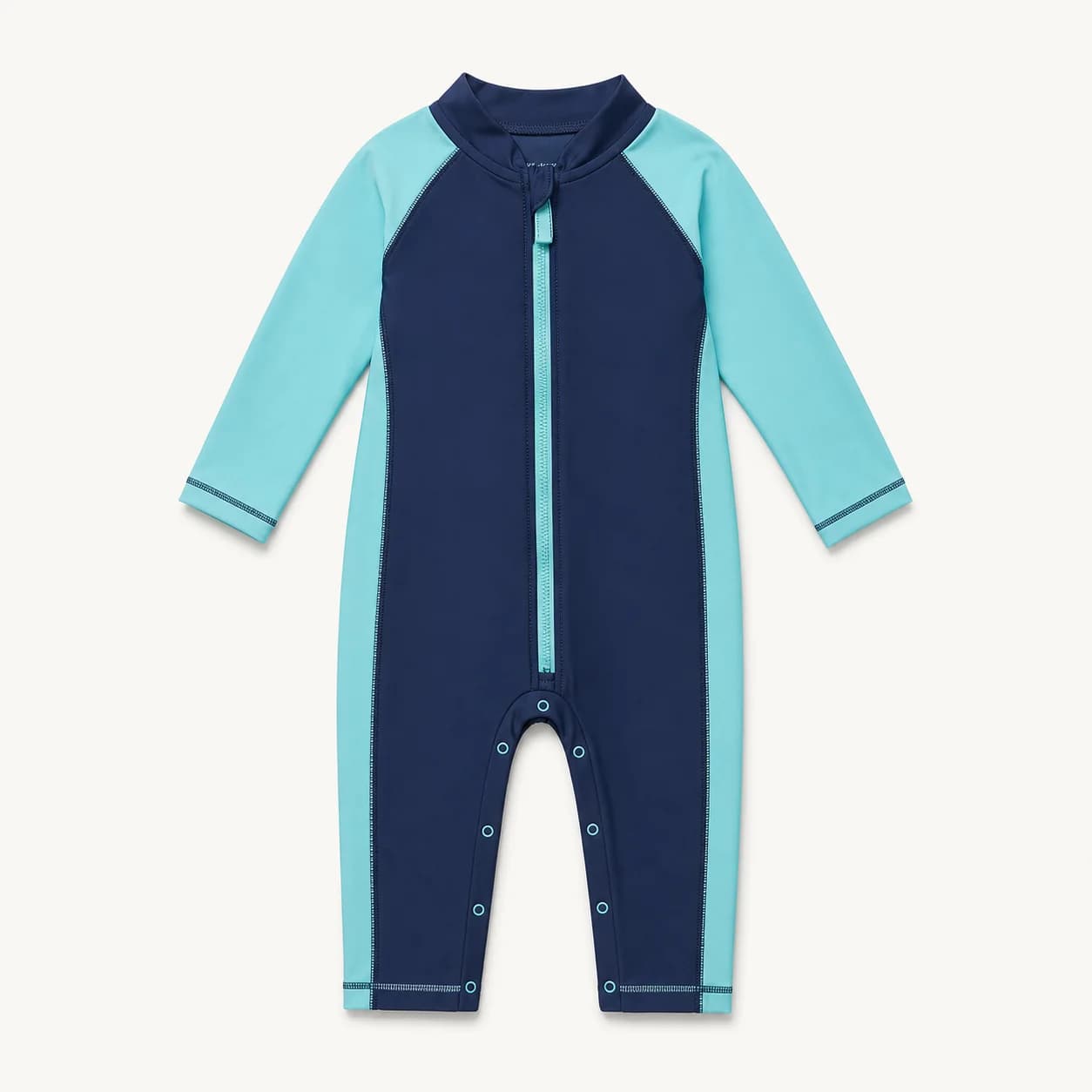
Crawlers, splash pads, and better waist coverage
One-piece swim suits
Check diaper access, snap placement, torso length, and whether legs or arms are covered enough.
Product image is a generated category visual. Verify the exact Amazon listing before buying.
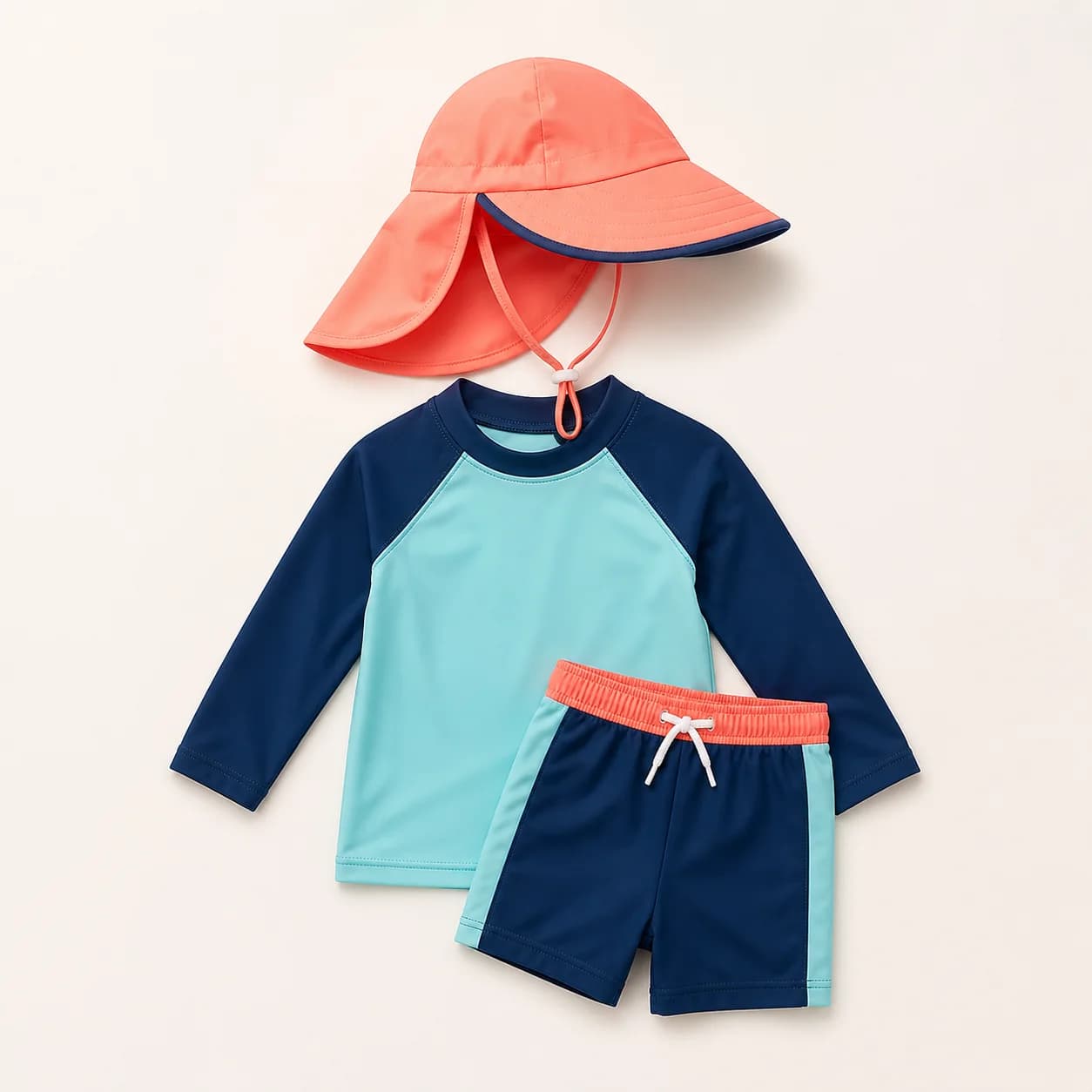
Shade backup, beach walks, stroller time
Hat and cover sets
Prioritize a brim or neck flap, adjustable chin strap, and coverage that stays put.
Product image is a generated category visual. Verify the exact Amazon listing before buying.
Who this guide is for
Parents of infants
You want shade-first coverage and clothing that does not create a changing battle.
Toddler pool families
You need durable swim tops that survive frequent on/off, snacks, sunscreen residue, and wet towels.
Beach-trip packers
You need a small rotation: swim shirt, backup shirt, hat, dry cover layer, and shade plan.
Baby UPF swim shirt comparison table
Prices and availability can change quickly. Use Amazon links as current search starting points, then verify the exact UPF claim, size chart, and care instructions on the current listing.
| Type | Best use | Coverage | Parent win | Watch out for | Shop |
|---|---|---|---|---|---|
| Baby rash guard | Short supervised water play | Arms, shoulders, torso | Simple, packable, easy to rotate | Can ride up at the belly | Search |
| Toddler zip top | Pool days and frequent changes | Arms, torso, sometimes higher neck | Easier wet on/off | Zipper rub at chin or chest | Search |
| One-piece sun suit | Crawlers, splash pads, sand play | Torso, arms, sometimes legs | Less waist ride-up | Diaper-change access varies | Search |
| Swim hat | Face, ear, and neck shade gaps | Head, face shade, neck flap if included | Small item, big coverage gap closer | Many babies remove hats quickly | Search |
| Cover shirt set | Dry shade breaks and stroller walks | Varies by shirt, hat, and shorts | Easy outfit bundle | Not always swim-first fabric | Search |

Illustrative category visual for parent decisions; the garments shown are not exact Amazon products.
Buying plans by situation
The same baby UPF shirt can be a good buy in one situation and the wrong choice in another. Use the scenario to decide whether you need easy changes, more hat coverage, a backup shirt, or a true swim-first fabric.
Beach vacation
Pack two swim tops, one hat with neck coverage, one dry cover layer, and shade you control.
Beach days create repeated wet/dry cycles. A single shirt can stay damp, sandy, or buried in a bag. For babies, shade and breaks are more important than a larger product haul.
Pool and splash pad
Choose easy on/off first: zip top, stretchy neck, or one-piece with practical diaper access.
Pool logistics are mostly about changes, towels, and comfort. Chlorine and sunscreen residue make rinsing and care labels more important.
Daycare or swim lessons
Prioritize labels, simple closures, bright colors, and a backup shirt.
Caregivers need gear that is obvious, fast, and forgiving. Skip complicated snap systems unless they are clearly easier for your child.
Boat or stroller time
Add hat and neck coverage, then control shade and reflection exposure.
Water, sand, and pavement can increase reflected exposure. A swim shirt covers only covered skin; face, ears, hands, and legs still need a plan.
Parent buying checklist
For baby swimwear, the buying decision is less about fashion and more about coverage, comfort, and whether the item survives the real logistics of wet changes.
Choose shade first, especially for infants under 6 months.
Use clothing, hats, stroller shade, umbrellas, and timing instead of relying only on sunscreen.
Verify the current product listing says UPF 50 or UPF 50+.
Check whether the fabric is meant for swim use, not just dry outdoor wear.
Avoid neck, zipper, and seam details that look irritating when wet.
Pack at least two tops for multi-day trips so one can dry while the other is ready.
Fit details that matter for babies and toddlers
Neck opening
A tiny neck hole can make wet removal miserable. Look for stretch, snaps, a zipper, or parent reviews that mention easy on/off.
Zipper guard
If you choose a zip top, check for a fabric guard at the chin and zipper backing inside the shirt.
Diaper access
One-piece suits can be great for coverage, but diaper changes depend on snap placement, zipper length, and whether the suit is wet.
Torso ride-up
Two-piece rash guards can ride up when babies crawl, are carried, or splash. Longer hems or one-piece suits reduce that gap.
Hat stay-put design
A neck flap helps only if the hat stays on. Adjustable chin straps and soft fabric edges matter.
Growth room
A little room helps comfort, but oversized sleeves, gapping necklines, and loose hats can create coverage problems.
What not to buy
Parent buyers often get pushed toward cute sets, tiny caps, or vague “sun safe” product titles. Those can be fine, but only if the practical details are there. Skip or treat these options carefully.
Vague “sun safe” listings
If a listing does not clearly state UPF 50 or UPF 50+, treat it as incomplete. Marketing words are not the same as a rating.
Tiny neck openings
They look neat in product photos but can be difficult when wet, sandy, or used with a tired baby.
Baseball-style caps only
A front-only brim does not cover ears or the back of the neck. For baby sun gear, brim and neck coverage matter.
One-shirt trip plans
Wet baby swimwear may not dry before the next outing. A backup top is a practical purchase, not an upsell.
Heavy dry-land hoodies for swim use
Some UPF hoodies are excellent dry layers but too heavy or clingy when soaked. Check whether the product is swim-specific.
Complicated closures for daycare
If another caregiver needs to change your child, simple gear is usually better than the most technical-looking option.
Simple packing list for a baby beach or pool day
This is the practical kit I would use as the shopping baseline before opening Amazon: not everything needs to be premium, but every item should solve a real gap.
- Two UPF 50 long-sleeve swim tops or rash guards
- One brimmed or neck-flap swim hat
- One dry cover layer for shade breaks
- Swim diapers or potty-training backup according to age
- Towel and dry bag for wet gear
- Shade plan: umbrella, stroller canopy, pop-up shade, or natural shade
- Sunscreen plan for exposed skin based on age and pediatric guidance
- Fresh water or feeding plan for heat and hydration needs
Source-informed sun-safety notes
This article does not replace pediatric advice. The buying recommendation is deliberately conservative: use shade, clothing, hats, and timing first; use sunscreen guidance according to age and clinician advice.
Important notes for infants
FDA guidance says sunscreen is not usually recommended for infants under 6 months and emphasizes shade, protective clothing, and asking a doctor before applying sunscreen to young babies. The Skin Cancer Foundation also emphasizes shade, stroller awnings, hats, sunglasses, and sun-protective clothing for babies.
Still deciding?
Use the parent funnel before buying.
If you are comparing baby, toddler, and big-kid sun gear for one trip, start with the parent buying path, then use the sun exposure tool to think through time, shade, and coverage.
FAQ
What is the best baby UPF swim shirt?
For a simple starting point, look for a long-sleeve UPF 50 or UPF 50+ baby rash guard with an easy neck opening. For crawlers or babies whose shirts ride up, compare one-piece sun suits.
What should babies under 6 months wear at the beach?
Shade and protective clothing should be the first line of defense. For sunscreen questions, follow pediatrician guidance and official guidance from groups such as the FDA and AAP.
Is a one-piece UPF swimsuit better than a rash guard?
A one-piece can reduce belly ride-up and improve crawler coverage. A two-piece rash guard is easier to rotate and may be easier for quick changes.
Are zip rash guards good for toddlers?
They can be very practical for wet changes, but check zipper guards, chin rub, and whether the zipper lies flat when the shirt is wet.
Should a baby swim shirt be tight or loose?
It should stay in place without restricting movement. Too tight can be hard to remove when wet; too loose can ride up and expose skin.
Do baby UPF swim shirts replace sunscreen?
They help only on covered skin. Face, hands, legs, feet, and neckline gaps still need a shade/sunscreen plan based on age and pediatric guidance.
What UPF rating should I buy for a baby swim shirt?
UPF 50 or UPF 50+ is the easiest target. Also check that the garment is designed for swim use and that the listing is current.
Do babies need swim hats?
A brimmed swim hat or neck-flap hat can help reduce face, ear, and neck exposure, but only if it stays on comfortably.
How many baby rash guards should I pack?
For a multi-day beach or pool trip, two is a practical minimum. Wet baby swimwear may not dry fast enough for the next outing.
What is the best baby UPF swim shirt for daycare or camp?
Choose simple long sleeves, bright colors, easy labels, and easy on/off. Avoid complicated zippers or snaps if caregivers need quick changes.
Can toddlers wear regular kids rash guards?
Sometimes, but toddler sizing, neck openings, and diaper/potty logistics are different. Check size charts and buyer feedback carefully.
What fabric is best for baby UPF swimwear?
Most swim-ready UPF tops use synthetic blends with stretch. The exact blend matters less than UPF rating, wet comfort, seams, and care instructions.
Is UPF 50 enough for a baby rash guard?
UPF 50 or UPF 50+ is a strong target for covered skin, but it is not a complete sun plan. Shade, hats, timing, and exposed-skin protection still matter.
What is better for babies: swim shirt and shorts or a one-piece?
A swim shirt and shorts are easier to rotate and change. A one-piece usually reduces waist ride-up and can be better for crawling. Pick based on diaper access and how active your baby will be.
Do baby rash guards keep their UPF when wet?
Swim-specific UPF garments are designed for water use, but parents should verify the current product listing and care label. Do not assume a dry-land shirt performs the same way in water.
Should I buy a baby UPF swimwear set?
Sets are convenient if every piece is useful. Check the shirt, hat, and shorts separately instead of assuming the bundle is strong because one item looks good.
What is the best toddler rash guard for easy changes?
A front-zip toddler rash guard is usually the easiest option if it has a zipper guard, soft collar, and enough room for the child to move comfortably.
Can babies overheat in UPF swim shirts?
Any clothing can contribute to heat discomfort if the child is in hot direct sun too long. Use shade, breaks, hydration or feeding plans, and watch for signs of overheating.
Are dark or light baby swim shirts better?
The UPF rating and fabric construction matter more than color alone. Light colors may look cooler, while darker colors may hide stains. Verify the listed UPF rating either way.