Best Baby Sun Hats in 2026: Infant, Toddler & Beach Hats Compared
Affiliate disclosure: SleeveShirts may earn from qualifying Amazon purchases. Recommendations are based on official guidance, current manufacturer specifications, category research, buyer-feedback patterns, and our published editorial criteria. We do not claim hands-on or laboratory testing.
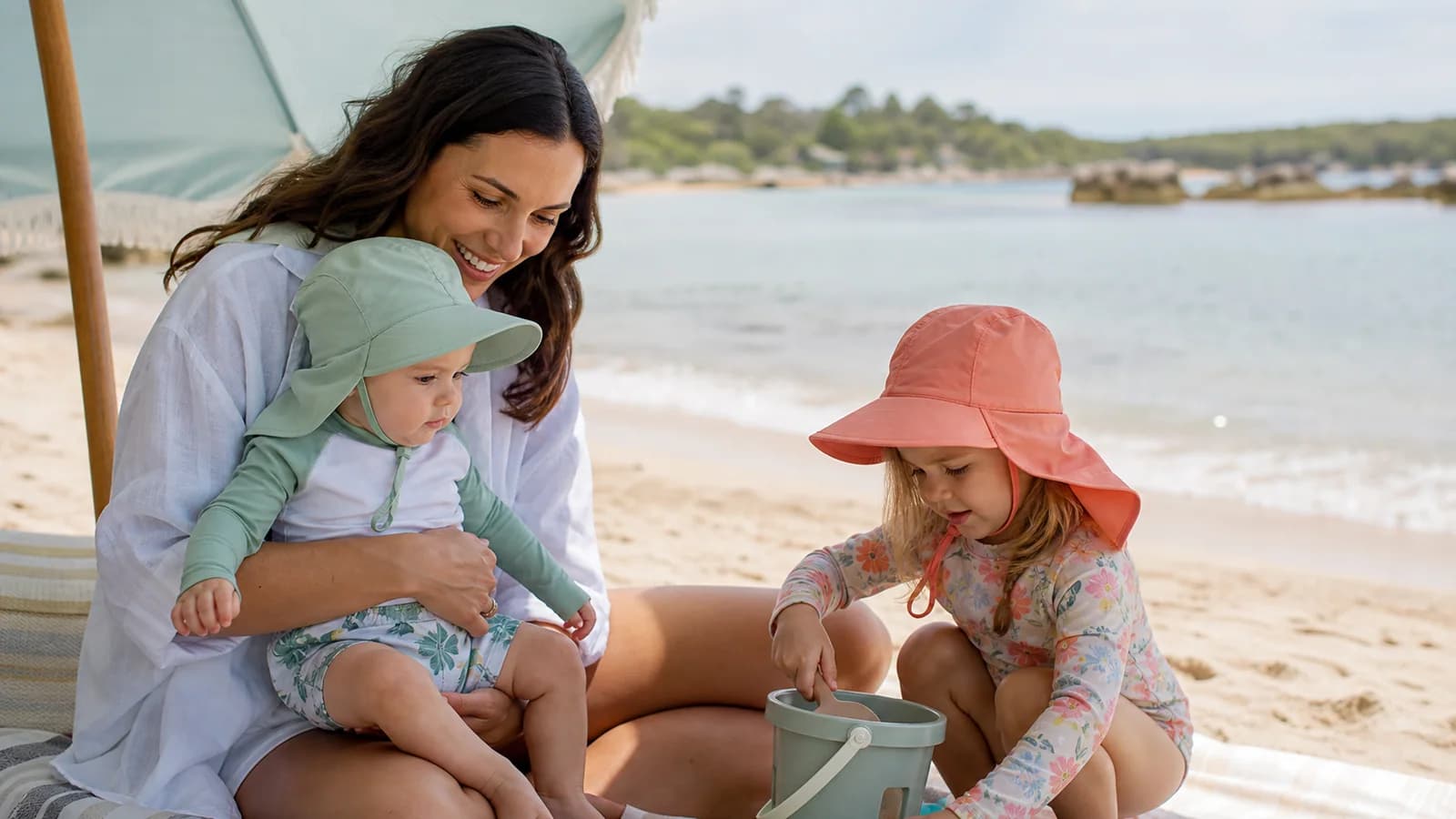
A baby sun hat has to solve more than shade. It needs age-appropriate sizing, a soft crown, coverage that stays useful when a child turns or looks down, and a retention design parents can manage safely. This guide compares infant bucket hats, toddler play hats, neck-flap designs and swim-ready options without treating a fabric label as a substitute for supervision, shade or sunscreen guidance.
Quick answer
Choose a soft, adjustable full-brim or neck-flap hat using the child's measurements as well as the age label.
For babies younger than 6 months, prioritize shade and keeping them out of direct sun; ask their pediatrician about sunscreen. Measure head circumference before choosing a soft brim, rear coverage and a child-appropriate retention system. The Kids’ Play Hat chart starts at 47 cm. Always supervise hat use and follow the maker’s safety instructions.
Quick picks
Best starting points by use case
Verify the current listing for the exact UPF claim, covered panels, size range, care instructions, seller, and return terms before buying.
Best all-around toddler format
Sunday Afternoons Kids' Play Hat-style design
This recognizable format combines a broad down-sloping brim, long neck veil, adjustable sizing and a breakaway-style chin strap. The official listing identifies which mesh areas are not UPF rated, a useful example of transparent specification.
Best infant coverage search
Soft full-brim infant hat with neck flap
For younger babies, look for a soft crown, gentle brim, rear coverage and a size chart beginning with head circumference. Avoid rigid brims that press against a stroller or car-seat headrest.
Best beach and splash use
Quick-dry toddler swim sun hat
A swim-ready hat should dry quickly, stay comfortable when damp and retain useful shape. Check whether it floats and whether the manufacturer permits saltwater or pool use.
Best budget multipack search
Adjustable baby bucket sun hat
Budget bucket hats can work for short outings, but compare brim depth, rear-neck shade, circumference and strap construction. Multipacks are only useful when each hat fits securely and the fabric claim is clear.
Who this guide is for
Use this guide if
- Parents choosing a first sun hat for an infant, crawler or active toddler.
- Families preparing for beach, stroller, pool, playground or travel days.
- Shoppers who need help interpreting age labels, head circumference and adjustment systems.
- Parents building a complete wearable sun-protection kit with swim shirts and shaded breaks.
Skip or narrow the search if
- You need a general adult hiking or travel hat; use the all-purpose UPF sun-hat guide.
- You are shopping for an older child whose head measurement falls into youth sizing rather than baby or toddler ranges.
- The child will be unattended or sleeping. Hats and straps require supervision and must follow product safety instructions.
- You need medical advice about sunscreen, heat illness or a skin condition; ask the child's qualified healthcare professional.
What official sun-safety guidance says
A fabric rating and a protective hat shape answer different questions. UPF describes the tested material; brim width, neck coverage, ear coverage, and the way the hat sits determine how much useful shade the design can create. These source notes shape our buying criteria.
Coverage still leads
CDC guidance favors a brim that shades the face, ears and back of the neck. For children, a cape or veil can provide useful rear coverage when a compact brim is easier to tolerate.
CDC Sun Safety →Child-friendly sun-specific caps exist
CDC travel guidance notes that caps with ear and neck flaps can be effective, especially for children, and recommends a broader sun-safety system rather than relying on a hat alone.
CDC Yellow Book →Design is separate from material testing
ARPANSA explains that UPF material tests do not evaluate the body coverage of the finished product. We therefore score brim, veil and fit separately from the stated fabric rating.
ARPANSA standard guidance →How we evaluate sun hats
We evaluate baby sun hats from a parent logistics perspective using official guidance, manufacturer specifications, sizing transparency and practical use signals. We do not call a product child-safe simply because it has a UPF label. The listing must also make fit, adjustment, strap style, care and covered areas understandable.
Age-appropriate coverage
A useful brim shades the face without folding into the eyes. A rear veil should cover the neck while remaining compatible with the way the child sits, crawls or plays.
Measured fit
Head circumference is more useful than a broad age range. Adjustable sizing should fine-tune a suitable base size, not compensate for a hat that is fundamentally too large.
Retention design
We look for clear manufacturer instructions and child-oriented features such as breakaway-style chin straps. Any cord or strap requires adult supervision.
Heat and moisture
Lightweight fabric, appropriate ventilation and a moisture-managing band can improve wear time. Large unrated mesh panels should be disclosed.
Washability
Baby hats encounter sunscreen, sand, snacks and water. Care instructions should be realistic, and the brim should retain useful shape after approved washing.
Parent usability
A hat that packs flat, adjusts quickly and works with a stroller is easier to use consistently. We also consider return terms because sizing varies substantially.
Model details · checked October 10, 2026
Compare the specifications that affect your choice
For babies younger than 6 months, prioritize shade and keeping them out of direct sun; ask their pediatrician about sunscreen. Choose by measured circumference, not the word “baby.” The Play Hat chart begins at 47 cm.
Prices are manufacturer references in USD for one item, before tax and shipping. Promotions, stock and seller terms can change. These source checks do not establish a match to every Amazon SKU or color pictured elsewhere in this guide. Unknown specifications are marked below; we have not tested these products.
Sunday Afternoons Kids’ Play Hat
$38 USD for one Llama Flow variant; other colors can differ.
- UPF and coverage
- UPF 50+ fabric; mesh ventilation is not rated. A hat does not cover the whole child.
- Fit and measurements
- Small 47–50 cm, Medium 50–53 cm, Large 53–56 cm. Measure the head; an infant below 47 cm needs another model.
- Fabric and construction
- Solid and printed versions use different nylon/polyester panels. Brim 7–9 cm and neck cape 13–15.5 cm vary by size.
- Care
- Hand wash cold, line dry; no bleach, iron or dry cleaning. Pack flat rather than creasing the brim.
Good fit if: Choose this if the measured head fits and a brim plus cape stays in place comfortably.
Tradeoff: The breakaway SmartStrap does not replace supervision. Mesh and gaps remain exposed; a child can still remove the hat.
Check the exact manufacturer model ↗ · Supporting fabric or size documentation ↗
Baby and toddler sun-hat comparison
The table compares practical product formats. Named examples are search starting points, not claims that one hat fits every child. Measure first and verify the current model specifications.
| Hat or category | Best use | Coverage signal | Comfort signal | Watch out for | Shop |
|---|---|---|---|---|---|
| Sunday Afternoons Kids' Play Hat | Toddler play, stroller and beach | Broad brim plus long neck veil; official UPF 50+ claim with mesh exception | Lightweight, adjustable and stroller-friendly | Size by circumference; follow strap instructions | Search |
| Soft infant legionnaire hat | Young babies and stroller outings | Front shade plus sides and rear neck flap | Soft crown and low packed volume | Check whether flap bunches behind the head | Search |
| Full-brim baby bucket hat | Everyday walking and short park visits | All-around brim; neck shade depends on depth | Simple familiar shape | Short brims may expose ears and neck as the child moves | Search |
| Quick-dry swim hat | Pool, splash pad and beach | Usually full brim or front brim plus neck flap | Designed to dry faster after splashing | Wet fabric can sag; check care and chlorine guidance | Search |
| Wide-brim toddler play hat | Playground and garden | Strong face and ear shade when brim stays shaped | Good airflow if crown is light | Large brim may catch wind or limit vision | Search |
| Budget bucket multipack | Backup hats for daycare or travel | Variable; often a shorter brim | Light and inexpensive | UPF wording, sizing and strap design may be vague | Search |
Prices, inventory, colors, seller quality, ratings, and specifications can change. Treat Amazon links as current search starting points.
Decision map
Match the hat to the child and the setting
An infant resting in a stroller and an active toddler at the beach have different fit and retention needs. Start with coverage, then check the exact age range, circumference and strap design.
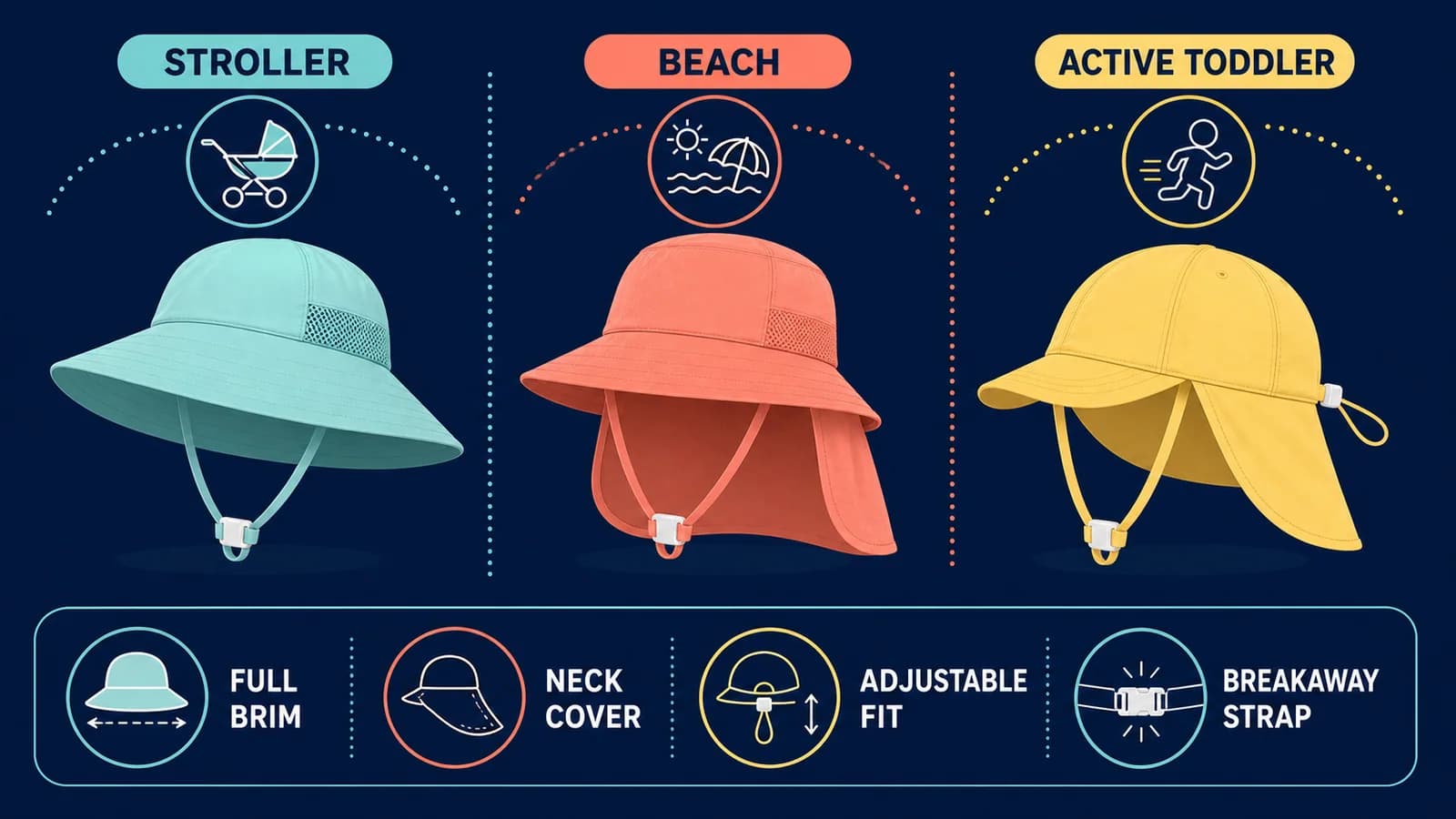
Generated category visual for editorial explanation; it does not depict exact Amazon products.
Choose by real-world situation
Stroller and carrier
A stiff rear brim can push the hat forward when it meets a seat or carrier. Soft rear coverage or a stroller-friendly veil is usually easier.
- Check the hat while the child is in the actual seat.
- Make sure fabric does not cover the nose or mouth.
- Use the stroller canopy and shade as additional layers.
Beach and pool
Wind, water and reflected brightness make a secure quick-dry hat more practical than a decorative floppy brim.
- Choose a brim that does not collapse when damp.
- Bring a dry backup for breaks and the ride home.
- Recheck fit after the hat becomes wet.
Active toddler
Movement changes everything: the brim must stay clear of the eyes, and the adjustment should hold without pressure.
- Measure the head before ordering.
- Look for a child-oriented breakaway retention feature.
- Choose a color and shape the child accepts wearing.
Detailed buying guidance
Why circumference beats age labels
Two children of the same age can have different head measurements, hair volume and comfort preferences. A label such as 6-12 months is useful only when the listing also gives centimeters or inches. Measure around the widest part of the head above the eyebrows and ears, then allow the manufacturer size chart to lead. An adjustable band should provide a small practical range rather than turn a loose hat into a fitted one.
- Measure before each seasonal replacement.
- Use the brand chart for the exact model.
- Do not size up so far that the brim falls over the eyes.
- Recheck fit after washing according to instructions.
Full brim versus neck flap
A full brim creates shade around the head and can look more like a conventional bucket hat. A neck flap gives more dependable rear coverage when the child looks down or turns away from the sun. For babies resting against a stroller, a soft veil may sit more comfortably than a rigid rear brim. For active toddlers, the best design is the one that stays positioned without obstructing sight.
- Choose a soft rear design for supported seating.
- Use a longer veil for sustained rear-neck exposure.
- Avoid brims that repeatedly flip upward in wind.
- Inspect both side and front views to assess coverage.
How to think about chin straps
Retention can keep a hat from being thrown or blown away, but cords must be treated as a safety feature that requires correct use and supervision. Look for clear product instructions and a breakaway-style system designed for children. Do not modify, knot or extend a strap in ways the manufacturer does not recommend, and remove the hat whenever its use is incompatible with a seat, sleep situation or play equipment.
- Follow the maker instructions exactly.
- Keep the child within active supervision.
- Inspect clips and adjustment hardware for damage.
- Never use an adult hat cord as a substitute for a child design.
Ventilation and the mesh exception
Parents reasonably want airflow, but product claims should identify whether mesh vents carry the same UPF rating as the solid fabric. The Sunday Afternoons Kids Play Hat, for example, states that its mesh is not rated. That transparency is useful. Small strategic vents can be a reasonable comfort trade-off; a mostly open crown deserves more scrutiny if scalp coverage is the goal.
- Read exclusions next to the UPF claim.
- Check the top and rear product views.
- Use shade breaks in hot conditions regardless of hat type.
- Stop and cool the child if comfort or behavior changes.
Build a repeatable parent routine
The hat should live with the rest of the outdoor kit rather than depend on memory at the door. Keep a labeled backup in the stroller or beach bag, check the fit before each season and wash according to the product instructions. Pair it with a suitable UPF swim top, shaded breaks and sunscreen guidance from authoritative sources or the child's healthcare professional.
- Pack one dry backup for water days.
- Check the adjustment before leaving home.
- Replace a damaged brim or unreliable fastener.
- Teach toddlers that the hat is part of the outdoor routine.
Fit and retention checks
Measure above eyebrows and ears
Use a soft tape around the widest part of the head without pulling tight. Record the measurement in both centimeters and inches so marketplace size charts are easier to compare.
Check vision and breathing
With the child upright and moving naturally, verify that the brim and flap stay away from the eyes, nose and mouth. Recheck after wind or water changes the fabric.
Test in the actual stroller or carrier
Rear brims can collide with headrests and push the crown forward. A soft neck veil may work better, but it should not bunch into an uncomfortable ridge.
Inspect retention hardware
Confirm that the strap, breakaway component and adjustment operate as the manufacturer describes. Do not use damaged hardware or improvise knots.
Amazon listing traps to avoid
Age range without measurements
A broad age label can hide a narrow or unusually deep crown. Prefer listings with head circumference and a clear adjustment range.
Cute design, shallow coverage
Decorative ears and prints do not tell you how much shade the brim creates. Inspect side and rear images and compare the stated brim or flap dimensions.
Adult-style cord on a child hat
Do not assume any chin cord is appropriate for a baby or toddler. Look for child-specific manufacturer guidance and use the product only under supervision.
UPF claim applied to every panel
Mesh or decorative panels may be excluded. Read the full specification rather than treating the title badge as a complete description.
Before checkout
Use this final checklist.
- 1The size chart matches the child's measured head circumference.
- 2The brim remains clear of the eyes, nose and mouth.
- 3The design shades the ears and back of the neck for the intended setting.
- 4The exact listing states which fabrics or panels carry the UPF claim.
- 5Any strap is child-specific, undamaged and used exactly as instructed.
- 6The care routine is realistic for sunscreen, sand and water exposure.
- 7The hat works with the actual stroller, carrier or beach setup.
- 8A shaded-break and exposed-skin protection plan is ready as well.
Sun-hat cluster
Compare the other sun-hat guides
Use the specialist route when age, water glare, wind or activity changes the buying decision.
Continue the sun-protection kit
Best baby UPF swim shirts
Compare infant rash guards, zip tops and one-piece sun suits for the rest of the beach kit.
Best UPF gear for kids
Build a broader family sun-protection checklist for playground, travel and beach days.
Sun exposure & coverage planner
Use the site tool as a planning aid before choosing coverage and timing.
Frequently asked questions
What kind of sun hat is best for a baby?
A soft, measured full-brim or neck-flap design is a strong starting point. It should shade the face, ears and neck without covering the eyes, nose or mouth. The exact choice depends on age, seating position, activity and the manufacturer safety instructions.
Should a baby sun hat have a chin strap?
Retention can be useful, but the strap must be designed and used appropriately for a child. Prefer explicit manufacturer guidance and breakaway-style features, supervise actively and never improvise or extend a cord.
How do I size a baby sun hat?
Measure head circumference above the eyebrows and ears and compare it with the exact product chart. Do not rely only on labels such as newborn, 6-12 months or toddler because head size varies.
Is UPF 50 important for a baby hat?
A clear UPF 50 material claim is useful, but fit and coverage matter too. Check whether mesh panels are excluded and whether the brim or veil shades the intended areas. A hat remains only one part of a complete sun-safety approach.
Can a baby wear a sun hat in a stroller?
Yes when the product is suitable, the child is awake and supervised, and the hat fits without being pushed forward by the headrest. Use the stroller canopy and shade as additional protection and follow product instructions.
What is the best baby hat for the beach?
Look for quick-dry fabric, a brim or flap that retains useful shape when damp, measurable sizing and secure child-appropriate retention. Bring a dry backup because a wet hat can become uncomfortable or sag.
How many baby sun hats should I buy?
One well-fitting hat plus a backup is practical for water days, travel or daycare. A multipack is not automatically better value if the fit or coverage is weak.
Does a baby sun hat replace sunscreen or shade?
No. A hat covers only part of the body. Use shade, appropriate clothing and authoritative sunscreen guidance for exposed skin, and ask a qualified healthcare professional when advice depends on the child's age or health.
Sources checked
- CDC Sun Safety Facts - Coverage and tightly woven material guidance.
- CDC Yellow Book: Sun Exposure in Travelers - Child-relevant neck-flap and broader sun-protection guidance.
- ARPANSA sun-protective clothing standard overview - Why fabric UPF testing does not replace design and coverage review.
- Sunday Afternoons Kids' Play Hat - Current manufacturer brim, veil, sizing, mesh-exception and strap specifications.
- Skin Cancer Foundation: Sun-Protective Clothing - General UPF, coverage and hat selection context.