Sunscreen vs. Sun Shirts: Which Is Better for Your Skin?
Use UPF clothing for covered skin and sunscreen for exposed areas. Compare coverage, care and practical limits before choosing your setup.
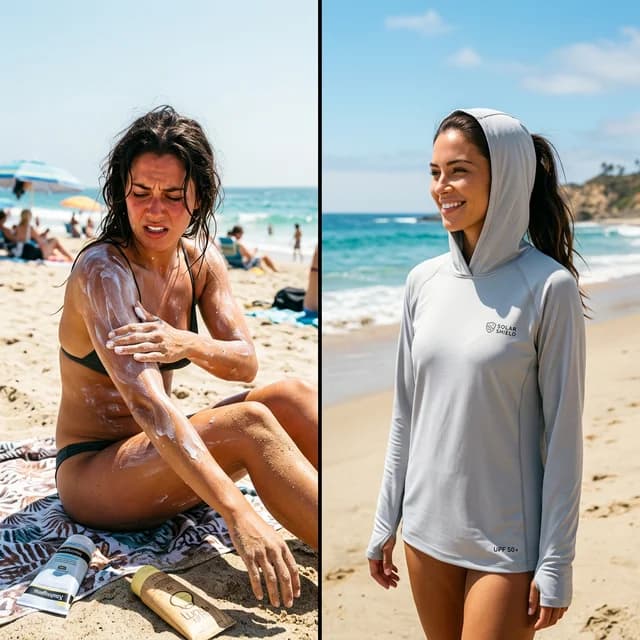
A sun shirt can cover the torso and arms, while sunscreen protects skin left exposed. Both have practical requirements: the garment must fit and cover well, and sunscreen needs correct application and reapplication.
Clothing can reduce the area you need to coat with sunscreen. It cannot cover every gap or replace shade, hats and sunglasses.
This guide compares the two options and explains how to combine them for swimming, travel and everyday outdoor use.
Table of Contents
Visual buying guide
Clothing and sunscreen cover different parts of the plan
Use clothing for the areas it covers and sunscreen for uncovered skin, alongside shade, a hat and protective eyewear.
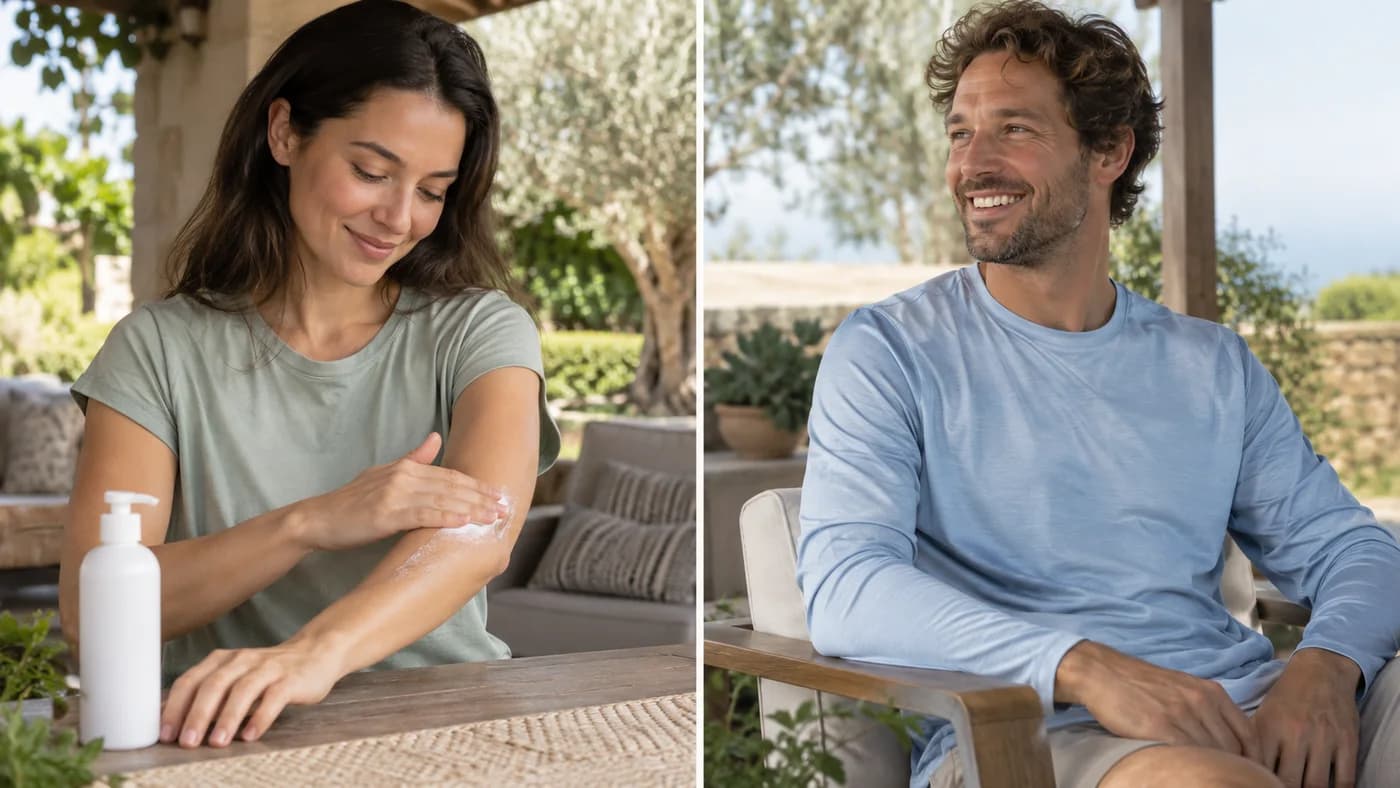
Covered fabric
Read the exact clothing label and check gaps as you move. A shirt does not cover every area of skin.
Exposed skin
Use sunscreen on uncovered skin. Reapply after swimming, sweating or toweling off, and when outdoors for more than two hours.
AI-generated, photorealistic category examples, not photographs of exact recommended products. The images do not verify UPF, fit or performance. These pictures do not demonstrate protection that stays constant under every condition.
CDC sun-safety guidance ↗1. The Consistency Problem
Apply sunscreen generously according to its label. The American Academy of Dermatology recommends broad-spectrum, water-resistant SPF 30 or higher on skin not covered by clothing.
Reapply according to the label, including after swimming, sweating or toweling. The CDC advises reapplication after more than two hours outdoors.
A shirt covers the skin beneath it. As detailed in The Science of UPF 50+, check the rating, fit and condition as well as the areas left exposed.
2. Broad Spectrum Reality
Look for broad-spectrum sunscreen, which addresses UVA and UVB. A high SPF number alone does not describe clothing coverage or replace the directions on the bottle.
UPF measures UV transmission through fabric under test conditions. A UPF 50+ label indicates about 2% or less transmission of the UV considered by the test. It does not establish complete protection for your face, hands or other uncovered areas.
3. What determines your sun-protection costs?
A shirt and sunscreen cover different parts of the same plan. Clothing can reduce the area needing sunscreen, but exposed skin still needs it. SleeveShirts does not manufacture the hoodie in this comparison and cannot promise a five-year garment life.
| Budget input | What to check |
|---|---|
| Shirt purchase | Use a dated price for the exact model and seller. Include tax, shipping and a spare if needed. |
| Sunscreen use | Track the bottle quantity and actual use for the exposed areas and applications. Do not assume one bottle lasts a fixed number of weeks. |
| Replacement and care | Inspect garment condition and follow care instructions. There is no assumed five-year replacement interval or guaranteed cost saving. |
For an estimate, add the checked shirt purchase and your sunscreen spending over a period you actually track. Compare the same exposed area and activities. A smaller sunscreen bill alone does not prove adequate protection.
4. Reef Safety and Ecology
For water trips, check local rules on sunscreen ingredients. An environmental claim on a bottle should not replace clear sun-protection labeling or correct application.
Keep exposed skin protected.
Covering more skin can reduce the area requiring sunscreen, but it does not eliminate sunscreen use. For textile choices, see our guide to Sustainable rPET Fabrics. Check the specific garment's materials and care requirements.
Beach or pool day?
If the shirt will get soaked, compare rashguard-style fit, wet comfort, and kids sizing before buying. Our UPF swim shirts guide breaks down rash guards, relaxed swim shirts, kids swim tops, and sun hoodies for water days.
5. The "Missed Spots" Epidemic
Check the areas a shirt leaves uncovered when you move or turn your head.
- The Back of the Neck: Often exposed when hiking or fishing.
- Top of the Shoulders: A collar may leave the back or sides of the neck exposed.
- Ears: Frequently forgotten and highly vulnerable.
A hood can add coverage, but openings and movement can leave gaps. Check it with your usual hat, and use sunscreen on skin that remains exposed.
6. Understanding UPF Ratings
UPF (Ultraviolet Protection Factor) measures how much UV radiation penetrates a fabric and reaches your skin.
- UPF 15-20:UPF 15 allows about 1/15 (6.7%) and UPF 20 about 1/20 (5%) of the UV considered by the test through. An ordinary T-shirt has no fixed rating without testing.
- UPF 30-40:UPF 30 allows about 1/30 (3.3%) and UPF 40 about 1/40 (2.5%) of the UV considered by the test through.
- UPF 50+:Allows about 1/50 or less of the UV considered by the test through the fabric. Coverage and garment condition still matter.
7. The Verdict
Build a setup that covers the skin you intend to protect and remains comfortable enough to keep wearing. The AAD recommends clothing, shade and sunscreen on uncovered skin together.
The Optimal Strategy:
- Choose a UPF-rated shirt with suitable coverage.
- For swimming or splash play, choose a dedicated UPF swim shirt or rash guard.
- Apply broad-spectrum, water-resistant SPF 30+ sunscreen to exposed skin.
- Reapply sunscreen as directed, after swimming or sweating, and use shade and breaks.
Sources and limits
General sun-protection guidance, not our own UV tests or medical advice.
Frequently Asked Questions
Do sun shirts make you hot?
Some sun shirts are designed to be lightweight and breathable. Comfort still depends on fabric, cut, humidity, wind and activity. A shirt should not be assumed to cool everyone more than bare skin.
Does the protection wash out?
Follow the care label and inspect wear, fading and stretch. Protection depends on the fabric and its condition; there is no universal wash count or permanent-protection promise for all sun shirts. SleeveShirts does not manufacture clothing.
Can I still get a tan through a sun shirt?
Some UV still passes through UPF-rated fabric, and gaps remain exposed. A UPF label is not permission to seek a tan or extend your time in direct sun.
Is a regular polyester shirt UPF rated?
A polyester label does not establish a UPF rating. Check the exact garment's published rating and intended use.
Plan clothing and sunscreen together.
Choose suitable UPF-rated clothing and use sunscreen on uncovered skin. Plan reapplication, shade and breaks too.
As an Amazon Associate, we earn from qualifying purchases. This helps support our research at no extra cost to you.