Best UPF Shirts for Beach Days in 2026: Swim Shirts, Cover-Ups & Sun Hoodies
Affiliate disclosure: SleeveShirts may earn from qualifying Amazon purchases. Recommendations are based on manufacturer specs, official source review, buyer feedback patterns, and SleeveShirts editorial criteria, not paid placement.
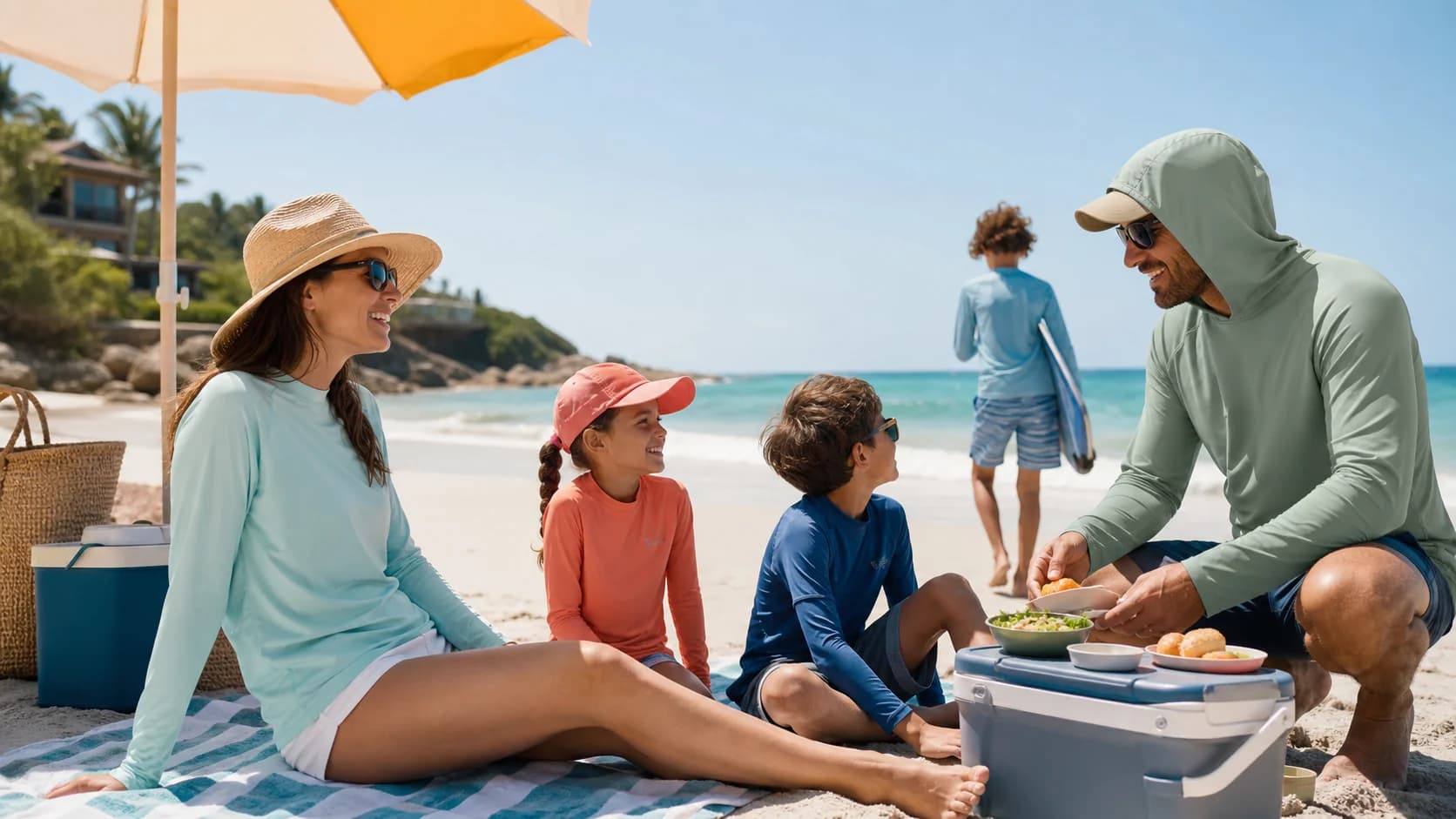
Beach UPF shirt is a broad buying intent. Some shoppers need a swim-ready rash guard. Others need a relaxed shirt for walking, a cover-up for lunch, or a sun hoodie for wind and reflected light.
Quick answer
For a beach day, pack one swim-ready shirt and one dry comfort layer.
Compare a water-use rash guard with a separate dry shirt or cover-up for walking, meals and shade breaks. Plan laundry and drying around the trip rather than expecting one garment to suit every activity.
Quick picks
Best starting points by intent
Treat these as search starting points, then verify the current listing for UPF rating, fabric, water-use language, fit, and return policy.
Best for swimming
Long-sleeve rash guard
Choose this when the shirt will spend real time in water. Stable fit matters more than relaxed style.
Best dry comfort
Loose UPF beach shirt
Better for walking, resort wear, sitting under umbrellas, and people who dislike clingy wet fabric.
Best lunch layer
UPF beach cover-up shirt
A cover-up style helps when the shopper wants sun coverage that still looks normal off the sand.
Best wind and neck coverage
Beach sun hoodie
Useful for boat rides, windy beaches, long walks, and anyone who wants hood coverage when mostly dry.
Who this guide is for
Use this if
- You want a practical shirt plan for beach, pool, cruise, resort, lake, or paddle days.
- You are choosing between rash guards, loose UPF shirts, cover-ups, and sun hoodies.
- You need family-friendly buying guidance before opening Amazon.
- You want more clothing coverage alongside shade, hats and sunscreen on exposed skin.
Skip this if
- You only need active surf gear. Use the rash guard guide.
- You only need infant or toddler gear. Use the baby UPF swim shirt guide.
- You want one shirt for every beach condition. Most trips need at least two layers.
Model details · checked October 10, 2026
Compare the specifications that affect your choice
For repeated swimming, check a water-specific cut; for dry beach time, a relaxed fishing shirt may be more convenient. Neither a loose fit nor a moisture-management feature establishes wet-fabric UPF for an unverified model.
Prices are manufacturer references in USD for one item, before tax and shipping. Promotions, stock and seller terms can change. These source checks do not establish a match to every Amazon SKU or color pictured elsewhere in this guide. Unknown specifications are marked below; we have not tested these products.
Columbia Terminal Tackle PFG Sea Creature Long Sleeve, style 2156781
$45 USD for one shirt, White variant.
- UPF and coverage
- UPF 50, Omni-Shade Broad Spectrum. Omni-Wick is a separate moisture-management feature.
- Fit and measurements
- Regular fit; S–XXL were listed. Fishing shirt with no hood, rather than a compression surf rash guard.
- Fabric and construction
- 100% polyester.
- Care
- Machine wash, no bleach, tumble dry; the page also permits ironing and excludes dry cleaning. Check the label for temperatures.
Good fit if: Choose this for a relaxed beach or fishing layer when you want rated fabric without a tight water fit.
Tradeoff: The page positions it for fishing. Do not assume a regular fishing cut will stay close during surf or snorkeling.
Kanu Surf Men’s Solid Long Sleeve Swim Shirt
$24.99 USD for one shirt, Black/Small variant.
- UPF and coverage
- UPF 50+ on the manufacturer page.
- Fit and measurements
- S–XXL were listed. The maker describes a looser fit than a traditional rash guard; raglan sleeves and flatlock seams.
- Fabric and construction
- A full fiber percentage was not provided on the checked page.
- Care
- A complete wash/dry instruction was not provided on the checked page; follow the label.
Good fit if: Choose this if you want a loose swim tee and the checked price suits your budget.
Tradeoff: Loose fabric may move in the water. Check waist and sleeve reach before choosing it for snorkeling.
Lands’ End Women’s Long Sleeve Relaxed UPF 50 Rash Guard, item 246954
$49.95 USD regular price for one shirt. Lower promotional prices varied by selection and conditions.
- UPF and coverage
- UPF 50 as named on the manufacturer page.
- Fit and measurements
- Regular, Petite, Plus and Long Torso options were shown. Regular XS (2–4) through XL (18) were listed; this is not a numeric Plus body-measurement chart.
- Fabric and construction
- The checked page did not expose a complete fiber specification. Confirm the exact color and size on the garment listing.
- Care
- The checked page did not expose complete care directions; check the label.
Good fit if: Choose this if a relaxed cut or a separate torso/Plus option matters more than a compression fit.
Tradeoff: The shirt is not documented here as providing bra support. Check your swim top underneath and verify the selected fit’s measurements.
Comparison table
Beach buying intent is mixed. A shirt that is great in water can feel cold and clingy at lunch. A shirt that looks good on a boardwalk may be poor for snorkeling.
| Type | Best use | Fit | Coverage | Watch out for | Shop |
|---|---|---|---|---|---|
| Rash guard | Swimming, surf, snorkel, paddle | Close to athletic | Arms, shoulders, torso | Not always comfortable after leaving water. | Search |
| Loose beach shirt | Walking, pool, travel, shade breaks | Relaxed | Arms and torso | Can ride up in active water. | Search |
| Cover-up shirt | Lunch, resort, boardwalk | Relaxed drape | Torso and arms depending on cut | Not always swim-ready. | Search |
| Sun hoodie | Boat, wind, long walks, dry coverage | Relaxed layer | Arms, torso, neck and head if hood stays up | Can feel warm if fabric is heavy. | Search |
Prices, ratings, inventory, and product details can change. Verify the current listing before buying.
Infographic
Beach UPF shirt decision map
Beach shoppers need different shirts for swimming, sitting under shade, walking, lunch breaks, and boating. Match the shirt to the part of the day.
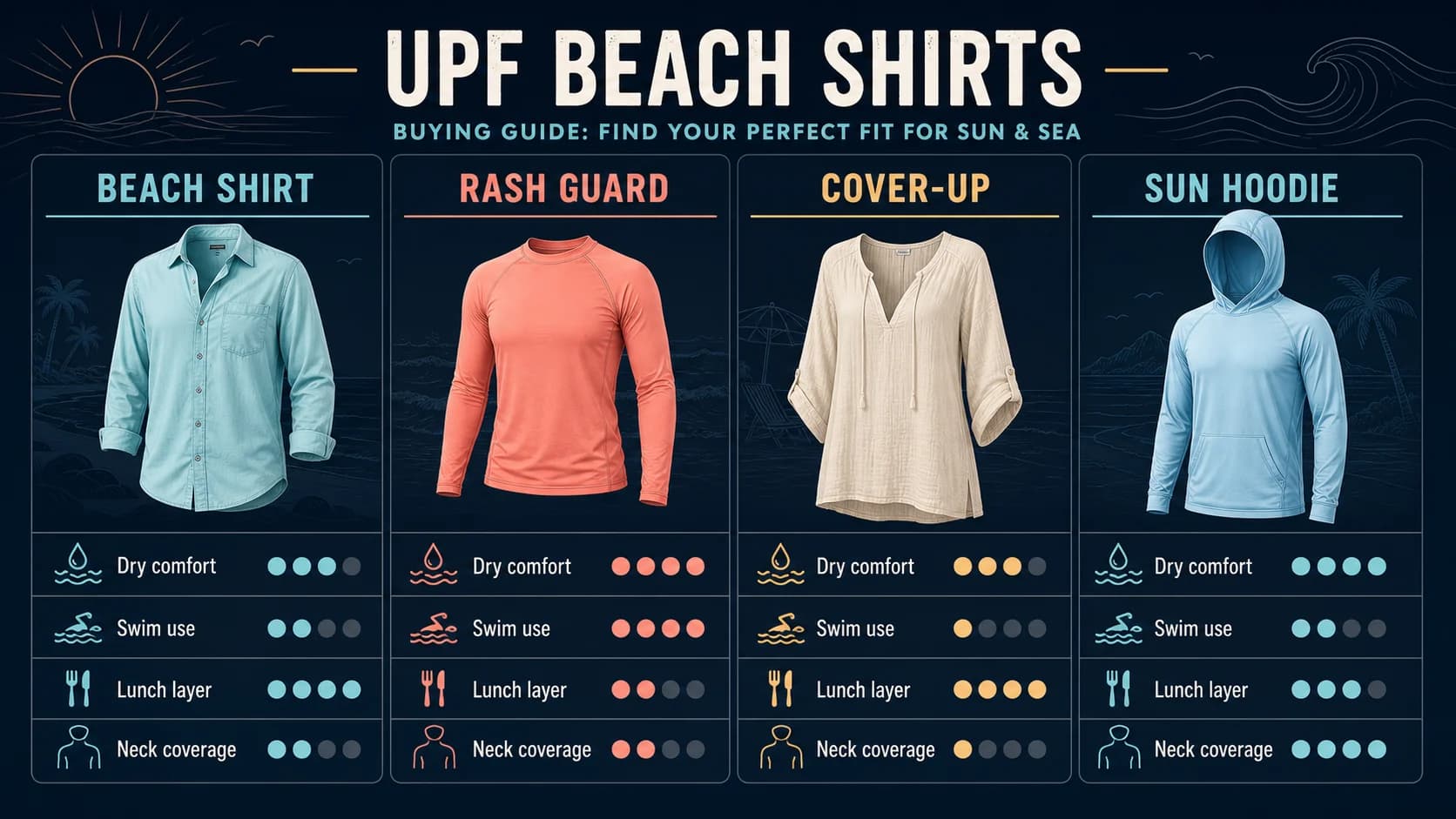
How to choose before opening Amazon
Choose the activity and fit first, then verify the selected listing’s size chart, fabric and care.
Beach plus water
Use a swim-specific rash guard for the water and a dry layer after. One soaked shirt rarely feels good all day.
Resort and cruise
Search for relaxed UPF beach shirts and cover-ups that work around food, towels, and walking.
Kids beach day
Buy for backups, easy neck openings, and bright colors. Kids need a dry option ready after water play.
Boating beach
A sun hoodie or collared fishing shirt can make more sense than a rash guard if the shirt stays mostly dry.
Sensitive skin comfort
Look for soft seams, looser fit, and coverage that reduces sunscreen dependence on arms and shoulders.
Budget family packing
Search for multipacks and simple basics, then verify the UPF claim and wet-use feedback.
Details that matter in real use
Separate wet and dry jobs
A wet rash guard is useful in water and often annoying after. A dry cover layer improves comfort and helps the wearer keep coverage on longer.
Coverage gaps decide the add-ons
Basic shirts leave face, ears, hands, legs, and neckline gaps. Hats, sunglasses, shade, and sunscreen still matter.
Do not overbuy features
For beach use, a simple comfortable shirt with clear UPF information can beat a technical shirt that nobody wants to wear.
Amazon listing traps to avoid
Check these details on the selected product as a final filter before opening checkout.
Trap: buying a cover-up and expecting a swim shirt
A cover-up can be excellent for walking to lunch, but it may not be designed for repeated swimming. If the listing emphasizes resort wear, crochet, linen, or fashion styling without swim-use language, treat it as a dry layer.
- Use cover-ups for dry comfort, not active water unless the listing says otherwise.
- Check whether the fabric becomes heavy or transparent when wet.
- Pair cover-ups with a real rash guard for swimming days.
Trap: assuming a sun hoodie is always cooler
A sun hoodie adds hood and neck coverage, but the wrong fabric can feel warm on still humid beaches. It works best for wind, walking, boating, and reflected-sun days, not necessarily for sitting in dead heat.
- Check fabric weight and breathability language.
- Use light colors and looser fits when heat is the main complaint.
- Choose swim-specific tops for repeated water use.
Before you buy
Use this checklist before checkout.
- 1Decide whether the shirt will be used in water, mostly dry, or both.
- 2Verify the current UPF rating on the listing.
- 3Check fabric weight and whether reviews mention warmth or cling.
- 4Match neckline and hood coverage to real exposure.
- 5Buy at least one dry backup for kids or multi-day trips.
- 6Use sunscreen for exposed areas and reapply around water.
- 7Avoid treating decorative cover-ups as swim shirts unless the listing supports it.
Related swim and sun-protection guides
Use these internal guides before shopping if the wearer, activity, or coverage need is more specific than this page.
Source-informed sun-safety notes
This guide is for shopping education, not medical advice. Clothing can reduce exposed skin under the fabric, but a full sun plan still includes sunscreen, hats, sunglasses, shade, timing, and checking the current garment label.
What the source review supports
- UPF is a fabric rating for how much UV passes through clothing; it applies to covered skin, not exposed areas.
- Wetness, stretch, transparency, fabric construction, and coverage gaps can change how useful a garment is in real use.
- Sunscreen is still needed for face, ears, hands, feet, legs, and neckline gaps, and no sunscreen should be treated as waterproof.
Still deciding?
Choose the path first, then shop.
If the result still feels unclear, use the search page or the activity recommender before opening Amazon. The goal is to avoid buying the right-looking shirt for the wrong use case.
FAQ
What is the best UPF shirt for the beach?
For swimming, choose a UPF 50 rash guard. For walking, shade breaks, and lunch, choose a loose UPF beach shirt or cover-up. Many beach days work best with both.
Can I wear a regular UPF shirt in the ocean?
Sometimes, but check the listing. A dry-land UPF shirt may feel heavy, clingy, or transparent when soaked. For frequent swimming, use swim-specific language as the filter.
Are sun hoodies good for the beach?
Yes for dry coverage, boat rides, walks, and windy shade breaks. They are not always the best choice for repeated swimming.
Do beach UPF shirts replace sunscreen?
No. They only cover the skin under the fabric. Sunscreen is still needed for face, ears, hands, legs, feet, and neckline gaps.
How many beach UPF shirts should I pack?
Two is a practical starting point for adults on a multi-day trip. Kids often need more because wet and sandy shirts may not be wearable again the same day.
What is the best UPF beach shirt for a cruise?
For cruises, a relaxed UPF shirt or cover-up often works better than a tight rash guard because it can move from excursion to lunch. Pack a true rash guard separately if swimming or snorkeling is planned.
Should I pack a dry UPF shirt after swimming?
Yes for most multi-hour beach days. A dry layer helps people keep coverage on after a wet rash guard becomes cold, sandy, or uncomfortable.
Are button-up shirts good for the beach?
They can be good for dry walking, fishing, and lunch breaks, especially if they are light and vented. They are usually not the best choice for repeated swimming unless the listing supports water use.
What is the best UPF beach shirt for walking all day?
Choose a loose, breathable long-sleeve UPF shirt or lightweight sun hoodie rather than a tight rash guard. Walking comfort depends on airflow, shoulder movement, and whether the fabric stays tolerable when sweaty.
What is the best UPF beach shirt for hot, humid weather?
Look for a relaxed light-color shirt with clear UPF information, breathable fabric, and enough room for airflow. Tight swim shirts can still protect well in water, but they often feel warmer during long dry beach walks.