Sun Hoodie vs. Arm Sleeves: Coverage, Fit & Heat Trade-Offs
Choose a sun hoodie for continuous upper-body coverage or arm sleeves for removable coverage. Comfort depends on the exact fabric, fit, humidity, wind, and activity—not a universal cooling winner.
📋 Quick Decision
- 🧥 Hoodies: One garment can cover the torso, arms, neck, and part of the head when it fits correctly.
- 🧤 Sleeves: Easy to remove and pair with short sleeves, but shoulder, neck, wrist, and hand gaps need a plan.
- 🔬 UPF evidence: Verify the exact garment claim; wetness, stretch, wear, and chemicals can reduce protection.
- ⚠️ Fit: Check seam placement, upper-arm grip, cuff pressure, and coverage through movement.
- 🌦️ Heat: Neither format is always cooler; compare airflow, contact, moisture, weather, and exertion.
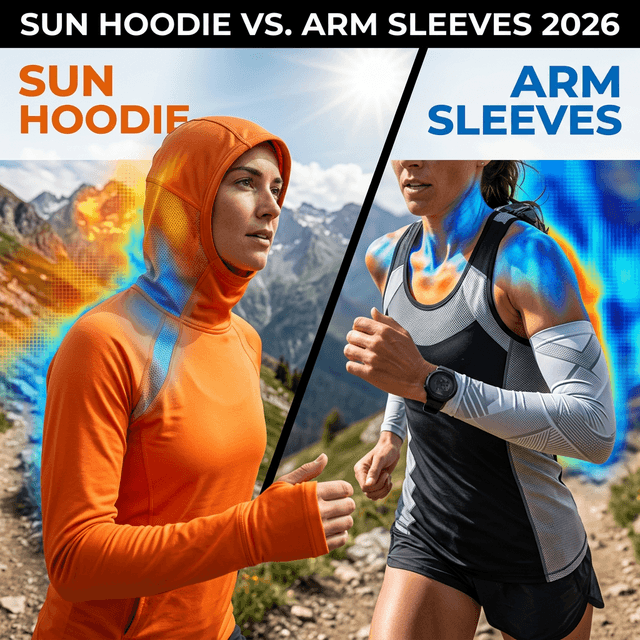
01. Start With Coverage and Removability
A sun hoodie and a pair of arm sleeves solve different clothing problems. A hoodie simplifies coverage across the upper body. Sleeves let you add or remove forearm and upper-arm coverage while keeping the shirt underneath unchanged.
The fabric rating applies only where the garment covers and remains in place. Sleeves can slide down or stop below the short-sleeve hem; hoodies can pull back at the wrists, face, or waist. Check those gaps during the movements you actually perform.
Public-health guidance treats clothing as one part of a broader sun-safety plan. The CDC recommends protective clothing alongside shade, hats, eyewear, and sunscreen on exposed skin. This comparison therefore focuses on practical garment coverage, not a promise that either format prevents sunburn or replaces the rest of the plan.
Visual buying guide
Two coverage setups to check in motion
Look at the spaces between the garments as well as the fabric they cover. Neither setup covers every exposed area.
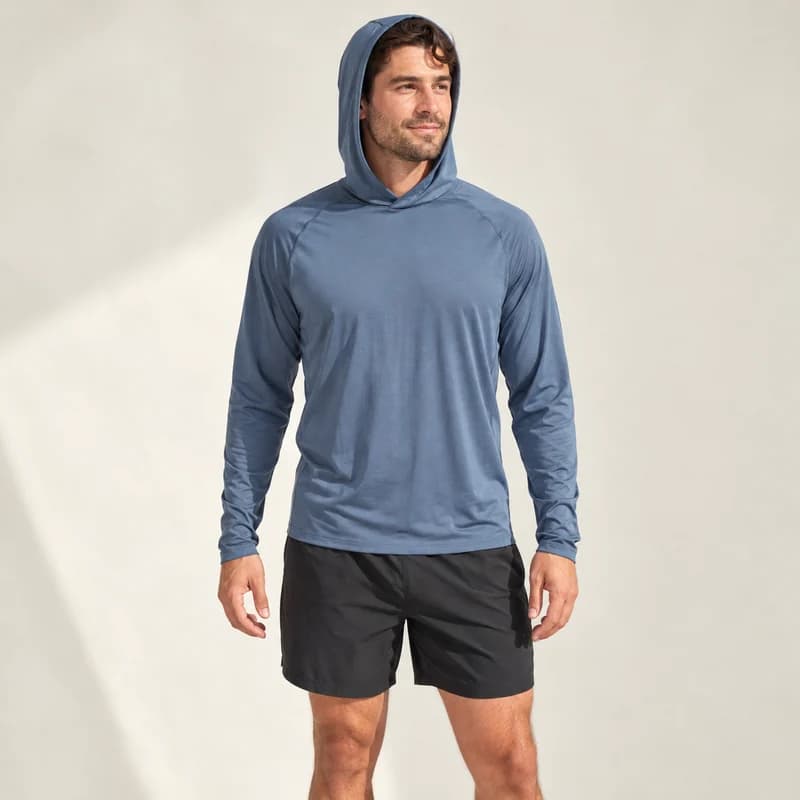
Sun hoodie
Check the hood, neck, wrists and waist while turning and reaching. A hood can shift, and the face remains exposed.
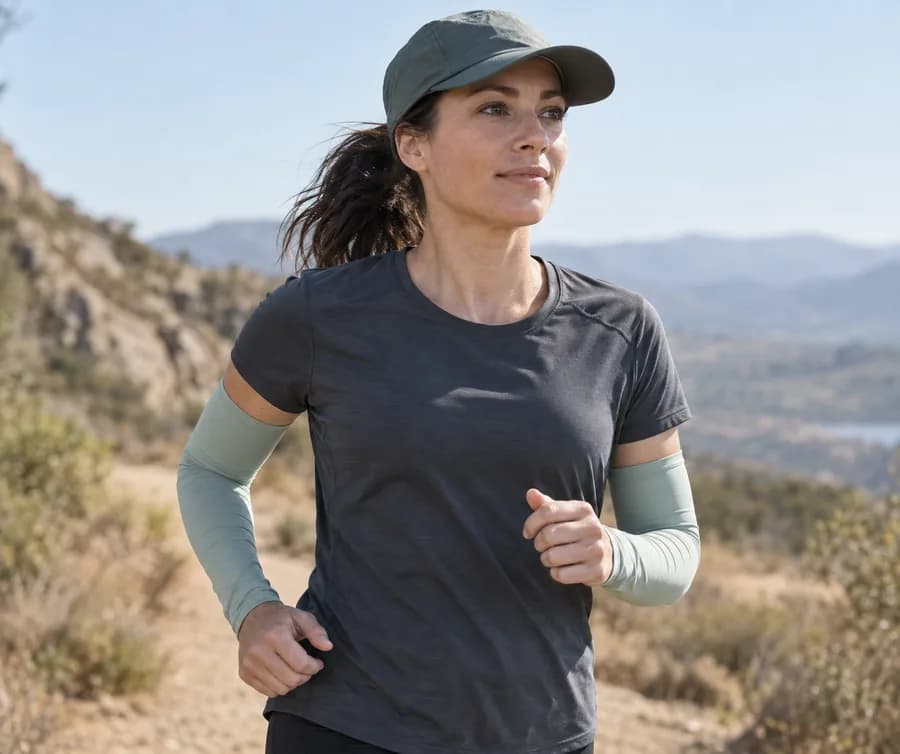
Tee + arm sleeves
Check for gaps above the sleeve tops and for sleeves slipping during movement. Read both the tee’s and sleeves’ own ratings.
AI-generated, photorealistic category examples, not photographs of exact recommended products. The images do not verify UPF, fit or performance. This comparison shows garment geometry, not a thermal test or a measurement of body temperature.
CDC sun-safety guidance ↗🚨 Technical Red Flags: 2026 Audit
1. Raised seams against skin or equipment
Raised seams can rub during repetitive arm movement. Inspect where seams sit under backpack straps, against the torso, and inside the elbow, then use the return window for a dry movement check.
2. Fabric "White-Out" (Excessive Stretch)
ARPANSA warns that stretching can reduce a material's protection. A palm-stretch check may reveal obvious strain, but it cannot verify a UPF value; buy the correct size and confirm the exact label.
3. Uncomfortable Upper-Arm Grippers
A gripper that rolls, pinches, or irritates the skin is a fit failure regardless of price. Check the published upper-arm measurement and stop using a sleeve that causes persistent irritation.
02. Heat and Moisture Trade-Offs
A loose sun hoodie can leave space for air to move between skin and fabric, but hood shape, neck opening, hem, fabric permeability, wind, and body movement all affect whether that space feels comfortable.
A close-fitting sleeve places more fabric in contact with the arm and can move moisture to the outer surface, while leaving the torso in a short-sleeve shirt. That modularity can be useful during cycling or running, but it does not guarantee a lower skin or core temperature.
SleeveShirts did not run a climate chamber, airflow test, skin-temperature comparison, or timed drying trial for these formats. Treat product cooling language as a feature claim unless the brand publishes a comparable test method and result.
Humidity limits evaporation for both formats. Wind can improve convective and evaporative heat transfer, but fabric that feels comfortable in moving air may feel different during a stationary break. Use our performance-fabric guide to evaluate construction language without turning it into an invented temperature score.
The practical test is fit and use: move through the full activity range, check whether the sleeve slips or binds, and confirm that the hoodie does not interfere with vision, hearing, helmets, packs, or other equipment.
03. Fabric and Construction Choices
Fiber names and branded technologies are not enough by themselves. Compare the exact UPF claim, fabric weight when disclosed, elastane content, seam layout, surface feel, care instructions, and whether the construction matches the activity.
Polyester + Elastane
Common in stretch sleeves and hoodies. Compare knit density, stretch recovery, published UPF, and care rather than assuming all blends perform alike.
Nylon + Elastane
Often used for a smooth hand feel and close fit. Verify the exact product's chlorine, saltwater, and care positioning before using it for swimming.
Cooling Additives
Minerals or surface treatments may change touch or moisture behavior. Without comparable published testing, do not convert a cooling claim into degrees or wear-time promises.
04. The "Protection Gap" Audit
Check the gap between a short sleeve and an arm sleeve, especially while wearing a pack. Straps and movement can uncover the shoulder or upper arm. Check neck coverage separately.
Exposure conditions vary with UV Index, elevation, cloud, reflection, time, and location. Whatever the setting, protect the uncovered shoulder, neck, face, wrist, and hand using the rest of your sun-safety plan.
A hoodie reduces the number of separate pieces, but it still needs correct coverage at the face, neck opening, wrists, and waist. No garment protects skin it does not cover.
2026 Technical Performance Matrix
| Metric | Sun hoodie | Arm sleeves |
|---|---|---|
| Heat strategy | Loose torso coverage; ventilation depends on fabric and openings | Close arm contact; removable while the base shirt remains |
| Coverage pattern | Torso and arms, plus head/neck where the hood stays positioned | Arms only; check shoulder, wrist, hand, neck, and torso gaps |
| Drying | More total fabric; verify the exact garment's construction and claim | Less total fabric; drying still depends on material and conditions |
| Fit checks | Hood stability, neck opening, sleeve reach, hem, equipment compatibility | Upper-arm grip, cuff pressure, seam position, length, hand coverage |
05. The Final Verdict: Who Wins?
Choose a Sun Hoodie When Coverage Simplicity Wins
A sun hoodie is the better starting point when you want one upper-body layer and can tolerate the hood, torso fabric, and longer sleeves. Protect exposed face and hand areas separately and verify that the hood remains compatible with your activity and equipment.
The Specialist Choice: Arm Sleeves
If you want modular arm coverage for cycling, running, golf, driving, or gardening, sleeves can be the more flexible format. Use our sun-protection arm-sleeve buying guide to compare verified UPF evidence, fit, grip, hand coverage, fabric, and care before choosing a pair.
Pillar Knowledge Support
People Also Ask: Sun Hoodie vs. Arm Sleeves (2026)
Are sun sleeves as effective as a sun hoodie for total UV protection?+
Do sun hoodies make you hotter than wearing a short-sleeve shirt with sun sleeves?+
What is the best material for sun sleeves for maximum cooling?+
Can you wear sun sleeves for both swimming and hiking?+
How do you know when UPF clothing (hoodies or sleeves) needs to be replaced?+
Sources and evidence boundary
- CDC — Sun Safety Facts: clothing, shade, hats, eyewear, and sunscreen on exposed skin.
- ARPANSA — Australian sun protective clothing standard: coverage limits and the effects of wetness, stretch, wear, and chemicals.
- ARPANSA — Sun protection using clothing: fabric construction, tension, color, additives, and garment condition.