Best Hiking Shirts for Hot Weather: 3 Exact Models Compared
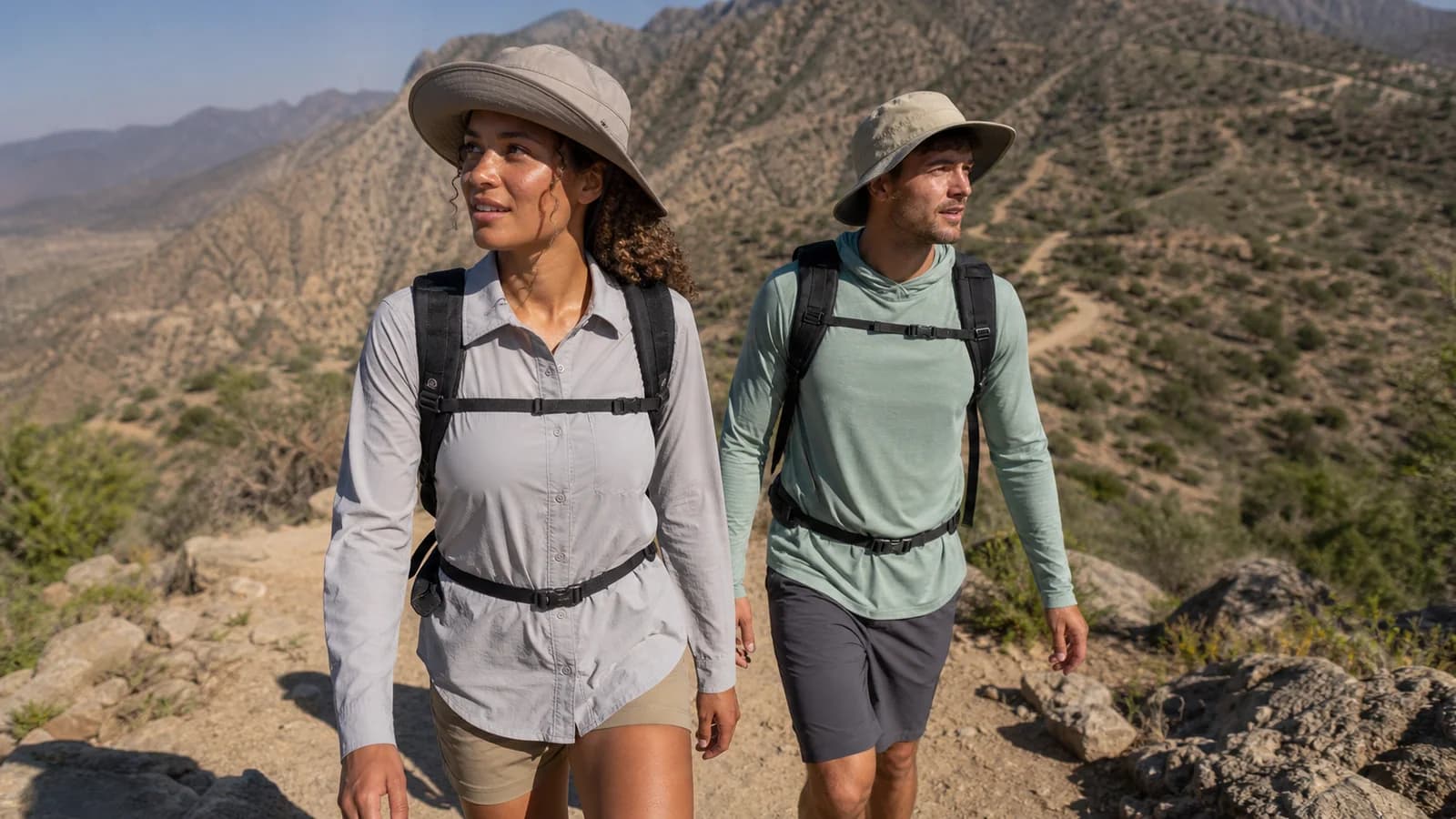
Start with your route, pack and coverage needs. Compare three current long-sleeve models by cut, coverage and care. Outdoor Research Echo offers a trim hooded cut with color-specific UPF; Patagonia Capilene Cool Daily is a regular crew with no published current UPF number; Columbia Terminal Tackle is a rated crew marketed for fishing that may also suit a hiker after a pack try-on.
Direct answer
Match coverage and fit before choosing by fabric weight
Consider Echo for a trim integrated hood, Terminal Tackle for a regular UPF 50 crew, or Capilene Cool Daily if its regular cut and care suit your use and a documented UPF rating is not a requirement. No matched cooling, drying or abrasion test ranks these models. Check the neck and hands separately and plan shade and sunscreen for exposed skin.
Affiliate disclosure: SleeveShirts may earn from qualifying Amazon purchases. The shortlist is based on practical criteria, not paid placement.
Amazon inventory, sellers, specifications, ratings, and prices can change. Open the current listing and verify the exact size chart, material, coverage, and return terms.
Quick picks
Start with the format that fits the job
Compare these 3 options, then check the exact model, size and seller.
Trim integrated hood
Outdoor Research Men’s Echo Hoodie 287625
UPF 15 light colors / 20 dark colors; check the chosen color and hood over your cap.
Regular rated crew
Columbia PFG Terminal Tackle 1388261
UPF 50 and regular fit. A fishing crossover; no hood and no measured pack-abrasion result.
Regular crew and simple care
Patagonia Capilene Cool Daily 45181
Warm wash and low tumble care without softener. No current numerical UPF statement.
What the official guidance changes about this purchase
Manufacturer prices and model details checked October 10, 2026, in USD for one shirt before tax and shipping. Reference prices are not live Amazon offers.
Plan for weather, water, and route conditions
The National Park Service advises hikers to check weather, know the route and limits, carry water, wear appropriate clothing, and turn around when conditions worsen. A premium shirt cannot repair a poor heat or water plan.
National Park Service →Heat strain includes exertion and clothing
NIOSH describes heat stress as a combination of environment, metabolic heat, clothing, and personal protective equipment. The right layer depends on pace, humidity, sun, pack, and the rest of the system.
CDC/NIOSH Heat Stress →UPF is affected by use and construction
WHO explains that fabric structure, color, stretch, wetness, wear, condition, and garment design affect protection. A rating must be interpreted with real fit and coverage.
World Health Organization →How we evaluate the category
SleeveShirts compares publicly available UPF statements, fabric and construction details, weight when disclosed, fit and size charts, vent and hood geometry, pack-contact features, care instructions, return signals, and recurring fit issues. We do not claim trail testing, laboratory measurements, permanent prices, or universal cooling performance. Recommendations identify which format best fits a trail scenario and what the buyer must verify.
Air and moisture pathway
A relaxed cut, permeable fabric, controllable openings, and realistic drying behavior matter more than unsupported cooling terminology.
Coverage geometry
Sleeve, cuff, hem, collar, and hood choices should match expected UV exposure without creating an unmanageable heat layer.
Pack compatibility
Shoulder seams, chest pockets, back vents, zippers, and fabric texture need to remain comfortable under loaded straps and a hip belt.
Movement fit
The shirt should preserve overhead reach, pole movement, scrambling, and a long stride without exposing the lower back or binding the shoulders.
Trail durability
Lower fabric mass does not prove lower abrasion resistance. Compare construction and any model-specific test, then check brush, rock and pack contact for your route.
Verifiable protection claim
Prefer a numerical UPF statement for the exact garment and panels, with enough detail to distinguish tested evidence from a generic UV-protection phrase.
Visual buying framework
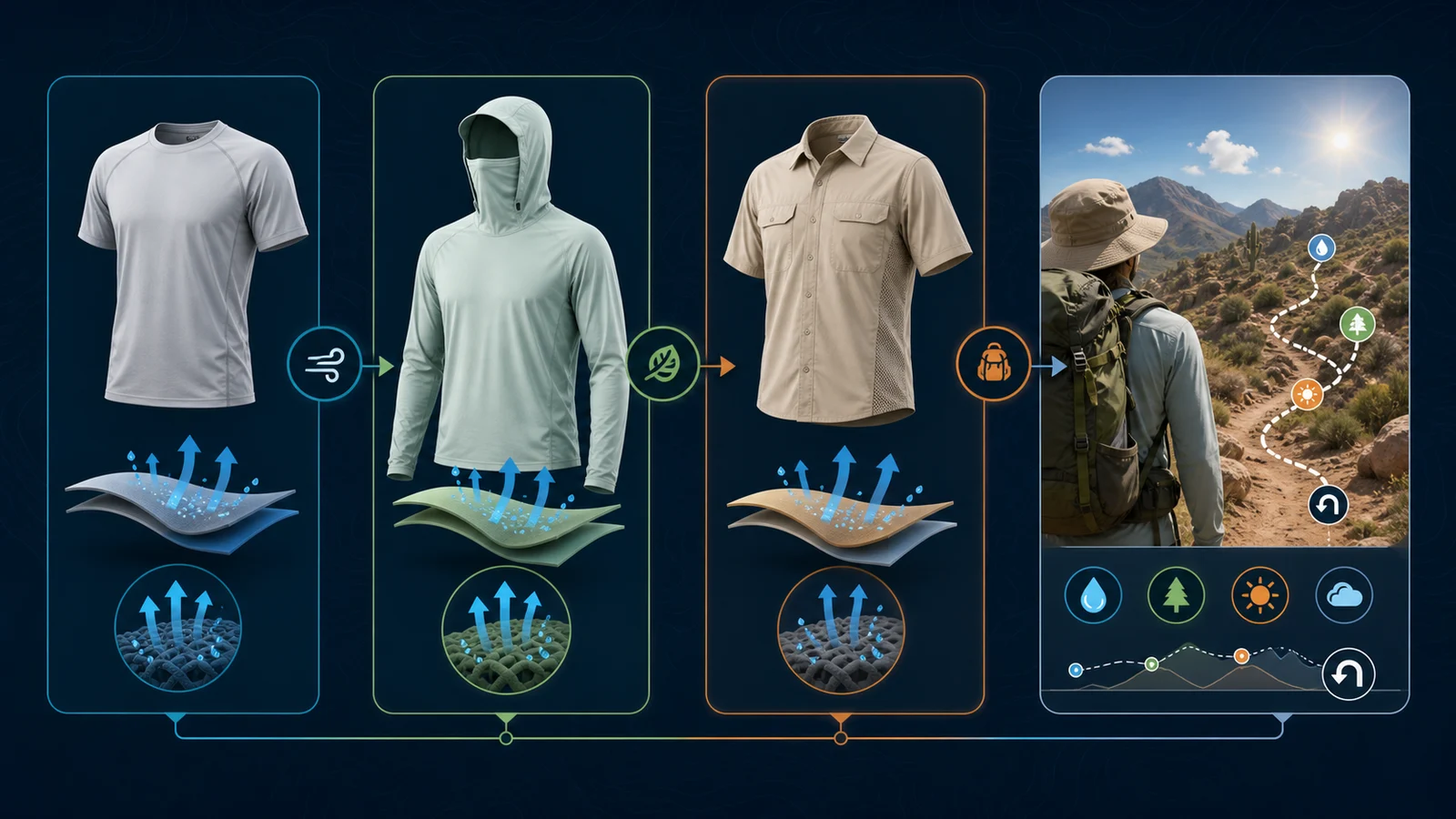
The hot-weather hiking-shirt decision system
Shirt format, moisture pathway, pack friction, and route conditions form one system; optimizing only the fabric leaves the main risks unresolved.
1. Pick controllable coverage
A crew is simple, a hoodie adds optional neck coverage, and a button-up adds adjustable openings and collar shade.
2. Map air and moisture
Fit, fabric structure, humidity, breeze, vents, and pack compression determine how the shirt manages sweat.
3. Load-test pack contact
Check shoulder seams, back panels, chest hardware, hem coverage, and hip-belt bunching under realistic weight.
4. Let the route lead
Forecast, shade, water, elevation, pace, communication, and the turnaround plan remain more important than a shirt claim.
Editorial category infographic generated for SleeveShirts. It explains selection logic and does not depict or certify an exact marketplace product.
Decision visual
Hot-weather trail-shirt decision map
The route and weather choose the shirt format. Marketplace filters only narrow the final shortlist.
Map exposure
Note shade, elevation, UV, humidity, reflected heat, wind, brush, insects, water availability, and expected time outside.
Estimate work rate
Separate a relaxed walk from steep climbing, a heavy pack, scrambling, or repeated stops in direct sun.
Choose controllable coverage
Select a crew, hoodie, button-up, short sleeve, or hybrid based on how easily coverage and ventilation can change.
Verify and test indoors
Check exact UPF, size, fabric, vents, seller, returns, and care, then test with the loaded pack before the hike.
Three exact models: fit, protection and care
Prices and details are maker references checked October 10, 2026. Echo’s 150 g and Patagonia’s 153 g are total garment weights; neither is a GSM figure. No comparable total weight was read for Terminal Tackle.
| Format | Best for | Prioritize | Trade-off | Listing check | Amazon |
|---|---|---|---|---|---|
| Outdoor Research Men’s Echo Hoodie 287625 | Trim hooded coverage | Try the hood, pack straps and sleeve reach | UPF 15/20 is lower than Columbia’s stated 50; trim fit may not suit your body or layering | Chosen color rating, exact size and stock | Search |
| Columbia PFG Terminal Tackle Long Sleeve 1388261 | Regular rated crew for a pack try-on | Check shoulders under straps; protect the exposed neck | No hood; fishing intent does not establish hiking abrasion performance | Exact 1388261, size path and color | Search |
| Patagonia Men’s Capilene Cool Daily Long Sleeve 45181 | Regular synthetic crew with simple care | Choose only if a published UPF number is not essential | Current page does not publish UPF; long sleeves alone do not supply a rating | Exact color’s recycled content and size selector | Search |
Detailed buying guidance
Thin is not the same as breathable or protective
A low fabric weight can reduce bulk, but weave, knit structure, finish, fit, humidity, and air movement determine how it feels. Some very thin fabrics cling when wet; some open knits release air but require careful interpretation of the UPF claim. Cooling words without construction detail are weak evidence.
Look for a specific rating, fabric composition, weight when published, vent locations, and a fit that leaves usable room without becoming unsafe around brush or equipment. Verify alternate colors because opacity and manufacturer claims can differ by variation.
- Inspect construction, not just adjectives.
- Prefer a specific UPF statement.
- Check whether mesh or vents are excluded.
- Choose enough ease to reduce cling.
Choose between a crew, hoodie, and button-up by control
A crew is simple and sits cleanly under a pack. A sun hoodie adds rapid head and neck coverage but can feel warmer or shift vision. A button-up opens for ventilation and adds a collar, yet buttons, pockets, and vent seams may land beneath straps. The best format is the one whose controls you can actually use on the route.
Consider the moments between movement: a hood may be valuable during a long exposed break, while a button-up can open during a shaded climb. None should be used in a way that compromises footing, hearing, vision, or required equipment.
- Use a crew for low-complexity layering.
- Use a hood when it remains stable and optional.
- Use a button-up when adjustable openings add value.
- Test every control with the pack on.
Pack friction changes the fabric decision
Shoulder straps and hip belts compress fabric, reduce airflow, and create repetitive friction. A soft shirt can still chafe if a seam sits directly beneath a loaded strap; a durable woven can feel hot when a large back panel is covered. Load the actual pack and move for at least several minutes indoors.
Check shoulder reach, neckline movement, lower-back coverage, pocket access, and bunching above the belt. For multi-day travel, inspect contact zones each evening and rotate or rinse shirts according to their care instructions.
- Test with realistic pack weight.
- Avoid raised seams beneath pressure points.
- Keep chest hardware out of strap paths.
- Inspect shoulders and lower back after each long day.
Humidity changes expectations for quick drying
A shirt can move moisture away from the skin yet remain damp when the air is humid and still. Quick dry is comparative, not a promise that a saturated garment will become dry on schedule. Pack ventilation, breeze, body heat, and the ability to change layers all affect the result.
Carry a dry layer when the route, temperature swing, or overnight plan requires it. Wet fabric can feel cold after the sun drops or wind rises. Follow the National Park Service principle of preparing for changing conditions rather than optimizing only for the hottest hour.
- Treat drying claims as conditional.
- Pack for evening and elevation changes.
- Avoid sealing a wet shirt in a bag.
- Bring a dry layer when consequences are meaningful.
Heat safety is a route decision, not a shirt feature
A technical shirt cannot prevent heat exhaustion or heat stroke. Check current forecasts and advisories, start at an appropriate time, carry sufficient water and electrolytes for the plan, pace conservatively, know symptoms, and turn around before a manageable problem becomes an emergency. Local park and public-health guidance should override affiliate content.
The heat-index tool can support preparation, but exposed trail conditions, radiant heat, elevation, sun, and personal factors may differ from a single reading. Hike with a plan that includes communication, navigation, shade opportunities, and an honest turnaround point.
- Check official local conditions before departure.
- Match water and pace to the route.
- Know the group’s limits and symptoms.
- Turn around when conditions or people deteriorate.
Build a small system for multi-day hiking
A useful rotation might combine one long-sleeve sun layer, one fast-drying alternate, and one dry insulation or weather layer. The exact mix depends on trip length and climate. Two shirts with distinct roles usually add more resilience than several near-duplicates selected by color alone.
Rinse salt and dirt when appropriate, dry fully, and inspect thinned shoulders, pulled cuffs, stretched necklines, and snagged panels. A shirt that no longer retains its intended fit or coverage should move out of exposed-trail duty.
- Assign each layer a specific job.
- Keep one critical layer dry.
- Follow care instructions during travel.
- Replace damaged coverage layers before remote trips.
Keep the format comparison in context
These six formats remain useful alternatives to the three exact models above. A format describes coverage and construction; it is not an additional tested model.
- Loose long-sleeve crew: Simple exposed-trail coverage. Check Airy torso, stable sleeves, long hem. Trade-off: Less neck and ventilation adjustment
- Ultralight sun hoodie: Optional head and neck coverage. Check Stable hood, open neck, low bulk. Trade-off: Hood can add heat and affect vision
- Vented button-up: Adjustable hiking and travel. Check Back vents, collar, secure pockets, cuff tabs. Trade-off: Seams and hardware under pack straps
- Short-sleeve trail tee: Shaded humid routes and high output. Check Loose sleeves, quick drying, low chafe. Trade-off: More exposed arms
- Hybrid woven-knit shirt: Brush, scrambling, mixed terrain. Check Durable front and shoulders, vented zones. Trade-off: Heavier and more complex construction
- Light base layer: Layered alpine starts and variable weather. Check Low bulk, close but nonbinding fit, drying. Trade-off: Can cling and is not necessarily sun-rated
Mid-guide shortlist
Ready to compare current listings?
Use the criteria above as a filter. Do not buy from the thumbnail alone: open the exact size chart, material details, care instructions, seller information, and return policy.
Choose by real-world situation
Dry exposed desert trail
Loose long sleeves, a stable collar or hood, and broad external sun planning are usually more useful than a minimal top chosen only for sweat feel.
- Start early when local guidance supports it.
- Carry route-appropriate water.
- Use shade and protect exposed skin.
Humid forest climb
A simple loose crew or short-sleeve trail shirt can reduce fabric complexity, while the sun and insect plan changes with canopy gaps.
- Expect slower drying.
- Choose low-chafe seams.
- Carry a dry layer for stops.
Mixed alpine day
A light long-sleeve layer that works beneath wind or rain protection is more versatile than a shirt optimized only for the valley heat.
- Plan for rapid weather changes.
- Keep insulation dry.
- Test all layers with the pack.
Amazon listing traps to avoid
A claimed cooling temperature accepted as universal
Real comfort depends on climate, exertion, fit, sweat, air movement, and layers. Reject unsupported promises of a fixed temperature reduction.
Quick dry treated as a safety guarantee
Humid or cold conditions can keep fabric wet. Carry and manage layers based on consequences, not a marketplace adjective.
UPF fabric assumed to cover every gap
Open buttons, rolled sleeves, a low neck, shifted hem, mesh, or a lowered hood change practical coverage.
Ratings and price treated as route fit
A popular low-price shirt may still put seams beneath your pack or fail your size and coverage needs. Verify the current variant directly.
Before checkout
Final verification checklist
- 1Route, forecast, UV, shade, humidity, water, elevation, and turnaround plan were reviewed.
- 2The format matches expected exertion, coverage, and ventilation needs.
- 3The exact garment and relevant panels state a specific UPF rating.
- 4Shoulders, neck, cuffs, and hem stay comfortable under the loaded pack.
- 5The shirt preserves reach and visibility without unsafe loose details.
- 6A dry, wind, rain, or insulation layer is packed when conditions require it.
- 7Seller, size chart, color, fabric, care, and return terms were checked.
- 8Water, pace, navigation, communication, and heat-symptom plans remain primary.
Continue with the right adjacent guide
Ultimate hiking-shirt guide
Compare materials, fits, layering roles, seasons, and trail conditions across the full category.
Hot-weather base layers
Focus on low-bulk next-to-skin options when the shirt must work beneath other layers.
Best sun hoodies
Compare hood stability, neck coverage, fabric, and activity-specific trade-offs.
Frequently asked questions
Are long sleeves or short sleeves better for hot-weather hiking?
Long sleeves provide more fabric coverage and can work well when loose and breathable; short sleeves reduce covered area but leave more skin dependent on sunscreen and shade. Choose based on exposure, humidity, effort, insects, fit, and your heat plan rather than a universal rule.
What fabric is best for hiking in hot weather?
There is no single winner. Lightweight polyester or nylon blends can dry reliably and add durability; merino blends can manage odor but may hold more moisture and cost more. Construction, fit, seams, UPF evidence, and climate matter as much as the fiber name.
Is a sun hoodie too hot for summer hiking?
It may work well when lightweight, loose, and used with the hood lowered as needed, but it can add warmth in still humid conditions. Test the system on a low-consequence outing and follow route-specific heat guidance.
Should a hiking shirt fit loose or tight in heat?
A relaxed fit often improves air space and reduces cling, as long as it remains safe around brush and equipment. A closer base layer may reduce bunching under other layers. In either case, avoid restriction and excessive stretch.
Does a quick-dry shirt keep you cool?
Not necessarily. Moisture transport and drying can support comfort, but humidity, breeze, sweat rate, fit, pack compression, and workload determine the outcome. Quick dry is not a heat-illness prevention claim.
Is UPF 30 or UPF 50 better for a hiking shirt?
UPF 50 represents a higher stated fabric protection level than UPF 30, but practical coverage also depends on fit, stretch, wetness, wear, seams, vents, and exposed skin. Verify the exact garment and use a layered sun plan.
How many hiking shirts should I take on a multi-day trip?
Two active shirts plus dry weather or insulation layers is a practical starting system for many trips, but the right number depends on duration, climate, washing, drying, remoteness, and consequences of a wet layer. Give each item a defined job.
Can a hiking shirt prevent heat illness?
No. Clothing is one factor in heat stress. Check official conditions, manage pace and timing, carry adequate water, use shade and rest, know symptoms, and turn around or seek help according to local guidance.
Sources checked
- National Park Service: Hiking Safety - Route, weather, water, clothing, limits, and turnaround preparation.
- CDC/NIOSH: Heat Stress - Environment, exertion, clothing, and personal factors in heat strain.
- CDC/NIOSH: Workplace Recommendations - Heat prevention principles including hydration, recovery, and acclimatization.
- World Health Organization: Protecting against skin cancer - UPF and how fabric, stretch, wetness, wear, and design affect clothing protection.
- American Academy of Dermatology: Shade, clothing, and sunscreen - Layered sun protection for covered and uncovered skin.
- Outdoor Research Echo 287625 - Color-specific UPF, trim fit, body chart and dated price checked October 10, 2026.
- Columbia Terminal Tackle 1388261 - UPF 50, regular fit, size paths, care and dated price checked October 10, 2026.
- Patagonia Capilene Cool Daily 45181 - Fabric, total weight, care and dated price checked October 10, 2026; no current UPF number.
Editorial transparency
We are not a medical provider, manufacturer, or accredited product-certification body. Recommendations combine public product data, standards-based claims, independent reviews, buyer feedback patterns, and SleeveShirts editorial judgment. AI may assist research organization and drafting, but final page wording should remain transparent about which signals come from direct source data versus secondary review patterns.
About the author
SleeveShirts Editorial
SleeveShirts Editorial researches UPF clothing, sun hoodies, fishing shirts, running layers, and family sun-protection gear for shoppers comparing products online. We prioritize clear criteria, source quality, practical fit/use-case signals, and transparent affiliate disclosures over brand sponsorship claims.
We do not present SleeveShirts as a dermatologist, medical authority, or accredited product-certification body. When a guide relies on manufacturer specifications, public standards, third-party reviews, or buyer feedback, it should say so plainly.