Hiking buying guide
Best Base Layers for Hot Weather Hiking: Two Shirts Compared
Compare Patagonia Capilene Cool Daily and Smartwool Classic All-Season by fit, care, dated price and documented UPF for summer hikes.
Affiliate disclosure: we may earn from qualifying Amazon purchases. This is a specification-based comparison, not our own field or laboratory test.
Quick answer
Choose the cut and care that fit your hike.
For a regular synthetic layer, compare Patagonia Capilene Cool Daily ($59). For a slim merino blend, compare Smartwool Classic All-Season ($100). Neither checked model publishes a UPF number. If that is essential, use the hot-weather hiking-shirt comparison.
Visual guide
Compare the two cuts and their care
Compare a regular synthetic cut with a slim merino blend, then check how each shirt needs to be washed and dried.

These generic examples illustrate the cuts compared in this guide. Verify fiber content in the specifications and use the exact garment’s size chart and care label.
AI-generated editorial examples; these do not depict the reviewed products or show product testing.
Two current models, compared by the same criteria
US manufacturer prices and specifications checked October 10, 2026, for one shirt before tax and shipping. They are reference prices, not current Amazon offers. The two examples cover different cuts and materials; they do not represent an exhaustive market test.
| Decision field | Patagonia Men’s Capilene Cool Daily Shirt | Smartwool Men’s Classic All-Season Merino Base Layer Long Sleeve |
|---|---|---|
| Price | $59 USD for one shirt | $100 USD for one shirt |
| Fabric and weight | 3.7-oz polyester jersey; recycled percentage varies by color. Published garment weight: 153 g (5.4 oz). These are different units, not 153 GSM. | 88% merino wool and 12% recycled nylon. The checked page describes a nylon-core construction; it does not give a GSM value that we can use here. |
| Fit and sizing | Regular fit. Check the current model’s size selector and body-measurement chart; availability depends on color and size. | Slim fit, designed to sit next to skin. Check the model selector and chart before ordering; a slim cut is not automatically comfortable beneath your pack. |
| Care | Machine wash warm; do not bleach; tumble dry low; cool iron; do not use fabric softener. | Machine wash warm on a gentle cycle; do not bleach; tumble dry low; cool iron without ironing decoration; do not dry clean. |
| Current UPF | No UPF number on the checked current product page. | No UPF number on the checked current product page. |
| Odor-control evidence | HeiQ Mint odor control. The finish supplier describes a non-antimicrobial treatment; it does not make this shirt odor-free for a set number of days. | Merino material properties are a reason to consider it for repeat wear. This is not evidence of seven odor-free days or a head-to-head odor test against Patagonia. |
Source review: October 10, 2026. A missing published result is not a performance score.
Style 45181
Patagonia Men’s Capilene Cool Daily Shirt
Choose this long-sleeve synthetic if you want a regular cut and care that allows low tumble drying. It is an example of a wicking base layer, not our pick for a certified-UPF requirement.
Trade-off: The current model lacks a published UPF rating. Keep that separate from its long-sleeve coverage, and choose a documented model if a rating is part of your purchase criteria.
Style SW016952
Smartwool Men’s Classic All-Season Merino Base Layer Long Sleeve
Choose this if you prefer merino against your skin and want a closer base-layer cut. It costs more than the synthetic example and needs the gentle cycle specified by Smartwool.
Trade-off: The published nylon-core construction does not establish a fixed strength advantage, drying time or odor-control percentage. Try the cut and plan a dry spare on a multi-day trip.
Section 02
Start with the hike, weather and pack
For a short, hot day hike, choose the shirt you can keep wearing comfortably while carrying your actual pack. On a multi-day route, add a laundry plan, a drying opportunity and a dry layer for stops. A fiber name cannot answer all of those questions.
A base layer sits close enough to interact with moisture at the skin. That does not mean it must be compression-tight. Check the shoulders when reaching, the hem under the hip belt and the sleeve cuffs when using poles. Tight fabric can restrict movement and stretch the textile; a loose shirt can bunch beneath straps.
Humidity, sun, wind and effort change the conditions around the shirt. A garment that feels comfortable during an easy shaded walk can remain wet during a steep climb in still, humid weather. Slow down or change the plan when heat becomes difficult to manage. Shopping for a new shirt cannot compensate for an unsafe pace or missing water and shade.
Section 03
Synthetic and merino: compare the finished garment
Polyester is used in many moisture-management shirts because fabric construction and finishes can help spread liquid while the fiber itself takes up relatively little water. Wicking moves liquid through a textile; drying removes it. Neither claim gives a universal cooling rate.
Merino can be useful when odor and repeated wear matter. Wool can interact with moisture and odor compounds, but washed apparel should not be described as relying on a bacteria-killing lanolin coating. Blend, knit, soil and care all matter. Airing a lightly used shirt may be enough for another wear; visible soil or persistent odor is a reason to wash it.
Cotton can feel comfortable in low-effort warm conditions. The practical concern on a hike is a shirt that holds moisture and remains wet into wind, a shaded stop or colder weather. Cotton does not switch off all thermoregulation, and this guide does not claim a fixed drying percentage between every cotton, polyester and wool garment.
Consider a blend by its actual construction and care instructions. A nylon core or a small synthetic percentage may be intended to improve durability, but the percentage in a label is not an abrasion-test result. There is no supported rule here that one material is always stronger, cooler or more comfortable.
Section 04
GSM is fabric mass, not a heat-safety threshold
GSM means grams per square metre. A 130 GSM textile has a mass of 130 grams for one square metre under the stated measurement conditions. A complete shirt also includes different areas of fabric, seams and trims; its total mass in grams is a separate number.
There is no universal 150 GSM safety ceiling for hot-weather clothing. Fabric openings, yarn, fit, ventilation, layering and the conditions affect comfort. Two shirts with the same GSM can behave differently. Use a published value as one comparison input, then check the rest of the garment.
A higher fabric mass does not prove greater abrasion resistance, and a lower number does not establish faster drying. If a maker publishes a test, look for the specimen, method and comparison conditions. An unsupported percentage should not decide which shirt you take under a heavy pack.
Section 05
Coverage and UPF need separate checks
Long sleeves cover the arms when the garment fits and stays in position. The coverage still leaves the face, hands and parts of the neck exposed. A crew neck cannot replace a brimmed hat or sunscreen on uncovered skin.
Neither checked example above carries a published current UPF number on its product page. That means the rating is undocumented here, not that the fabric blocks no UV. Older product generations or a general claim about polyester cannot supply a current model-specific rating.
Wetness, stretching, wear and chemical exposure can change UV transmission. This guide does not assign an invented wet UPF to Capilene Cool Daily. If your use involves swimming, repeated soaking or unusually tight stretch, check the exact model’s wet-use instructions and test scope.
Visual guide
Check fit with your loaded pack
A shirt that fits standing still can feel different under straps and a hip belt.

Wear your loaded pack, sit and bend, then reach with your poles. Check where seams sit beneath the straps and whether the belt pulls the hem out of place.
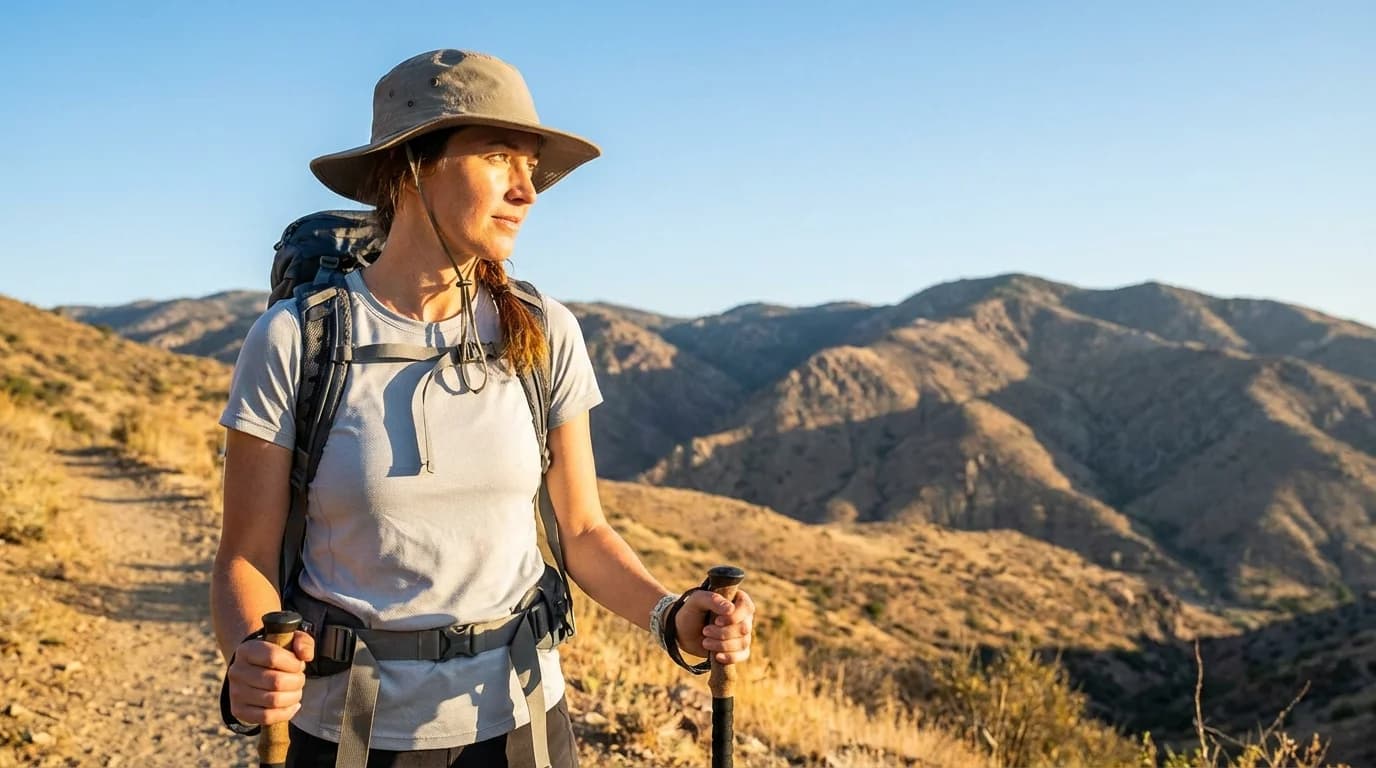
AI-generated editorial examples; these do not depict the reviewed products or show product testing.
Section 06
Try the shirt with your hiking equipment
Put on the loaded pack and tighten the hip belt as you would on the trail. Reach overhead, lean forward and use your poles. Check whether the hem stays down and whether the shoulder seams or collar are trapped under straps. A flat seam can still rub if its placement is wrong for your body and pack.
Ventilation depends on the garment and conditions. A closer base layer can maintain skin contact, while a looser cut can give room for movement and air. A pack may block either benefit at the back. We do not turn that observation into a universal bellows-cooling percentage.
If you normally wear a sun hoodie, compare how its hood works with a cap, sunglasses and a pack collar. The two examples in this guide are crew-style long-sleeve layers. A hoodie or vented woven shirt may suit your needs better; use the linked hiking-shirt guide to compare those formats.
Section 07
Choose a laundry routine you can follow
Read the sewn label before washing. The Patagonia example permits warm machine washing and low tumble drying, with no softener. Smartwool specifies a warm gentle cycle and low tumble drying. These are model-specific instructions, not a recipe for every synthetic or merino shirt.
A sink wash needs the label’s permission, suitable detergent and thorough rinsing. Do not introduce a vinegar soak, an enzyme detergent or aggressive heat merely because odor persists. A treatment that suits one garment may affect another finish or blend.
Before a trip, wash the shirt as allowed and try drying it in conditions similar to your accommodation. If it is still damp the next morning, plan a longer drying window or a spare. A dry spare is especially useful before a windy stop; there is no guaranteed two-hour drying time.
Section 08
A shirt cannot prevent heat illness
CDC guidance for athletes recommends planning activity around heat, building up exposure gradually, drinking water and responding to symptoms. Stop exertion and get to a cooler place if you feel faint or weak. Check companions too; clothing comfort is only one part of the plan.
Confusion, collapse or other signs of heat stroke require emergency help and prompt cooling. Sweating can still be present in exertional heat stroke. Do not wait for someone to stop sweating before acting. This guide offers clothing information, not a diagnosis or an individualized hydration schedule.
Buying checklist
Before ordering
- Confirm the exact model
Match the exact style and current fabric; do not transfer an older model’s UPF.
- Check the size chart
Measure your body and use the model’s chart. Check whether the chart gives body or finished-garment dimensions.
- Try your equipment
Try your pack, overhead reach and hem coverage indoors while tags remain attached.
- Read return conditions
Check the seller’s return conditions before washing or wearing outside. Manufacturer policy does not automatically apply to Amazon sellers.
- Plan laundry
Plan allowed washing, drying and a spare for the actual trip.
Section 09
Frequently asked questions
Which is the better hot-weather base layer?
Choose from the whole garment and trip. The Patagonia example offers a regular synthetic cut and straightforward care; the Smartwool example offers a closer merino blend at a higher checked price. We have not measured cooling or ranked them as universal winners.
Can a shirt heavier than 150 GSM be worn in heat?
GSM alone cannot define safe use. Construction, fit, activity and conditions matter. If the shirt makes the intended activity uncomfortable, choose a different garment or change the plan; there is no universal 150 GSM danger threshold.
Can I wear merino for a week without washing?
There is no promised number of odor-free days. Air the garment after light wear and wash it when soil or odor requires it. Keep a laundry plan and a spare rather than relying on a seven-day claim.
Does Capilene Cool Daily keep UPF 50 when wet?
The checked current long-sleeve model does not publish a UPF number. This guide cannot assign it a dry or wet rating. If a documented rating is essential, compare an exact UPF-labeled model and its test scope.
Should I use vinegar to remove odor?
Only use a soak or treatment that the garment maker permits. Start with the allowed wash cycle, detergent dose, rinsing and complete drying. A universal acid-soak ratio is not supported for these models.
Sources and next steps
Research sources
- Patagonia Men’s Capilene Cool Daily Shirt: current specifications and care
- Smartwool Men’s Classic All-Season Merino Base Layer Long Sleeve: current specifications and care
- CDC: heat and athletes
- CDC/NIOSH: heat-related illnesses
- HeiQ Mint: supplier’s finish description and test scope
- Woolmark: wool and odor research
- ASTM D3776/D3776M: fabric mass per area