Best Sun Shirts for Working Outside in 2026: UPF Work Shirts for Heat
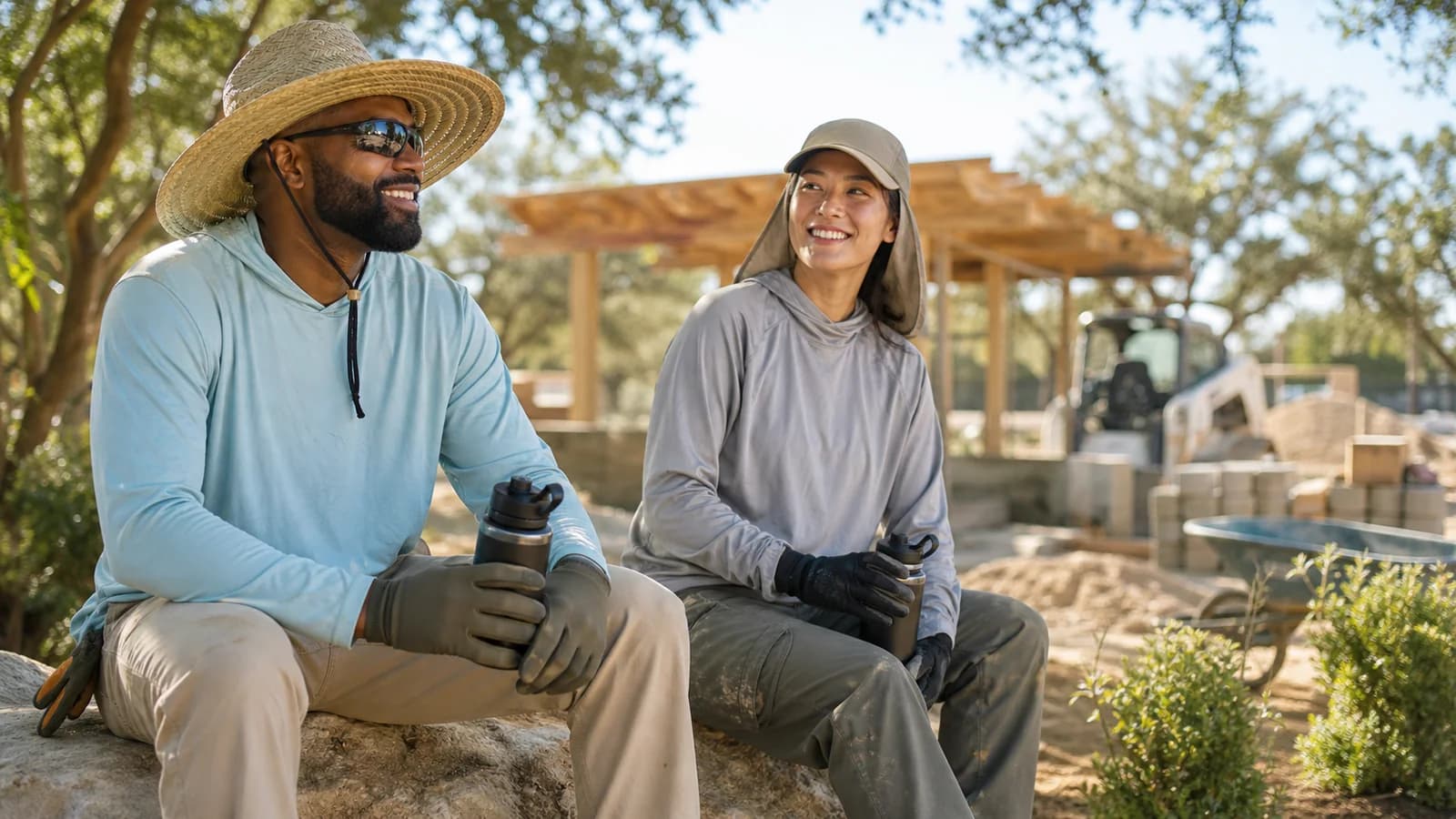
Outdoor work creates a three-way clothing problem: coverage, heat release, and compatibility with the job. This guide compares shirt formats rather than inventing product scores, so landscapers, construction crews, gardeners, inspectors, and property workers can build a practical shortlist.
Direct answer
What is the best sun shirt for working outside?
For most outdoor work, start with a loose, light-colored long-sleeve shirt that has an explicit UPF rating, enough airflow for the conditions, and a hem and sleeve design that stays covered while you bend and reach. Required PPE, high-visibility rules, shade, hydration, and work-rest controls still take priority.
Affiliate disclosure: SleeveShirts may earn from qualifying Amazon purchases. The shortlist is based on practical criteria, not paid placement.
Amazon inventory, sellers, specifications, ratings, and prices can change. Open the current listing and verify the exact size chart, material, coverage, and return terms.
Quick picks
Start with the format that fits the job
Compare these 6 options, then check the exact model, size and seller.
General landscaping and property work
Loose UPF 50 long-sleeve crew
A simple crew avoids hood interference and can move air around the torso. Look for a long back hem, nonbinding cuffs, and a fabric claim tied to the exact color and model.
Open sun without headgear conflicts
Lightweight work sun hoodie
A hood can reduce neck exposure during stationary or low-risk tasks. It must not obstruct hearing, peripheral vision, hard-hat fit, machinery awareness, or employer-required equipment.
Inspectors, guides, and low-abrasion work
Vented UPF button-up shirt
A collar, adjustable cuffs, pockets, and mechanical vents add flexibility. Buttons and loose panels are less suitable around snag or entanglement hazards.
Jobs with visibility requirements
Compliant high-visibility sun shirt
Choose the required visibility classification first, then evaluate UPF, ventilation, and fit. A bright color alone is not proof that a garment meets a workplace standard.
SleeveShirts Buyer Copilot
Turn this guide into your personal shortlist
Rules select from an audited catalog. AI explains the fit and trade-offs; it cannot add products or sources.
Model-specific buying path
3 exact Amazon sun shirts for outdoor work roles
These exact listings cover a simple long-sleeve crew, a loose technical fishing shirt, and a vented button-up. None replaces employer PPE, heat controls, or a task-specific safety assessment.
Specification-based shortlist, not a hands-on product test. Amazon supplies exact-listing titles, images, availability, offer data, and destinations when a match is available.
Vapor Apparel Outdoor UPF 50+ Long-Sleeve Shirt
A straightforward long-sleeve UPF 50+ format for lower-abrasion property work, gardening, inspection, and general outdoor tasks. Verify the selected size, color, fabric details, and worksite compatibility.
Columbia PFG Terminal Tackle Long-Sleeve Shirt
A relaxed technical long-sleeve route for open-sun tasks where a hood or loose button placket would interfere. Check the current fit, hem length, exact UPF language, and compatibility with required PPE.
Columbia Silver Ridge Utility Lite Long-Sleeve Shirt
A collared button-up option for inspectors, guides, travel, and lower-snag work that benefits from adjustable cuffs and pockets. Avoid loose panels around entanglement hazards and verify the exact listing details.
What the official guidance changes about this purchase
A sun shirt can reduce covered-skin exposure, but it cannot make a hot worksite safe. The buying criteria below separate garment features from employer controls and required protective equipment.
Heat load is more than air temperature
NIOSH defines occupational heat stress as the combined effect of environmental heat, metabolic heat, clothing, and personal protective equipment. That is why the lightest-feeling shirt is not automatically the safest work system.
CDC/NIOSH Heat Stress →Water and recovery remain work controls
Current NIOSH recommendations emphasize accessible cool drinking water, acclimatization, rest breaks, training, and changes to schedules or workload. Clothing is only one layer of that prevention plan.
CDC/NIOSH workplace recommendations →Coverage still leaves exposed areas
The American Academy of Dermatology recommends shade, sun-protective clothing, and sunscreen on skin not covered by clothing. A long-sleeve shirt does not address the face, ears, hands, or every neckline gap.
American Academy of Dermatology →How we evaluate the category
SleeveShirts compares public product descriptions, stated UPF ratings, size charts, fabric and construction details, care information, return signals, and recurring buyer-fit issues. We do not claim to have worn every shirt on a jobsite, measured fabric transmission, or certified workplace compliance. The strongest listing makes its claims specific and lets the buyer verify fit and safety compatibility.
Explicit UPF claim
We look for a stated rating on the exact garment, not vague phrases such as UV resistant. The claim should cover the relevant fabric panels and not silently exclude open mesh.
Heat-release pathway
Loose cut, fabric permeability, vent placement, and the ability to uncover the head during safe breaks matter more than a marketing word like cooling.
Movement coverage
Sleeves, cuffs, shoulder reach, and back length should remain useful while kneeling, lifting, reaching overhead, or leaning into a task.
Worksite compatibility
The shirt must coexist with required PPE, uniforms, visibility rules, radios, harnesses, gloves, hearing protection, and task-specific restrictions.
Abrasion strategy
Ultralight fabric may feel good but snag on masonry, brush, fasteners, or tools. Durable zones and replaceable value shirts can be smarter than one fragile premium layer.
Care and rotation
A work shirt needs realistic washing instructions, odor management, quick drying, and enough availability for a multi-shirt rotation rather than one overused garment.
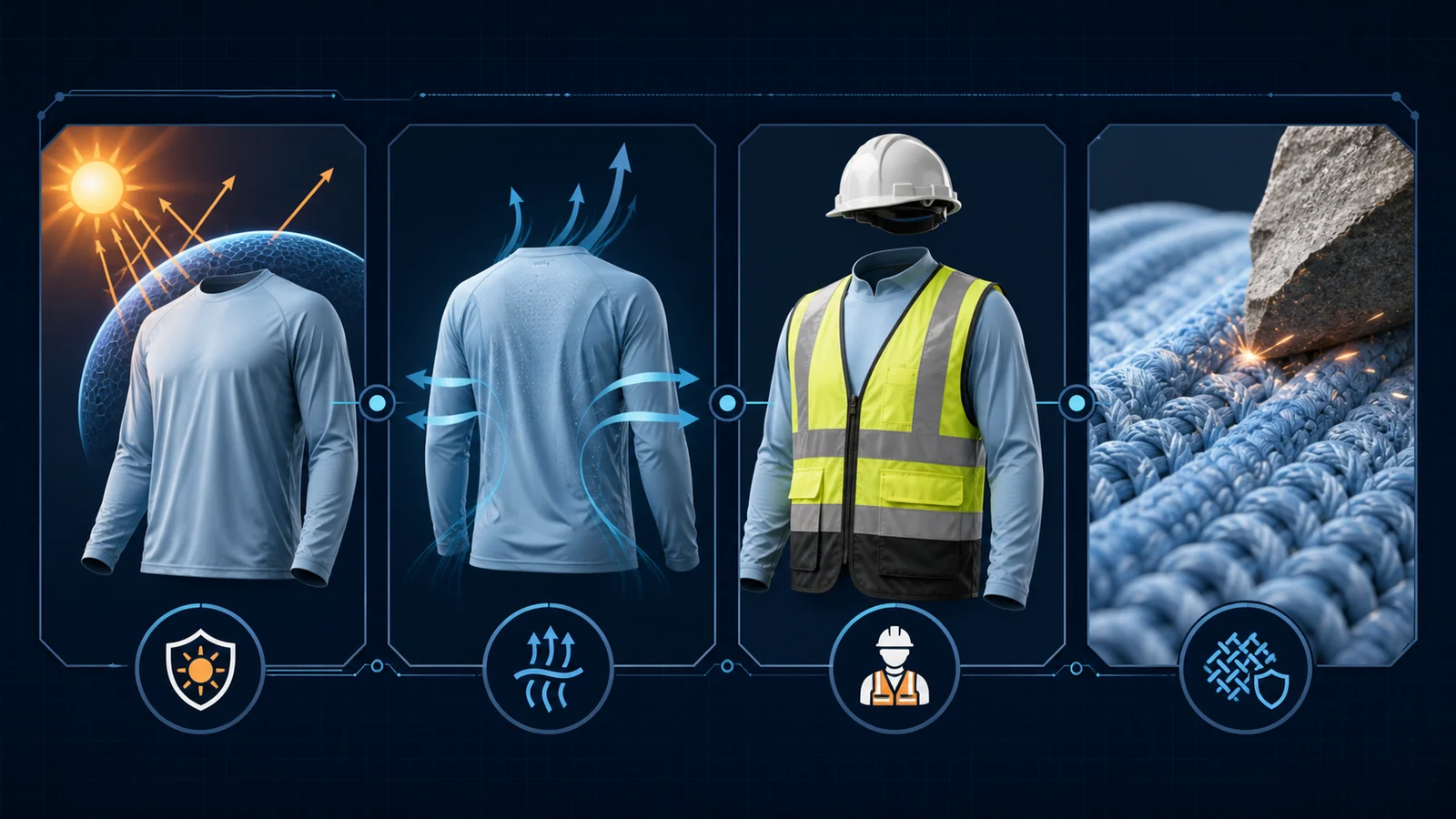
Visual buying framework
The outdoor-work sun-shirt system at a glance
Read the image from left to right: protection evidence, heat release, task compatibility, and durability must all survive the same decision.
1. Verify coverage
Require a numerical UPF claim for the exact shirt and panels, then check sleeves, neckline, and hem through work movement.
2. Preserve heat release
A relaxed cut, usable vents, and safe opportunities to uncover matter more than unsupported cooling language.
3. Fit the work system
Employer rules, visibility class, hard hats, vests, harnesses, gloves, and entanglement controls choose the format first.
4. Match abrasion
Brush, masonry, tools, straps, and repeated washing may justify tougher fabric or an economical replacement rotation.
Editorial category infographic generated for SleeveShirts. It explains selection logic and does not depict or certify an exact marketplace product.
Decision visual
Outdoor-work shirt decision map
Choose the work constraint first. The fabric comes second, and the Amazon listing comes last.
List required equipment
Start with employer rules, high-visibility needs, hard hats, harnesses, gloves, and entanglement restrictions.
Map heat and exertion
Separate light inspection work from heavy labor, humidity, radiant heat, and long periods without air movement.
Choose coverage geometry
Decide between a crew, hoodie, button-up, or compliant high-visibility format based on the actual task.
Verify the exact listing
Confirm the stated UPF, size chart, color, material, mesh exceptions, care instructions, seller, and returns.
Sun-shirt formats for outdoor work compared
These six formats describe task trade-offs, not six tested models. The exact-model section below connects three researched shirts to lower-cost crew rotation, hood coverage and collared field work, including dated costs and model-specific care. Recreational shirts are not worksite PPE.
| Format | Best for | Prioritize | Trade-off | Listing check | Amazon |
|---|---|---|---|---|---|
| Loose long-sleeve crew | General outdoor labor and rotation | Long hem, open but secure cuffs, explicit UPF | No built-in neck or head coverage | Torso length and shrink/care notes | Search |
| Work sun hoodie | Open-sun tasks without hood conflicts | Stable hood, peripheral vision, breathable neck opening | Can trap heat or interfere with PPE | Hard-hat and employer compatibility | Search |
| Vented button-up | Inspection, guiding, gardening, field visits | Collar, back vents, roll-up sleeves, pockets | Buttons and loose fabric can snag | Task restrictions and vent coverage | Search |
| High-visibility performance shirt | Roadside and visibility-controlled sites | Required compliance marking plus breathability | Fewer fit and fabric choices | Exact standard/class and employer rule | Search |
| Lightweight woven overshirt | Brush, insects, and adjustable ventilation | Tough weave, collar, secure cuffs | Warmer than a minimal knit when closed | UPF claim after wear and washing | Search |
| Cooling base shirt under PPE | Required outer PPE systems | Low bulk, seams, moisture transport | Does not reduce the heat burden of impermeable PPE | Layering and safety-professional guidance | Search |
Detailed buying guidance
Baleaf Men’s UPF50+ Sun Long Sleeve Shirt
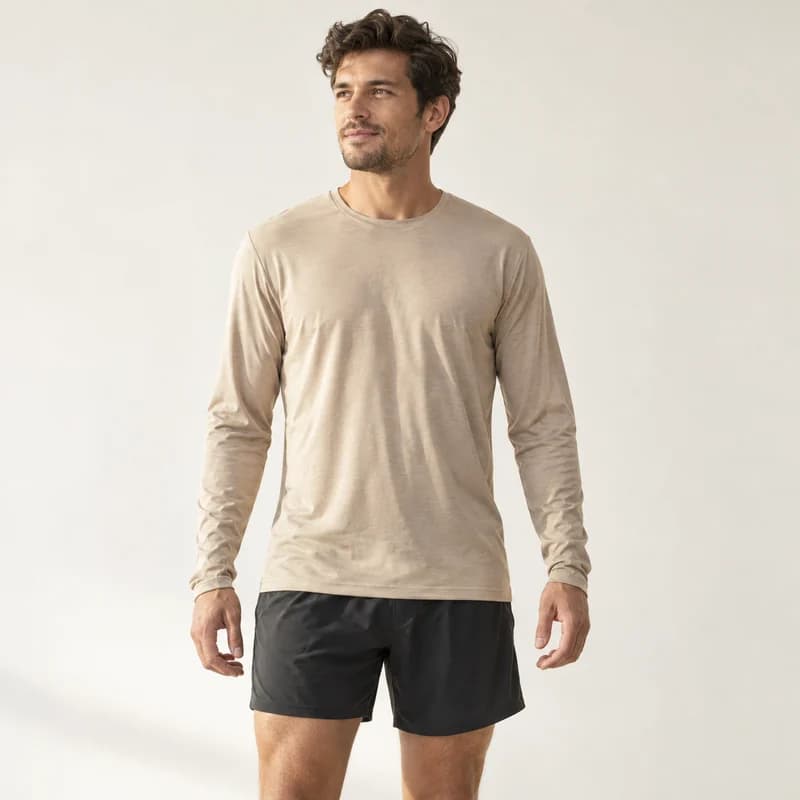
Choose this model if you want the lowest checked price here and already have separate head and neck coverage. UPF 50+. Loose fit; S–3XL; body length not published
US cost reference, October 10, 2026: $29; Pastel Blue reference. One shirt before tax or shipping; not a live Amazon offer. 100% polyester; raglan sleeves, flatlock seams; wicking/quick-dry claims; GSM and odor finish not stated
- Care: Machine wash cold with like colors; no bleach; tumble dry low; no iron or dry-clean.
- Drawback: Crew neck, no hood or documented hand-covering cuffs; garment weight is not stated.
Baleaf Men’s UPF50+ Sun Hoodie (AGA030)
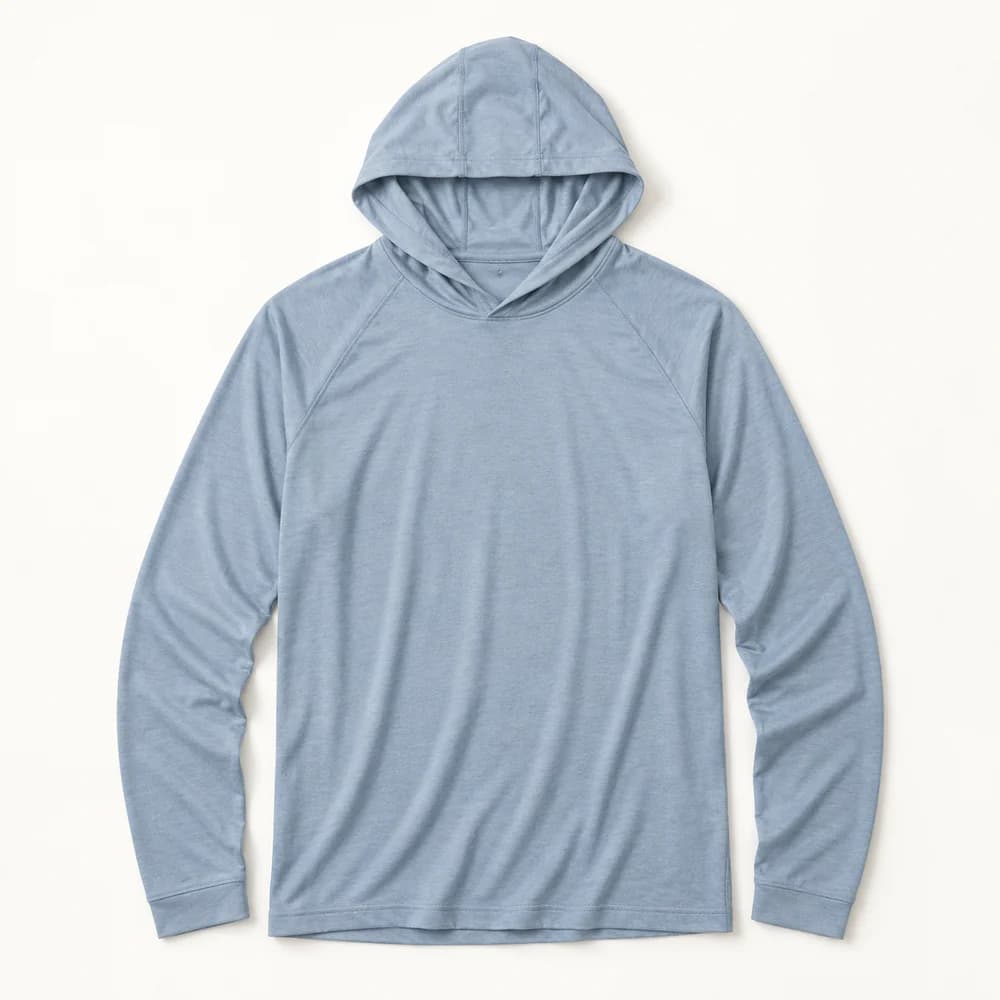
Choose this model if you want a hood and thumbholes while keeping the checked price below the premium hoodies here. UPF 50+. Comfort fit; XS–3XL; no separately documented Tall cut or garment length
US cost reference, October 10, 2026: $36; Gray/S reference. One shirt before tax or shipping; not a live Amazon offer. 100% polyester; hood, thumbholes, raglan sleeves and flatlock seams; GSM and odor finish not stated
- Care: Machine wash cold with like colors; no bleach; tumble dry low; no iron or dry-clean.
- Drawback: No separately documented Tall cut or garment length; size letters alone do not establish sleeve reach.
Columbia Men’s Silver Ridge Utility Lite Long Sleeve (2012931)
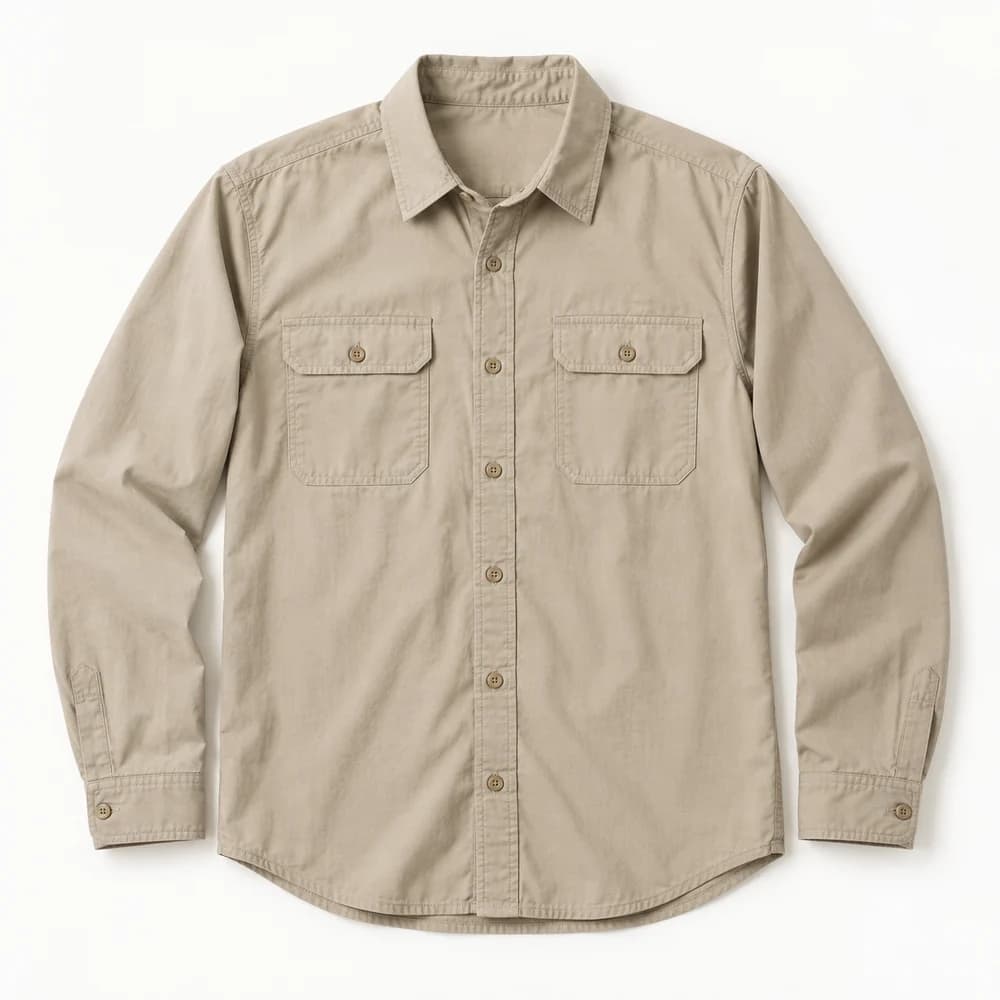
Choose this model if you prefer a vented, collared hiking shirt with pockets and can verify an available exact-model listing. UPF 50. Regular; 30 in. center-back reference; verify available size/stock with the selected seller
US cost reference, October 10, 2026: Maker page showed out of stock; no selected-variant price retrieved. One shirt before tax or shipping; not a live Amazon offer. 100% recycled polyester; back vent, roll-up sleeves and secure pockets; odor-neutralizing maker claim, no wash-life result
- Care: Machine wash; no bleach; tumble dry; no iron or dry-clean; temperatures not stated online.
- Drawback: Unavailable on the checked maker page; roll-up sleeves reduce coverage, and vents need their own coverage check.
US roadside work: a bright recreational shirt is not compliant warning apparel
For construction flaggers, OSHA 29 CFR 1926.201(a) requires the use of flaggers and their warning garments to conform to Part 6 of the MUTCD. A UPF rating, bright dye or ordinary reflective logo does not establish that requirement. None of the recreational shirts referenced here is presented as certified high-visibility workwear.
Ask the employer or safety professional for the required apparel standard, type and performance class for the actual task, jurisdiction and traffic exposure. Then match the garment’s marking and coverage to that requirement. If a sun shirt is worn underneath approved outer PPE, consider the heat and movement of the complete system.
- Confirm the required marking before choosing a shirt.
- Do not infer compliance from color or UPF.
- Preserve heat controls and required protective equipment.
Coverage and cooling are a managed trade-off
Long sleeves reduce the amount of skin left directly exposed, yet fabric also changes how heat and moisture leave the body. A thin knit can move sweat and air differently from a tightly woven overshirt; a hood can shade the neck while also enclosing it. The correct choice depends on humidity, wind, radiant heat, work rate, and every outer layer.
Treat cooling language as a prompt to inspect construction, not as a guarantee. Look for measurable details such as fabric composition, vents, mesh locations, garment weight when provided, and whether the cut is relaxed. Then consider whether the task will compress the shirt beneath straps or PPE, because a breathable panel has little effect when it is covered.
- Prefer a relaxed cut when loose clothing is permitted.
- Check whether mesh panels carry the same UPF claim.
- Use a hood only when it preserves hearing and peripheral vision.
- Never use a shirt claim to override work-rest controls.
A hoodie is not automatically a construction shirt
Sun hoodies are popular because they combine arm, neck, and partial head coverage in one light layer. On a worksite, that same hood can conflict with a hard hat, catch wind, reduce awareness, or create an extra layer beneath required equipment. A construction-specific search should therefore begin with the task and employer policy, not with outdoor-recreation styling.
If hoods are allowed, check whether the opening stays outside the eyes when the head turns, whether the fabric bunches under straps, and whether the hood can be lowered quickly in a safe area. Thumb loops can maintain wrist coverage, but they may interfere with gloves or become uncomfortable during repetitive gripping.
- Confirm hood permission before purchase.
- Test head rotation with every required item.
- Avoid cords or loose details near machinery.
- Check glove and cuff overlap without pressure.
Durability should match the exposure, not the marketing tier
Landscaping brush, masonry edges, lumber, tool belts, and repeated laundering can damage ultralight recreational fabrics. A heavier woven shirt may last longer but feel warmer; a low-cost knit may be economical if it is replaced before thinning or stretching creates coverage gaps. There is no universal durability winner.
Inspect high-friction areas: shoulder seams under suspenders, the lower back above a belt, forearms near brush, and cuffs beneath gloves. Reinforcement is useful only if it does not create rigid hot spots. Because a damaged shirt may no longer behave like the original garment, follow care guidance and retire visibly thinned or torn work layers.
- Match fabric toughness to brush, masonry, or smooth-site work.
- Inspect cuffs, shoulders, elbows, and the lower hem.
- Build a rotation so one shirt is not worn wet or dirty every day.
- Do not assume a premium price proves longer service life.
Men’s flannel shirts for cool-weather outdoor work: check the exact UPF rating
A long-sleeve flannel can be a warmer collared option for low-exertion field visits or cool-season work when the job permits button-up layers. It is a poor default for strenuous work in heat, and its loose cuffs or pockets may conflict with equipment. Flannel itself is not a sun-protection rating; check the exact model and color instead of assuming a UPF number from the fabric name.
Two manufacturer-documented examples are the NRS Men’s Campfire Flannel (UPF 50+) and Outdoor Research Men’s Ravenna Flannel (UPF 40). They show that rated flannel exists, not that all flannel protects equally. The checked Ravenna product page showed out of stock on September 22, 2026, so treat it as a specification example rather than a current buying pick. Compare the stated rating, body coverage, warmth, fit, care, and worksite rules before choosing this format over the lighter sun shirts above.
- Use this route for cooler, lower-output conditions.
- Check the exact garment’s UPF claim and stock.
- Keep PPE, visibility, and entanglement rules ahead of style.
Fit has to work through a full task cycle
Standing-room fit is not enough. Reach overhead, squat, kneel, extend both arms, and simulate the positions used during the job. The hem should not expose the lower back, cuffs should not pull halfway up the forearm, and the neckline should not open so widely that it defeats the intended coverage.
At the same time, excess fabric can snag or bunch beneath a harness. Use the manufacturer size chart rather than assuming a familiar letter size, and compare garment measurements when available. Buyers between sizes should weigh movement room against task restrictions instead of automatically sizing up.
- Check chest, shoulder, sleeve, and back-length measurements.
- Simulate reaching and kneeling before removing tags.
- Test with belts, radios, packs, or harnesses used at work.
- Verify the return window before washing the garment.
Build a work system, not a single-shirt solution
A sun shirt covers only part of the body and does not address workload, schedule, shade, hydration, acclimatization, or emergency response. NIOSH specifically treats those as workplace controls. The practical purchase is therefore a compatible layer inside a broader employer-led heat and UV plan.
For exposed skin, follow qualified public-health guidance and site policy. Add an appropriate brimmed hat only when head protection rules allow it, use sunscreen as directed on uncovered areas, and keep the shirt clean enough that sweat, dirt, or chemical contamination does not create another problem. Stop and report heat-illness symptoms rather than trying to push through because the shirt feels technical.
- Pair clothing with shade, hydration, recovery, and training.
- Use the OSHA-NIOSH Heat Safety Tool where appropriate.
- Keep a clean dry replacement available.
- Escalate heat symptoms according to the worksite plan.
Mid-guide shortlist
Ready to compare current listings?
Use the criteria above as a filter. Do not buy from the thumbnail alone: open the exact size chart, material details, care instructions, seller information, and return policy.
Choose by real-world situation
Landscaping and gardening crews
Brush, soil, sweat, reaching, and frequent washing favor a simple long-sleeve layer with enough durability and a secure hem.
- Choose closeable cuffs if insects and brush are concerns.
- Avoid loose hood hardware around powered equipment.
- Keep a dry spare for long shifts.
Construction and maintenance
Required PPE and visibility rules narrow the choices before comfort features enter the comparison.
- Confirm employer and site requirements.
- Test the shirt under the actual vest or harness.
- Use compliant visibility garments where required.
Inspection and field visits
Lower physical output may permit a vented button-up or collared format with useful pockets and adjustable sleeves.
- Secure pocket contents before climbing or bending.
- Check the collar and neck gap in direct sun.
- Prefer packable fabric that can be changed between sites.
Amazon listing traps to avoid
“Cooling” presented as a safety claim
A fabric may feel cooler or dry quickly without preventing dangerous heat strain. Reject listings that imply one shirt replaces hydration, shade, acclimatization, rest, or employer controls.
Bright color mistaken for compliance
Fluorescent fabric is not automatically a compliant high-visibility garment. Verify the exact standard, class, and employer requirement before purchase.
UPF language attached to only part of the shirt
Mesh, vents, stretched panels, or alternate colors may not share the main-fabric claim. Read the specification for the exact variation in the cart.
Recreation features copied into machinery work
Loose cords, oversized hoods, thumb loops, and open pockets can create conflicts around equipment. Match details to the task rather than to an outdoor aesthetic.
Before checkout
Final verification checklist
- 1Employer, site, PPE, visibility, and entanglement requirements are satisfied first.
- 2The exact color and model state a specific UPF rating for the relevant panels.
- 3The shirt stays covered through reaching, kneeling, lifting, and bending.
- 4The cut and vents suit the expected heat, humidity, airflow, and workload.
- 5Hood, cuffs, pockets, and cords do not interfere with required equipment.
- 6The fabric is durable enough for the abrasion and washing cycle of the job.
- 7The current seller, size chart, return terms, and care instructions were checked.
- 8Shade, hydration, acclimatization, rest, training, and emergency plans remain in place.
Continue with the right adjacent guide
Budget UPF shirt guide
Build a multi-shirt rotation without treating a low price as proof of quality.
Sun protection arm sleeves
Compare removable UV sleeves by UPF evidence, fit, grip, hand coverage, and activity.
Sun hoodie buyer’s guide
Compare hood geometry, thumb loops, face coverage, and recreational-use trade-offs.
Performance fabric guide
Understand wicking, drying, odor, fabric weight, and construction language.
Frequently asked questions
What shirt is best for working outside in the sun?
A loose, light-colored long-sleeve shirt with a verified UPF rating is a practical general starting point when the job permits it. The best format must also satisfy PPE, visibility, entanglement, heat, and movement requirements. Clothing does not replace shade, hydration, rest, acclimatization, or workplace heat controls.
Are sun hoodies safe for construction work?
Only when the employer and task allow a hood and it does not interfere with a hard hat, hearing, vision, harness, machinery, or other required equipment. Many construction settings make a hoodless crew or compliant high-visibility shirt the more compatible choice. Confirm site rules before buying.
Is UPF 50 necessary for outdoor work?
UPF 50 is a clear high-protection fabric rating and is useful for long outdoor exposure, but garment coverage and correct use still matter. A high rating cannot cover the face, hands, gaps, mesh openings, or fabric pulled away from its intended position. Verify the exact product claim.
What color work shirt is coolest in the sun?
Light colors often absorb less solar energy than dark colors, but color alone does not determine comfort or UPF. Fabric structure, airflow, fit, moisture, workload, wind, humidity, and required PPE also affect heat exchange. Choose a color that meets safety and visibility rules and carries the needed product claim.
Are polyester work shirts too hot?
Not automatically. Lightweight polyester knits can dry quickly, while dense or low-permeability garments can trap heat. Cotton can feel comfortable in some dry-work conditions but retains water longer. Judge the complete construction, fit, humidity, work rate, and layering system rather than the fiber name alone.
Can a cooling shirt prevent heat illness?
No shirt can guarantee that. NIOSH treats heat stress as a combination of environment, physical work, clothing, and PPE, and recommends controls including water, rest, acclimatization, training, and changes to workload or schedule. Cooling garments also have limits and should be evaluated within a workplace plan.
How many outdoor work shirts should I buy?
A rotation of several shirts is more practical than relying on one garment, especially for sweaty or dirty work. The exact number depends on shift frequency, laundry access, drying time, contamination rules, and employer uniform requirements. Start by confirming one size and format before ordering multiples.
Should an outdoor work shirt fit loose or tight?
A relaxed fit generally supports airflow and reach when loose clothing is safe, but excess fabric can snag or bunch under equipment. The shirt should preserve coverage through movement without restricting the shoulders or creating hazardous loose details. Use garment measurements and test the full task range.
Sources checked
- CDC/NIOSH Workplace Recommendations - Current heat controls, hydration, rest, training, and acclimatization guidance.
- CDC/NIOSH PPE Heat Burden - How clothing and protective equipment can add heat load and limit heat loss.
- American Academy of Dermatology: Shade, clothing, and sunscreen - Layered sun-protection guidance for covered and exposed skin.
- World Health Organization: Protecting against skin cancer - UPF definition and fabric factors including structure, stretch, wetness, and wear.
- NRS: Men’s Campfire Flannel - Exact-model UPF 50+ claim, fabric composition, fit, and intended use checked September 22, 2026.
- Outdoor Research: Men’s Ravenna Flannel - Exact-model UPF 40 claim, fabric composition, and fit checked September 22, 2026; checked US product page showed out of stock.
Editorial transparency
We are not a medical provider, manufacturer, or accredited product-certification body. Recommendations combine public product data, standards-based claims, independent reviews, buyer feedback patterns, and SleeveShirts editorial judgment. AI may assist research organization and drafting, but final page wording should remain transparent about which signals come from direct source data versus secondary review patterns.
About the author
SleeveShirts Editorial
SleeveShirts Editorial researches UPF clothing, sun hoodies, fishing shirts, running layers, and family sun-protection gear for shoppers comparing products online. We prioritize clear criteria, source quality, practical fit/use-case signals, and transparent affiliate disclosures over brand sponsorship claims.
We do not present SleeveShirts as a dermatologist, medical authority, or accredited product-certification body. When a guide relies on manufacturer specifications, public standards, third-party reviews, or buyer feedback, it should say so plainly.