Best Budget UPF Shirts: Fit, Coverage and Value
Start with the exact shirt’s rating, fit and care, then compare the complete offer. A higher price does not establish better UV protection. This guide compares published information, not our own wear or laboratory tests; the price references below are dated manufacturer examples, not live Amazon offers.
Quick buying checks
Check the exact garment’s UPF and care information. A low price does not prove that protection washes out.
Color: Check the stated rating for the exact color. Dye can affect protection, but it cannot compensate for undocumented or damaged fabric.
Seams: Try the shirt under your pack or equipment and check for rubbing. Compare the seam placement of the specific model.
Value Peak: Compare the dated price of the exact model with its documented UPF, fit and care. Price alone cannot establish fabric quality or protection.
Visual guide
Compare coverage before comparing price
Decide whether you want a crew or hood, then check the selected model and variant.

A lower price does not establish UPF or coverage. Match the model name, chosen color or variant and label to the claim you are relying on.
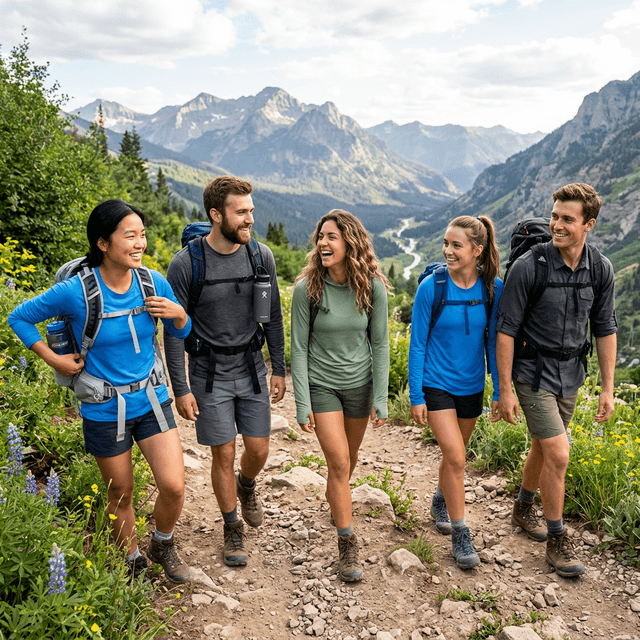
AI-generated editorial examples; these do not depict the reviewed products or show product testing.
01. What the price tells you
Compare the complete offer, including fit, care, warranty and returns. A higher price can reflect several costs and features; it does not establish better UV protection.
UPF depends on the specific tested fabric. Price and a fiber name cannot confirm a rating or show that a budget shirt uses the same specifications as a premium model.
Check the model’s stated UPF, available sizes, care and actual seller return terms. A rating does not establish how long the garment retains coverage after washing.
For messy work or fishing, consider whether you need a spare and how easily the shirt can be cleaned. A lower price may make rotation affordable, but frequent disposal is not a performance benefit.
Manufacturer references · October 10, 2026
Three lower-cost shirts: crew, hoodie or fishing long sleeve
Prices below are USD references for one shirt before tax or shipping, checked October 10, 2026. They are not live Amazon offers. Promotions, selected colors and unavailable variants are identified; a search link does not confirm stock. These comparisons use published specifications, without SleeveShirts wear or laboratory testing.
| Exact model / source | Checked cost | Published UPF | Fit / size / length |
|---|---|---|---|
| Baleaf Men’s UPF50+ Sun Long Sleeve Shirt ↗ | $29; Pastel Blue reference | 50+ | Loose fit; S–3XL; body length not published |
| Baleaf Men’s UPF50+ Sun Hoodie (AGA030) ↗ | $36; Gray/S reference | 50+ | Comfort fit; XS–3XL; no separately documented Tall cut or garment length |
| Columbia Men’s PFG Terminal Tackle Long Sleeve (1388261) ↗ | $40; Carbon/Ancient Fossil Logo reference; other-color markdowns not transferred | 50 | Regular; standard XS–XXL; separate Big and Tall routes; 29 in. center-back reference |
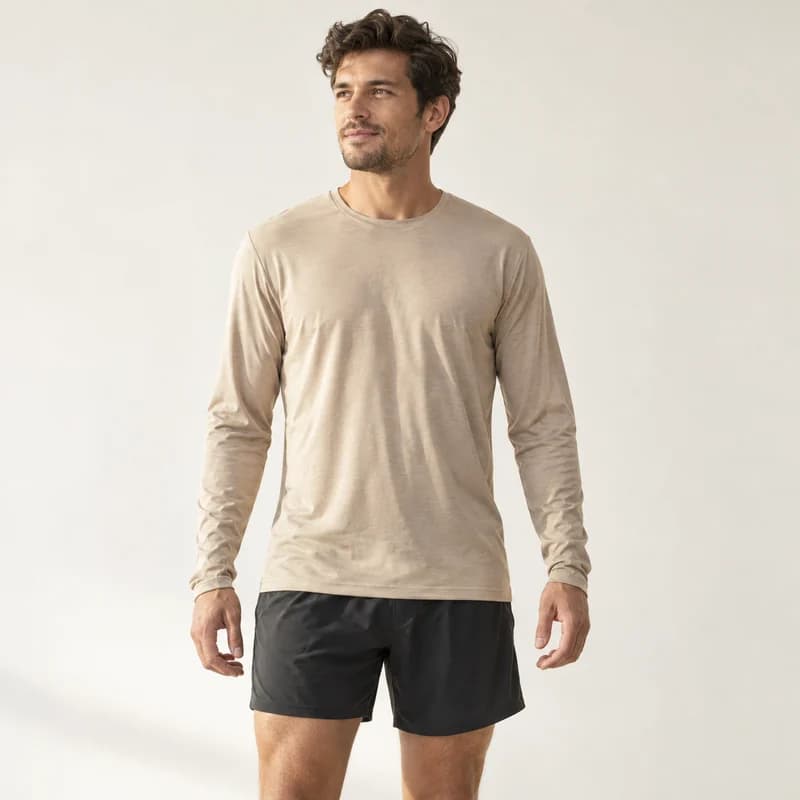
Baleaf Men’s UPF50+ Sun Long Sleeve Shirt
- Choose it if
- You want the lowest checked price here and already have separate head and neck coverage.
- Fabric and everyday details
- 100% polyester; raglan sleeves, flatlock seams; wicking/quick-dry claims; GSM and odor finish not stated
- Care
- Machine wash cold with like colors; no bleach; tumble dry low; no iron or dry-clean.
- Drawback to accept
- Crew neck, no hood or documented hand-covering cuffs; garment weight is not stated.
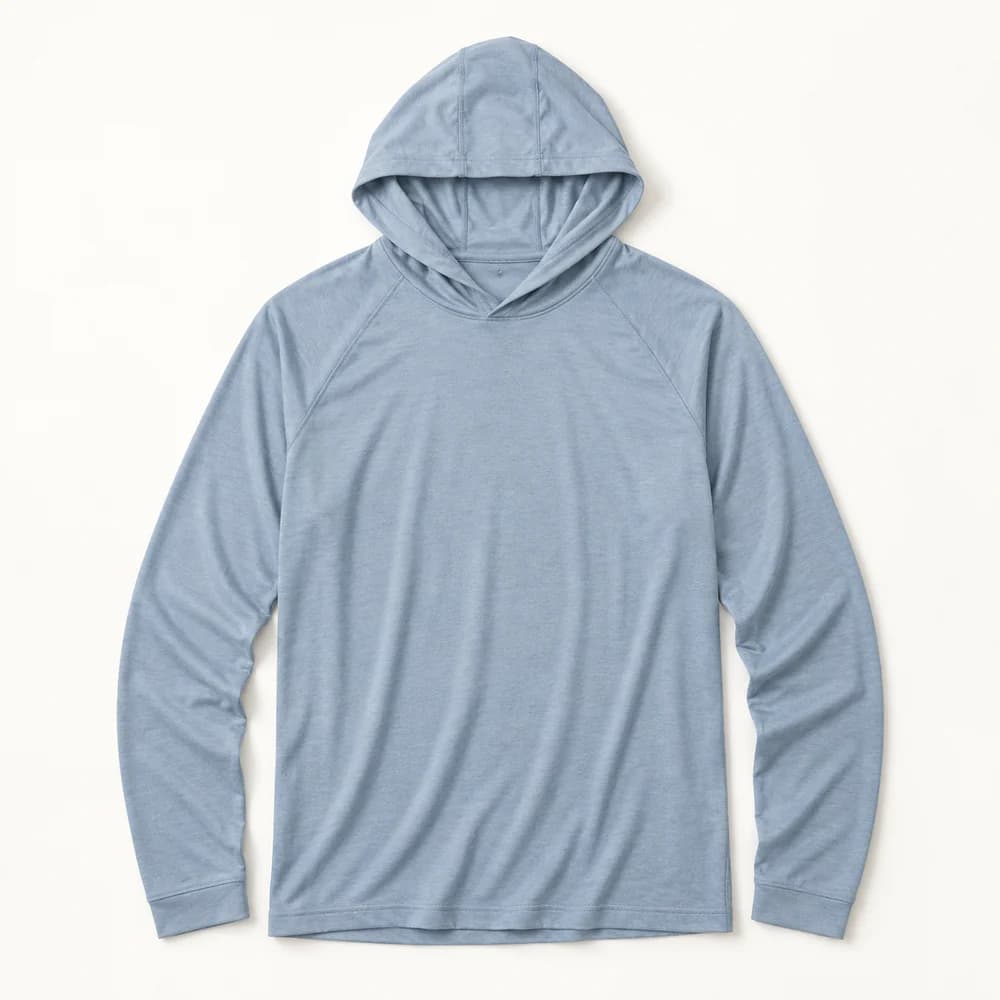
Baleaf Men’s UPF50+ Sun Hoodie (AGA030)
- Choose it if
- You want a hood and thumbholes while keeping the checked price below the premium hoodies here.
- Fabric and everyday details
- 100% polyester; hood, thumbholes, raglan sleeves and flatlock seams; GSM and odor finish not stated
- Care
- Machine wash cold with like colors; no bleach; tumble dry low; no iron or dry-clean.
- Drawback to accept
- No separately documented Tall cut or garment length; size letters alone do not establish sleeve reach.
Columbia Men’s PFG Terminal Tackle Long Sleeve (1388261)
- Choose it if
- You want a hoodless fishing crew with a documented torso-length reference and separate size routes.
- Fabric and everyday details
- 100% polyester; raglan sleeves, Omni-Wick and quick-dry maker claims; no GSM or odor finish stated
- Care
- Machine wash; no bleach; tumble dry; iron; no dry-clean. Follow the sewn-in label for temperatures.
- Drawback to accept
- No built-in head coverage or thumbholes; the 29-inch length is not a size-by-size chart.
02. Check the protection claim
A fabric’s construction, fibers, color and finishes can all contribute to UV protection. Check the exact model’s stated rating and care rather than dividing every shirt into a good or bad protection method.
Fabric finishes
A UV-related finish is not automatically a drawback. Look for the manufacturer’s rating and any documented laundering conditions; do not infer a fixed wash life from price.
Fabric construction
A dense knit can contribute to protection, but it does not establish permanent performance. Check the model’s rating and condition after use.
A solution-dyed or inherent-protection claim needs a clear scope. Find out which fabric and model it covers and whether the maker documents any care-related performance conditions.
Do not infer a rating from a supposed fiber shape. Check the complete fabric and product information; construction and use conditions matter.
Which budget option should you choose?
Choose the $29 Baleaf crew if you already use a hat and want the lowest checked shirt cost. The $36 AGA030 adds a hood and thumbholes for $7 more. Choose the $40 Columbia Terminal Tackle crew if its regular cut, 29-inch back-length reference and separate Big/Tall routes solve a fit problem. Columbia does not publish the same thumbhole package as the Baleaf hoodie.
We selected these three by documented model-specific UPF, distinct coverage or fit and a checked maker price. This is a focused lower-cost comparison, not an exhaustive market survey. Roadbox and Piscifun are not ranked here because an exact current maker model and comparable specifications were not established for this update. For fishing-specific hood/gaiter systems, use the fishing-hoodie comparison.
04. Compare the complete garment
Two shirts made from polyester can differ in knit, finishes, seams, fit and service. Compare the complete garment rather than assuming equivalent performance from the fiber name.
Price can reflect materials, construction, distribution and service. Without evidence for the individual brands’ costs, we cannot assign the price difference to marketing or manufacturing alone.
Compare published garment weight and fabric specifications when available. Do not assume budget shirts use thicker yarns or that thicker yarns always mean better durability or protection.
"If you are looking for specific fits, check out our guide on the Best UPF 50+ Shirts for Women or the Best UPF Gear for Kids. For landscaping, construction, inspections, and property work, use the sun-shirts-for-working-outside guide, where PPE compatibility, movement coverage, heat controls, and abrasion matter more than price alone."
05. Seam placement and comfort
Construction varies within price tiers. Check seams, hems and reinforcement on the exact model.
Low-profile seams
Low-profile seams may feel more comfortable under straps or during repetitive movement. Try the shirt with your equipment; flatlock construction cannot guarantee a chafe-free day.
Raised seams
Raised seams can be noticeable against the skin. Check the actual construction and fit rather than assuming a fixed level of comfort from the price.
Check the underarms, shoulders and other gear-contact areas while moving. If a seam rubs during a try-on, consider another cut or model.
06. Check fabric and coverage
Fiber composition alone does not determine the garment’s UPF. Check the model’s stated rating, construction, color and care.
We do not have a matched fabric test establishing a UV-blocking advantage for these budget shirts. Use their published model-specific information and check any testing claim at its source.
Water and snow can reflect UV onto exposed skin. Clothing coverage, a suitable hat, sunglasses and sunscreen on uncovered areas all matter. For clothing options, see our guide to the Best Fishing Hoodies with Face Masks.
Visual guide
Check the listing, size and care
Use the exact model’s information before placing your order.

Match the listing to the garment, use its size chart and read the care instructions. Check the seller’s return conditions before washing; eligibility can depend on the seller and item.
AI-generated editorial examples; these do not depict the reviewed products or show product testing.
07. Model identity and consistent information
Check that the listing, sewn-in label and manufacturer information refer to the same model and version. If they disagree, ask the seller or maker to clarify.
We have no documented laboratory results for separate Baleaf production batches. The useful buying checks are the model identity, stated rating and seller details.
- Match the exact model and color across the listing and label.
- Ask the seller to clarify inconsistent UPF information.
- Check return conditions before washing or wearing outdoors.
A price difference cannot establish suitability for a medical sun-sensitivity concern. Discuss that concern with a clinician and check the exact garment’s evidence. For published product comparisons, see Coolibar, Columbia and Baleaf.
08. Color and the stated rating
Color can affect protection, but there is no reliable universal UPF ranking by color. Use the rating for the exact garment and color, and compare heat comfort separately.
Color checks:
- Check the exact color’s stated rating.
- Do not derive a UPF number from color alone.
- Compare fit and coverage while moving.
Check both coverage and the documented fabric rating. Our UPF 50 versus UPF 30 guide explains the transmission difference without converting it into safe hours outdoors.
09. Material and environmental claims
If recycled content matters to you, check the exact garment’s disclosed percentage and any certification scope. A higher price does not prove recycled content or a lower overall environmental impact.
Synthetic garments can release fibers during laundering. This guide does not have matched evidence ranking the listed shirts’ shedding by price.
Care: Follow the garment’s wash instructions and use it for as long as its condition and your needs allow. Check the scope of any fiber-capture accessory claim before treating it as a complete solution.
10. Washing and useful life
Use the garment’s own care label for washing and drying. Condition, construction and use all affect useful life; a fixed three-year lifespan is not established here.
- Preparation: Follow the label on turning the garment inside out and fastening closures.
- Temperature: Use the washing temperature specified for the garment.
- Products: Check whether the label permits fabric softener, bleach or other additives.
- Drying: Use the maker’s drying method and let the shirt dry fully before storage.
For persistent odor, review the detergent, washing routine and complete drying. Avoid an unapproved vinegar soak; ask the maker about care compatible with the fabric and finishes.
Budget UPF shirt questions
Are cheap UPF shirts on Amazon actually safe?+
Why is Baleaf so much cheaper than Patagonia?+
How many washes do budget sun shirts last?+
Should I choose a dark or light color for a budget shirt?+
Are budget shirts as breathable as expensive ones?+
Compare cost per wear
Divide the purchase cost by the number of times you actually wear the shirt. Use your own figures; this guide does not establish a universal failure date or savings ratio. A comfortable shirt you keep using may offer better value than an unworn bargain.