Travel Light: Packing for a Week with Only 3 Shirts
A three-shirt rotation can reduce packing if you have time and space to wash and dry clothes. Start with your itinerary and laundry access.
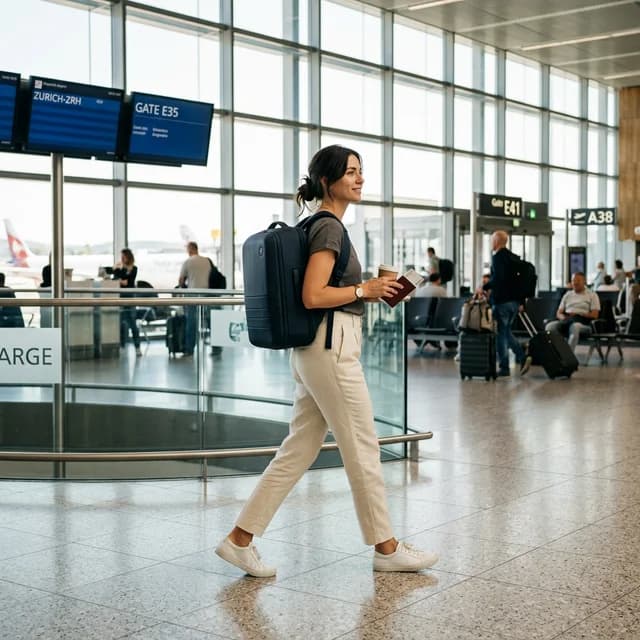
Packing fewer shirts can make a carry-on easier to manage. It works best when the clothes suit several activities and you can wash them during the trip.
Before removing items, check how often you expect to change, where you will wash clothes and whether the accommodation offers drying space.
This guide uses a three-shirt rotation: one to wear, one drying and one clean spare. Add extras if that does not leave enough margin for your plans.
Table of Contents
Visual buying guide
Compare what you pack and how you will wash it
The guide’s three-shirt approach works as a packing framework. Match the quantity to your activities and access to laundry.
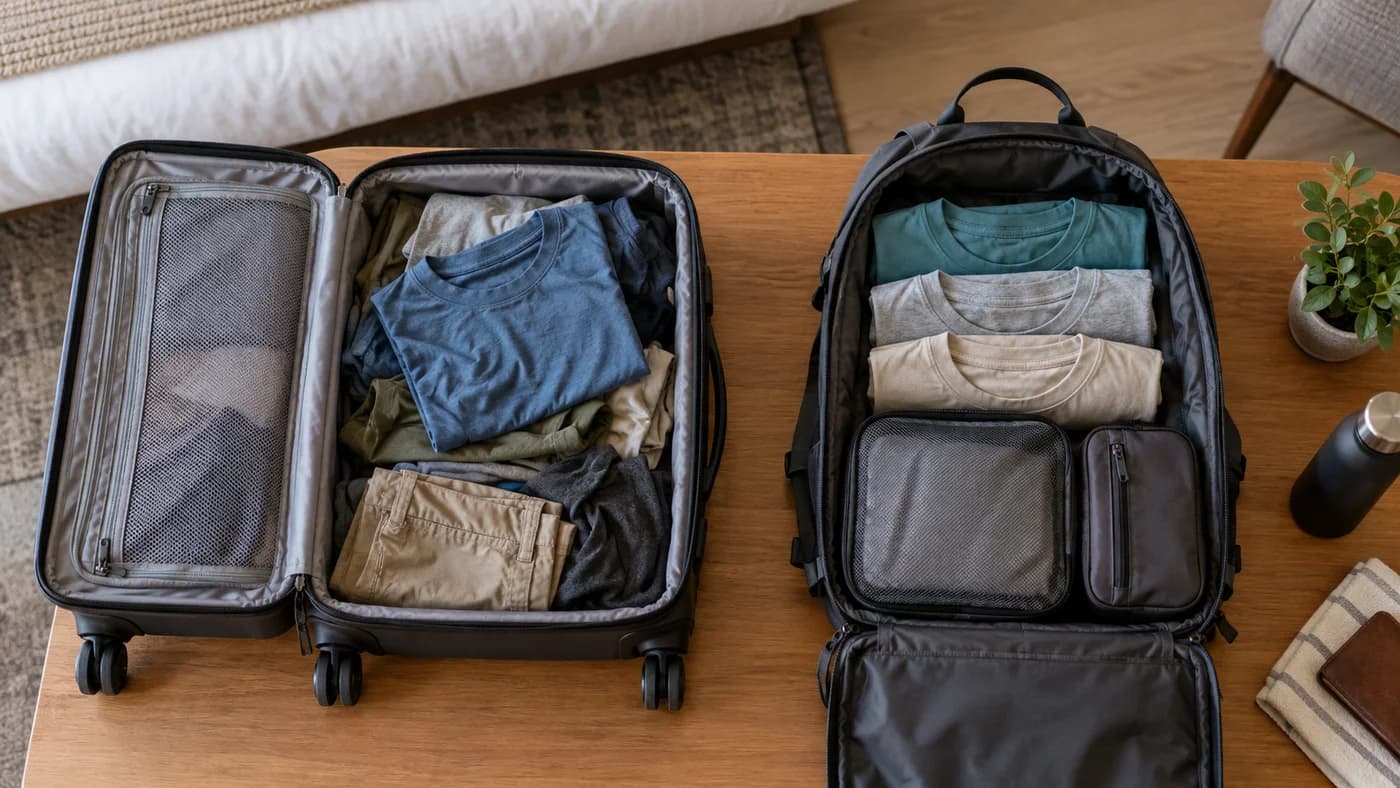
More shirts, fewer laundry stops
Lay out every piece and check whether its role is already covered. Verify the actual packed weight and volume.
Three shirts + a wash plan
Give each shirt a distinct use and plan time to wash and dry it. Check the garment label before sink washing.
AI-generated packing examples. The pictured luggage and shirts have not been weighed or tested for drying time.
1. The Math of Minimalism
Use your own garment weights to compare packing options. As an example, seven shirts weighing 180 grams each total 1.26 kg. Those are assumed weights, not measured averages for all cotton shirts.
By switching to lightweight performance fabrics, compare the complete garment weight as well as fabric GSM. Carrying fewer items can also reduce the quantity.
Example: three shirts at an assumed 130 g each total 390 g. A 130 gsm fabric does not imply a 130 g shirt.
The example saves 870 g, about 1.9 lbs. Your result depends on the actual shirts. Packed volume also depends on size, construction and folding; no fixed space saving follows from this calculation.
2. The 3-Shirt Rule
How can three shirts last a week? Or a month? It works on a simple rotation:
Shirt A: Wearing
This is the shirt on your back. You wear it all day, hiking, exploring, or sitting in transit.
Shirt B: Drying
This is the shirt you washed last night. Leave it in a suitable drying spot and check that it is fully dry before packing.
Shirt C: Spare
Keep this one clean as a spare for dinner, sleeping or a drying delay.
The rotation works only if washing and drying keep pace with use. Allow more shirts or planned laundry access for humid conditions, long activities or frequent changes.
3. Fabric Choice: The Dealbreaker
This strategy can be harder with some cotton garments if drying is slow. Test your shirt's drying routine before departure instead of relying on a fixed 24–48-hour estimate.
A synthetic or merino shirt may suit the routine, but neither material is mandatory. Choose the complete garment by care instructions, comfort, the climate and the drying opportunities on your trip.
- Merino Wool: Can be useful for odor management, but check the specific blend, care and durability. Airing does not replace washing when the garment needs it.
- Performance Synthetics (Polyester): Can suit a small travel wardrobe, depending on construction, comfort and care. Drying time varies with the garment, water removal, airflow and humidity.
Check the exact model’s odor-control evidence if repeated wear matters. A named finish may be non-antimicrobial and does not replace washing.
4. How to Do Laundry in a Sink
Check that the care label permits hand washing. Sink laundry also needs suitable detergent, rinsing time and somewhere to dry the shirt.
- Fill & Soap: Use the water temperature and detergent permitted by the care label.
- Agitate: Gently work the permitted detergent through the fabric, paying attention to soiled areas.
- Soak (Optional): Soak only if allowed by the garment's care instructions.
- Rinse: Drain and rinse until bubbles are gone.
- Press Out Water: If the care label allows it, gently press excess water out with a clean towel. Avoid aggressive twisting or stretching.
- Hang: Use the allowed hanging or flat-drying method, with ventilation where possible. Check that the garment is dry; there is no universal two-hour drying time.
A seven-day rotation with a drying reserve
This is a planning example, not a promise that three shirts suit every trip. Start day one in Shirt A with B and C clean. After the day’s activity, wash A only by its allowed method. Wear B next; keep C available if A is still damp, becomes soiled or needs a longer wash cycle. Repeat only when each shirt is dry and suitable to wear.
For real care examples, Patagonia’s Capilene Cool Daily 45181 allows warm machine washing and low tumble drying without softener. Smartwool’s Classic All-Season SW016952 specifies a warm gentle cycle and low tumble drying. Neither instruction guarantees overnight drying or automatically approves sink washing.
In humid accommodation with no dryer, add a spare or arrange a laundry stop. Test your drying routine at home and check the label before treating the material name as a travel shortcut.
5. Versatility: Trail to Tapas
Choose shirts that suit the activities and dress expectations on your itinerary. Color and finish can help one top work in several settings.
This aligns with our philosophy of consumer sustainability: Buy less, but better.
Solid neutral colors and smaller logos may suit both outdoor use and casual meals. Check the destination's dress expectations rather than assuming every sun hoodie fits every setting.
Frequently Asked Questions
What happens if I spill something?
Treat the stain promptly using the garment's care instructions. Stain resistance and drying time vary; keep your spare available.
Can I really wear the same shirt 3 days in a row?
That depends on activity, odor and soil. Air the shirt between light uses, but wash it when needed. Antimicrobial treatment does not guarantee three comfortable days.
Do I need special detergent?
Follow the garment's detergent instructions. Pack a small amount of a suitable product instead of assuming hotel shampoo works for every fabric.
What about underwear and socks?
Plan these separately for hygiene and drying time. Bring enough changes for your activities and laundry access rather than applying the shirt count automatically.
Travel Freely.
Choose shirts you can wear across your itinerary, and test the wash-and-dry routine before traveling.
As an Amazon Associate, we earn from qualifying purchases. This helps support our research at no extra cost to you.