Is a sun hoodie too hot for hiking?
Comfort depends on construction, fit, weather and pace. Try the hood and fabric with your loaded pack rather than relying on an ultralight label.
Hikers need a balance of UV coverage, breathability, packability, odor control, and layering. The right choice depends on trail exposure, altitude, sweat rate, and trip length.
As an Amazon Associate, SleeveShirts may earn from qualifying purchases.
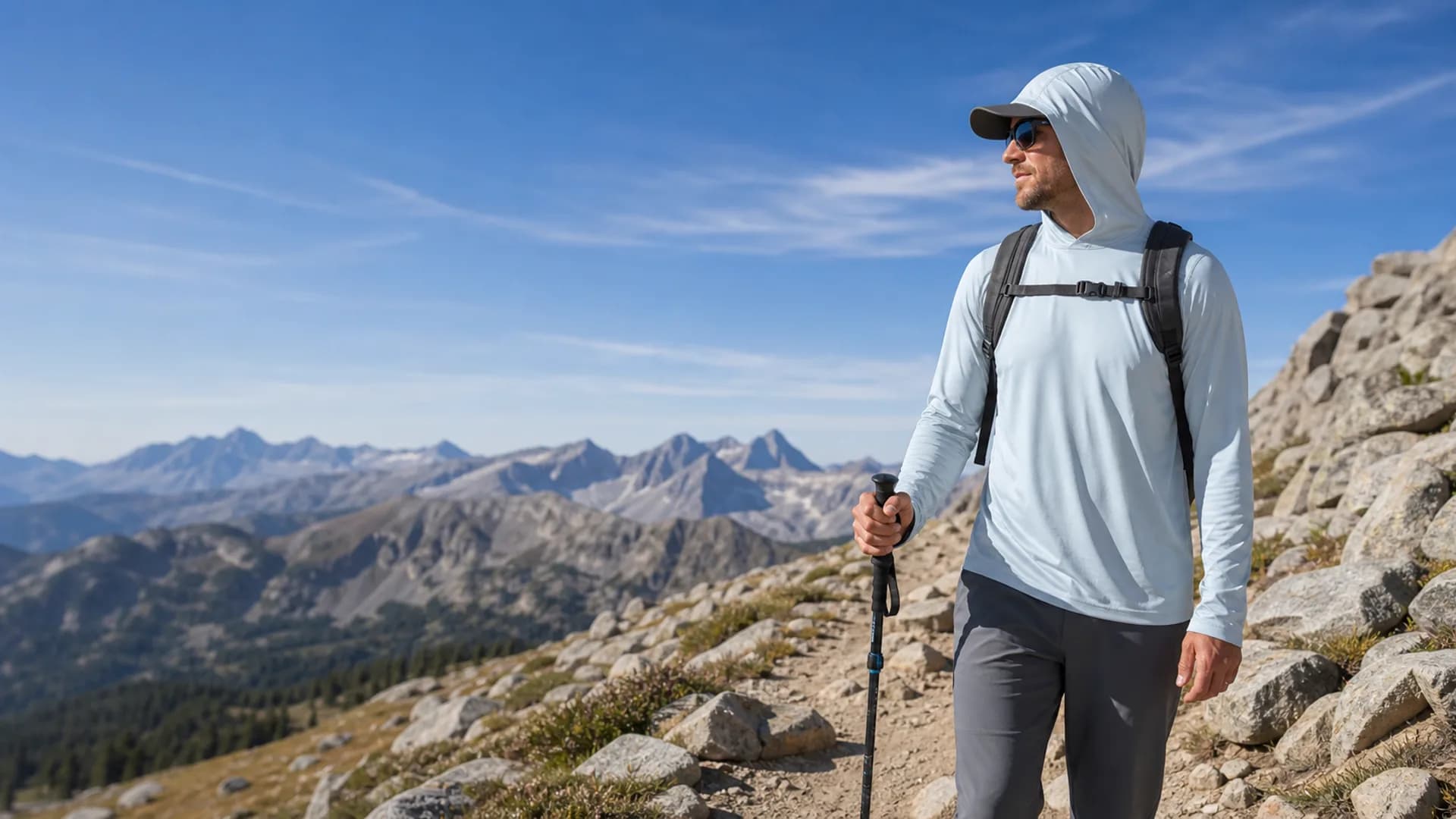
Choose the shortest path based on how ready you are to buy.
Compare lightweight hoodies by neck coverage, fit with a pack and documented UPF.
Open path Full hiking guideCompare hiking layers, fabric tradeoffs, altitude UV, and warm-weather base layers.
Open path Decision toolUse forecast conditions to choose base, mid, and outer layers.
Open pathPick the product type that matches the real use case before comparing brands.
Exposed trails and altitude
Consider for neck and arm coverage on exposed trails.
Shop optionHot humid hikes
Useful when airflow and casual styling matter more than hood coverage.
Shop optionMulti-day odor control
Consider for odor management between washes; compare the exact blend, comfort and care.
Shop optionLayering and sweat management
Works under a shell or alone when you need a minimal trail layer.
Shop optionShort answers for common search questions in this category.
Comfort depends on construction, fit, weather and pace. Try the hood and fabric with your loaded pack rather than relying on an ultralight label.
Compare the actual garment's drying, odor-control claims, fit and care. Neither merino nor synthetic is the automatic winner for every hike.
UV exposure generally increases with altitude, and shade can be limited above treeline. Higher coverage becomes more valuable even when the air feels cool.