Fishing in hot weather
Fishing in the Heat: Clothing, UV Coverage and Trip Planning
Plan fishing trips in hot weather with useful clothing coverage, ventilation, shade, hydration access and clear limits on cooling claims.
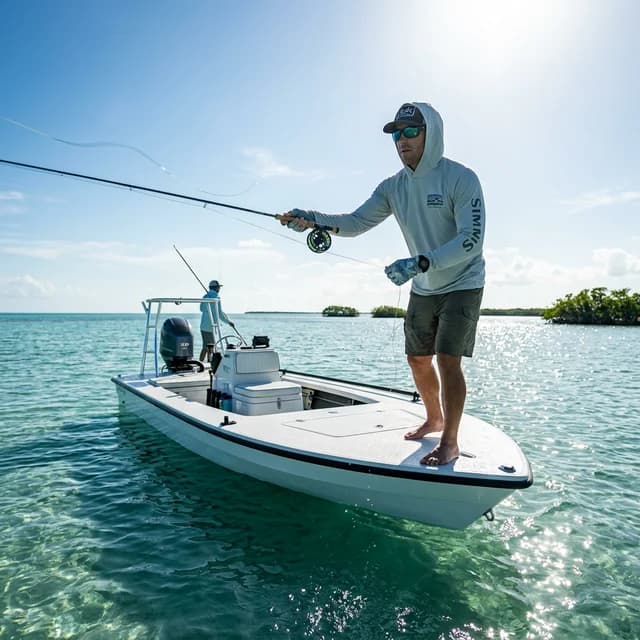
Start with the trip, then choose the shirt
Check the forecast and UV Index, access to shade and drinking water, and how you will shorten or end the outing if conditions worsen. Then compare a UPF-rated long sleeve or hoodie that fits with your fishing equipment. Clothing does not remove heat-illness risk.
This guide uses published guidance and product information. It does not report our own thermal, drying or wear tests. As an Amazon Associate, SleeveShirts earns from qualifying purchases.
Water adds reflected UV exposure
The CDC notes that UV can reflect from water, sand and other surfaces. A brim and shirt may leave parts of the face, ears, neck and hands exposed. Check the whole setup, including sunglasses and sunscreen on uncovered skin.
Do not turn a general reflection figure into a fixed personal exposure multiplier. Conditions, surroundings, sun angle and your position vary. The practical step is to cover the gaps you find and plan shade breaks.
A hood or gaiter may help with particular gaps, but it must fit comfortably and leave vision and movement clear. Compare the fishing-hoodie guide for model-specific coverage features.
Separate UV protection from heat comfort
UPF describes UV transmission through tested fabric. It does not measure how cool you will feel, and UPF 50+ does not mean that a shirt blocks 98% of all incoming heat energy.
Choose coverage that stays in place as you cast, bend and sit. Check the hood and sleeve reach with your life jacket or other equipment. Use clothing with shade, a suitable hat and sunscreen on exposed skin; the UPF fabric guide explains the rating’s limits.
More fabric can add coverage while also changing comfort. Try the complete garment rather than assuming that every sun shirt feels cooler than bare skin.
Read cooling claims at the model level
Some manufacturers advertise cooling minerals or moisture-activated finishes, including branded technologies such as brrr®. Check which exact model uses the technology and what the manufacturer’s comparison measures.
A cool initial touch does not establish sustained comfort during a humid fishing trip. Without matched tests, we cannot rank shirts by a numerical cooling advantage. Decide whether the fabric, ventilation and fit suit the conditions you expect.
Compare fabric, UPF and care separately
A polyester or nylon label does not establish drying speed, retained UPF after washing or resistance to abrasion. Look for the exact garment’s composition, rating and instructions. A lower price is not evidence that protection disappears after a particular wash count.
If salt spray is part of the trip, follow the maker’s rinsing and washing directions. Remove dirt and salt as instructed, dry the garment before storage, and inspect wear. Avoid treating any finish as a promise that the shirt will last all season regardless of care.
Humidity and ventilation change the decision
High humidity can limit evaporation. A wicking claim describes liquid movement through fabric; it does not guarantee effective cooling in still, humid air.
Compare adjustable openings, a relaxed but manageable fit and ventilation that works with your gear. Vents can also change coverage, so check the garment’s stated UPF and design. A crew, hooded knit or vented button-down can each be useful in the right setup.
Leave room in your plan for shade and breaks. Moving air during a boat ride is not a reliable heat-safety strategy for the whole outing.
Compare fishing shirts by the problem you need to solve
| Need | What to compare | What to check in person |
|---|---|---|
| Neck coverage | Hood shape, collar height, adjuster and UPF | Turn your head with your hat and fishing gear on. |
| Airflow and storage | Vents, closure and usable pockets | Check access and pressure beneath a life jacket. |
| Frequent changes | Price, care and whether you need a spare | Confirm fit before buying several shirts. |
| Repeated casting | Seam placement, sleeve reach and stretch | Repeat casting movements and check hem coverage. |
For AFTCO, Huk, Columbia PFG, Simms and budget options, use the fishing-shirt buying guide. The Huk, Columbia PFG and AFTCO comparison gives more detail on reference models, measurements and dated price context.
Pay more only for a feature that addresses your use. A premium logo or branded fabric does not guarantee better fit, wind stability or drying in your conditions.
Try casting movements before removing tags
Reach forward, overhead and across the body. Check for pulling at the neck and underarms, pressure beneath equipment and a hem that rides above your waistband. Raglan sleeves or gussets change construction, but they cannot promise unrestricted movement for every wearer.
Use any thumbholes while gripping a rod. Check pressure at the thumb and how much of the hand remains uncovered.
Plan for cleaning and odor management
Wet storage, retained oils and the garment’s construction can contribute to odor. Wash according to the care label, rinse adequately and dry before packing away. Check a named odor-control treatment as a model-specific claim, not a guarantee of unlimited clean wears.
Use the moisture-management guide to distinguish wicking from drying and odor control. Do not use an acid soak or other improvised treatment unless the garment maker permits it.
Plan breaks and know when to stop
Arrange access to drinking water, a cooler place and help before departure. Heat risk depends on the conditions, exertion and person; this guide does not prescribe one electrolyte dose for every angler.
The CDC’s heat-illness guidance describes signs such as headache, nausea, dizziness and weakness. Stop activity and seek appropriate help if symptoms develop. Confusion, loss of consciousness or suspected heat stroke requires emergency assistance and cooling while help arrives. Heat stroke can occur with sweating.
A shore-fishing trip with breaks built in
Planning example: check the forecast and UV index, start during a cooler part of the day, and choose a spot with a usable route to shade or shelter. Try the shirt with your life jacket where needed. Check the wrists, neckline, ears and face when casting; use sunscreen on uncovered skin and follow its reapplication instructions.
Pack water and arrange a break before you feel unwell. Change the outing when heat or conditions become difficult to manage. Feeling faint or weak is a reason to stop and move to a cooler place; confusion or collapse requires emergency help and prompt cooling. Sweating can still occur in exertional heat stroke. There is no universal safe temperature or drinking dose in this example. See CDC heat guidance and NIOSH heat-related illnesses.
Frequently asked questions
Which shirt color should I choose?
Confirm the UPF for the exact color first. Then compare comfort, visibility and your fishing preferences. Color alone does not prove a cooling advantage or a particular effect on fish.
Does saltwater change protection?
The effect depends on the textile and its condition. Check whether the garment is intended for water use, follow care directions and inspect wear. Do not assign a fixed UPF drop from salt exposure without a product-specific test.
Are bamboo-derived shirts unsuitable for fishing?
A fiber label alone cannot answer that. Check the specific textile blend, wet comfort, coverage, care and maker’s intended use. Do not assume a universal drying time or declare a whole fiber category unsafe.
Can clothing replace breaks or sunscreen?
No. Clothing covers the skin beneath it. You still need to manage heat exposure and protect uncovered areas, including the face and hands.
Choose for your fishing routine
Start with a documented rating, workable fit and care instructions. Compare a hood for neck coverage, a vented shirt for airflow and storage, or a spare for wet and dirty outings.
Search fishing hoodies on AmazonThe button opens a search. Confirm model, rating, seller and current offer. AI tools assisted with drafting; no original thermal measurements are reported.